
Healthy Sleep Environment Guide: Air, Light, Temperature & Materials
Sleep is not shaped by routines alone. The room around you — its air, temperature, light, noise, layout, and materials — can quietly influence how comfortable and consistent rest feels.
This guide walks through the practical elements of a healthier sleep environment, from bedroom air quality and low-stimulation lighting to breathable bedding, lower-emission materials, and product upgrades that make sense over time.
It is not about building a perfect bedroom. It is about creating a calmer, more comfortable space that supports rest with less overwhelm.
This guide is for informational purposes only and explores general environmental factors related to sleep comfort. It does not provide medical advice or diagnose sleep conditions.
Quick Answer: What Makes a Healthy Sleep Environment?
A healthy sleep environment is a bedroom setup that supports rest through cooler temperature, low light, reduced noise, good airflow, breathable materials, and a calmer layout.
The goal is not to create a perfect bedroom. It is to remove small sources of friction — stale air, harsh lighting, uncomfortable bedding, clutter, heat, or distracting noise — so your room feels cooler, darker, quieter, fresher, and more comfortable at night.
A supportive sleep space usually starts with:
-
Cooler room temperature
-
Low light or darkness
-
Reduced sudden noise
-
Fresh air and ventilation
-
Breathable bedding
-
A lower-clutter layout
-
Materials with better transparency
Table of Contents
What Is a Healthy Sleep Environment?
The Best Bedroom Conditions for Sleep
Temperature, Light, Noise, and Air Quality
Why Bedroom Air Quality Matters While You Sleep
What Makes a Sleep Environment Less Supportive?
Sleep Rules Explained: 10-3-2-1, 3-2-1, and Wind-Down Methods
Bedroom Materials That Matter for Sleep Comfort
Build Your Sleep Setup: A Guided Path
Choose Your Next Sleep Upgrade
FAQ
What Is a Healthy Sleep Environment?
A healthy sleep environment refers to the conditions of the space where you sleep, not just the bed itself.
While sleep is often discussed in terms of routines or habits, environmental factors come first. The room’s temperature, air quality, light, noise, and surrounding materials all shape how comfortable and consistent sleep feels over time.
A supportive sleep environment typically focuses on:
-
Reducing unnecessary stimulation
-
Supporting physical comfort
-
Creating a sense of calm and predictability
Rather than aiming for a single “healthiest” way to sleep, most guidance points to the same principle:
sleep works best when the environment removes friction instead of adding it.
This guide looks at sleep from the outside in:
-
Environment first (the room and conditions)
-
Products second (what you sleep on and around)
-
Habits last (routines and rules)
The Best Bedroom Conditions for Sleep
A supportive sleep environment usually comes down to a few practical conditions working together. No single element has to be perfect, but the more your bedroom supports comfort, calm, and consistency, the easier it becomes to create a space that feels restful.
Think of your bedroom as a system: air, light, temperature, sound, layout, and materials all contribute to how the room feels at night.
A better sleep environment often includes:
-
Cooler temperature: A room that feels slightly cool rather than warm or stuffy.
-
Darkness or low light: Less exposure to bright light, harsh overhead lighting, or glowing screens before bed.
-
Reduced sudden noise: Fewer disruptive sounds from outside, appliances, or electronics.
-
Fresh air and ventilation: Better airflow to reduce stale air and support a fresher room.
-
Breathable bedding: Sheets, pillows, and toppers that help regulate comfort and heat.
-
Lower-clutter layout: A calmer visual environment with fewer distractions.
-
Materials with better transparency: Bedding, mattresses, and furniture made with clearer material information, certifications, or lower-emission finishes where possible.
A healthy sleep environment is not about buying everything new. It is about understanding which parts of your bedroom affect comfort most — and improving them in the order that makes sense for your home.
Temperature, Light, Noise, and Air Quality
Most sleep-environment guidance tends to return to the same core idea: a bedroom should feel cool, dark, quiet, and comfortable.
That does not mean every person needs the exact same setup. Some people sleep better with a fan, some need white noise, and others prefer warmer bedding or heavier layers. But the basic room conditions still matter because they shape the sensory environment around sleep.
Here are the main areas to review first:
Temperature
A room that feels too warm can make it harder to stay comfortable through the night. Start by adjusting airflow, bedding weight, sleepwear, and thermostat settings before replacing larger products.
If you often wake up warm, the issue may not be only the room temperature. It could also come from heat-trapping bedding, a dense mattress topper, synthetic sheets, or poor airflow.
Light
Light tells your body that it is time to stay alert. In the bedroom, the goal is to reduce harsh stimulation as the evening winds down.
Focus on:
-
Dimming overhead lights
-
Using warmer bedside lighting
-
Reducing screen brightness
-
Blocking outdoor light if needed
-
Avoiding bright light during nighttime wakeups
Noise
A perfectly silent bedroom is not always realistic. The goal is to reduce sudden, sharp, or inconsistent sounds that can interrupt rest.
Helpful options may include:
-
Soft furnishings that absorb sound
-
Closing windows during noisy hours
-
Using a fan or white noise machine
-
Moving buzzing electronics away from the bed
-
Reducing appliance noise in nearby rooms
Air Quality
Bedroom air can feel stale overnight, especially when windows stay closed, ventilation is limited, or the room contains dust, synthetic materials, scented products, or new furniture.
Improving bedroom air quality can start with simple steps:
-
Open windows when outdoor air quality allows
-
Wash bedding regularly
-
Vacuum and dust often
-
Avoid heavy synthetic fragrances
-
Improve ventilation
-
Consider an air purifier if the room feels musty, dusty, or poorly ventilated
The strongest sleep environment is usually not created by one product. It comes from small improvements working together.
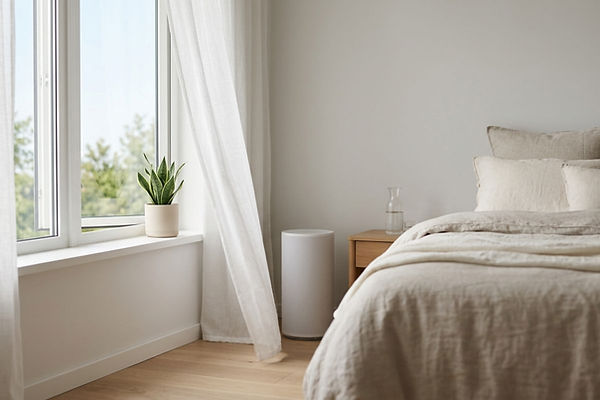
Why Air Quality Matters While You Sleep
Bedroom air quality is one of the most overlooked parts of a healthier sleep environment.
Because bedrooms are often closed for long stretches overnight, air can become stale. Dust, humidity, pet dander, outdoor pollution, cleaning product residue, scented products, and volatile organic compounds from furniture or textiles can all influence how fresh the room feels.
This does not mean your bedroom needs to feel clinical or perfectly purified. It simply means air quality deserves a place in the sleep conversation — especially if your room often feels stuffy, musty, dusty, or heavy in the morning
Why Bedrooms Can Feel Stale Overnight
A bedroom may feel stale when air does not circulate well. This can happen when:
-
Windows remain closed for long periods
-
Doors stay shut overnight
-
The room has poor ventilation
-
Bedding traps heat and humidity
-
Dust accumulates on textiles and surfaces
-
New furniture, mattresses, or decor release odors
-
Scented candles, sprays, or plug-ins are used frequently
The first step is usually not a purchase. Start with airflow, cleaning habits, and material awareness.
VOCs, Dust, Allergens, and Ventilation
VOCs, dust, and allergens can come from different sources inside the home.
Common bedroom sources may include:
-
New mattresses or mattress toppers
-
Pressed wood furniture
-
Foam products
-
Synthetic rugs or curtains
-
Paints, stains, or finishes
-
Scented products
-
Cleaning sprays
-
Dust buildup in bedding and textiles
Good ventilation helps dilute indoor pollutants when outdoor air quality is acceptable. Regular cleaning, washable bedding, and lower-emission materials can also help create a fresher room over time.
For a deeper explanation, read our guide to VOCs in homes and how to reduce them.
Bedroom air quality is part of a larger home system. Dust, VOCs, humidity, ventilation, outdoor pollution, and filtration all work together, so it can help to understand the bigger picture before choosing a product.
For a deeper breakdown, read our Indoor Air Quality Guide, which explains how to identify the source first and choose between ventilation, humidity control, HEPA filtration, activated carbon, air purifiers, dehumidifiers, or monitoring.
Do Plants Help Bedroom Air Quality?
Plants can make a bedroom feel calmer, softer, and more connected to nature. They may support the atmosphere of the room visually and emotionally.
However, plants should not be treated as a replacement for ventilation, filtration, or regular cleaning. For most bedrooms, practical air-quality improvements usually come from airflow, dust control, source reduction, and — when needed — an air purifier.
Plants can be part of a beautiful sleep space. They just should not carry the full job of cleaning the air.
When to Consider an Air Purifier
An air purifier may be worth considering if your bedroom:
-
Feels dusty even after cleaning
-
Has limited ventilation
-
Feels musty or humid
-
Is near outdoor pollution or traffic
-
Contains pets
-
Has new furniture, bedding, or materials with noticeable odors
-
Triggers discomfort from airborne particles or stale air
For bedroom use, compare filtration types carefully. A HEPA filter can help capture fine particles, while activated carbon can help reduce certain odors and gases. If you are comparing options, start with our guide to HEPA vs carbon filters.
You can also explore our guides to best non-toxic air purifiers, desktop air purifiers for smaller spaces, and air purifiers for mold-prone or musty rooms.
When to Consider a Dehumidifier
A dehumidifier may be worth considering if your bedroom or nearby spaces:
-
Feel damp, musty, or heavy
-
Have condensation on windows
-
Stay humid even with ventilation
-
Are close to a bathroom, laundry area, or basement
-
Have closets, bedding, or textiles that feel slightly damp
-
Smell musty even after cleaning
-
Feel uncomfortable during rainy or humid seasons
Unlike an air purifier, a dehumidifier does not filter airborne particles. Its job is to remove excess moisture from the air. For sleep spaces, this can be helpful when humidity makes the room feel damp, uncomfortable, or harder to keep fresh.
If the issue is dust, pollen, smoke, or airborne particles, start with an air purifier. If the issue is dampness or humidity, start with a dehumidifier. If your bedroom feels both damp and dusty, you may need both tools working together.
For room-by-room moisture control, start with our guide to the best dehumidifiers for basements, bathrooms, and everyday home use.
Bedroom air comfort depends on both air quality and moisture balance. Our Air Purifier vs Dehumidifier guide helps you decide which device makes more sense for dust, dampness, musty smells, and overnight comfort.
What Makes a Sleep Environment Less Supportive?
A less supportive sleep environment is usually not “bad” in one obvious way. More often, it is a combination of small factors that make the room feel uncomfortable, overstimulating, stuffy, or hard to settle into.
A bedroom may feel less supportive when it includes:
-
Warm, stagnant air
-
Harsh overhead lighting
-
Too much visual clutter
-
Noise that changes suddenly
-
Bedding that traps heat
-
Pillows that no longer support your sleep position
-
Mattresses or toppers that feel worn out
-
Strong synthetic fragrances
-
Dust buildup in soft surfaces
-
Furniture or textiles with unclear material information
-
Electronics that create light, sound, or mental stimulation
The goal is not to judge your space. Most bedrooms have at least a few of these issues.
Instead, use them as clues. If your room feels too warm, start with temperature and bedding. If it feels stale, start with ventilation and air quality. If it feels visually busy, start with layout and clutter.
Small changes can make the bedroom feel calmer before you invest in larger upgrades.

Sleep Rules Explained: 10-3-2-1, 3-2-1, and Wind-Down Methods
Sleep rules can be helpful, but they are not a substitute for a supportive bedroom.
Methods like the 10-3-2-1 rule or 3-2-1 rule are usually designed to reduce stimulation before bed. They often focus on habits such as limiting caffeine, heavy meals, work, screens, or bright light in the hours before sleep.
They can be useful because they create a transition between daytime activity and nighttime rest.
But routines work best when the room supports them.
A calming evening routine may be less effective if the bedroom is too warm, brightly lit, noisy, cluttered, or uncomfortable. That is why this guide focuses on both sides of the sleep equation:
-
Habits: what you do before bed
-
Environment: what your room feels like when you get there
A better sleep setup does not need to be complicated. Start with the room conditions you can control most easily: light, airflow, temperature, bedding comfort, and noise.

Bedroom Materials That Matter for Sleep Comfort
The materials closest to your body often have the biggest effect on comfort. That includes your mattress, topper, pillow, sheets, and sometimes the bed frame or surrounding furniture.
Not every material needs to be natural, organic, or premium. But when you are upgrading a bedroom product, it helps to look for clearer material information, durability signals, certifications where relevant, and designs that match how you actually sleep.
Use this simple decision guide to choose where to go next.
Mattress
Your mattress is the largest sleep surface in the room. If you are replacing one, look at support, comfort, certifications, material transparency, durability, and whether the brand clearly explains what is inside.
Explore our guide to best non-toxic mattresses if your current mattress is old, uncomfortable, or made with unclear materials.
Mattress Topper
A topper can be a useful middle step if your mattress still has life left but feels too firm, too warm, or not supportive enough.
Compare options like latex, wool, cotton, and other materials depending on whether you need pressure relief, breathability, or surface comfort.
Explore our guide to mattress toppers if you want to adjust comfort without replacing the entire mattress.
Pillow
Pillows affect neck alignment, temperature, and overall comfort. The right choice depends on your sleep position, preferred loft, and fill material.
Explore our guide to pillows if your current pillow feels flat, too high, too warm, or no longer supportive.
Sheets
Sheets influence how warm, cool, crisp, or soft your bed feels. Fiber and weave matter: cotton, linen, bamboo-derived fabrics, and other materials can feel very different depending on construction and care.
Explore our guide to bed sheets if you wake up warm, dislike synthetic textures, or want more breathable bedding.
Bed Frame
A bed frame may not touch your body directly, but it still contributes to the bedroom’s material story. Solid wood frames, lower-emission finishes, and durable construction can support a calmer, longer-lasting bedroom setup.
Explore our guide to wood bed frames if you are reviewing furniture materials, finishes, or long-term durability.

How Bedding Affects Sleep Comfort (Beyond the Mattress)
Bedding choices shape how sleep feels, even when the mattress stays the same.
In recent years, trends like skipping top sheets or switching to simplified bedding setups — especially among younger generations — reflect a growing focus on comfort, temperature control, and ease of use.
Breathability, Skin Contact, and Temperature
Bedding affects sleep comfort through:
-
Breathability, which helps regulate heat overnight
-
Skin contact, especially for sensitive or warm sleepers
-
Moisture management, influencing how the bed feels by morning
Sheets, pillowcases, and covers sit closest to the body, so their texture and airflow can noticeably influence comfort — even if they don’t change sleep outcomes on their own.
If you’re curious how different bedding components play a role, these guides offer deeper breakdowns:
→ Explore non-toxic bed sheets
→ Compare non-toxic pillow options
How Long Should Sleep Products Last?
When rethinking a sleep setup, longevity is often overlooked — yet it’s one of the most practical factors to consider.
Sleep products don’t last forever, but their lifespan isn’t defined by a single number. Instead, it’s shaped by wear, hygiene, and changing comfort needs over time.
Lifespan vs Wear vs Hygiene
Rather than asking “How long should this last?”, it can be more useful to consider:
-
Wear — loss of support, sagging, flattening, or reduced responsiveness
-
Hygiene — buildup of moisture, dust, or odors that’s difficult to fully remove
-
Comfort changes — shifts in how the body responds as needs evolve
Some products may remain structurally intact but no longer feel comfortable or supportive. Others may still feel fine but benefit from replacement due to hygiene or material fatigue.
From a durability perspective, choosing well-made, breathable materials and maintaining good airflow in the bedroom can help extend usable life, even if replacement is eventually necessary.
The goal isn’t to maximise years at all costs — it’s to balance comfort, cleanliness, and longevity in a way that makes sense for everyday use.
Healthy Sleep, Not Perfect Sleep
Sleep advice often sounds absolute — as if there’s a single “right” amount of sleep, a perfect routine, or one habit that matters more than everything else.
In reality, healthy sleep looks different from person to person.
Some people feel rested with fewer hours, others need more. Occasional long nights or restless stretches are normal, especially during periods of stress, travel, or change.
Progress Over Perfection
Instead of chasing ideal numbers or rigid rules, a more sustainable approach to sleep focuses on:
-
Consistency over extremes
-
Comfort over optimisation
-
Patterns over isolated nights
Signs that sleep may need attention often show up gradually — persistent fatigue, difficulty winding down, or feeling unrested despite time in bed. These signals aren’t diagnoses; they’re prompts to look at context, starting with the environment.
At Zenda Guide, we approach sleep the same way we approach conscious living:
not as something to perfect, but something to support gently, step by step.
Build Your Sleep Setup (A Guided Path)
A healthier sleep environment is easier to build when you move in layers.
Start with the parts of your bedroom that affect comfort every night, then upgrade products only when there is a clear reason to do so.
1. Start With Air and Ventilation
Before buying anything new, look at airflow.
Try:
-
Opening windows when outdoor air quality allows
-
Keeping the bedroom door open for part of the evening
-
Washing bedding regularly
-
Dusting surfaces and vacuuming soft areas
-
Reducing synthetic fragrances
-
Checking for musty or stale odors
If the room still feels dusty, stale, or poorly ventilated, compare filtration options next.
3. Reduce Noise and Visual Clutter
A calmer room is often easier to settle into.
Try:
-
Moving buzzing electronics away from the bed
-
Using soft furnishings to reduce echo
-
Keeping bedside surfaces simple
-
Removing visual clutter from the sleep area
-
Using a fan or white noise if sudden sounds are disruptive
4. Upgrade Contact Materials First
When it is time to invest, start with the materials closest to your body.
Usually, that means:
-
Sheets
-
Pillow
-
Mattress topper
-
Mattress
These products shape temperature, texture, support, and breathability more directly than decorative items.
5. Replace Products Only When There Is a Clear Reason
Not every bedroom improvement requires a new purchase.
Replace or upgrade when a product is:
Worn out
-
Uncomfortable
-
Trapping too much heat
-
Difficult to clean
-
Made with unclear materials
-
Releasing persistent odors
-
No longer supporting your sleep position
-
Misaligned with your long-term home goals
The best sleep setup is not the most expensive one. It is the one that supports your comfort, values, and daily routine with less friction.
Choose Your Next Sleep Upgrade
Start with the part of your bedroom that feels most noticeable.
Stale or stuffy air?
Explore air purifiers, VOCs, and HEPA vs carbon filters. Start with air quality if your room feels dusty, musty, heavy, or poorly ventilated.
Helpful next reads:
Too warm at night?
Start with breathable sheets, pillows, and mattress toppers. Heat discomfort often comes from layers close to the body, not just the thermostat.
Helpful next reads:
Old or uncomfortable sleep surface?
Compare mattress and topper materials before replacing the full setup. A topper may help if your mattress is still supportive, while a mattress replacement may make more sense if the structure is worn out.
Helpful next reads:
Furniture or material concerns?
Look at solid wood bed frames and lower-emission finishes. Furniture can influence the feel, durability, and material transparency of the room.
Helpful next read:
Want to explore the full sleep ecosystem?
Visit our Bedroom & Sleep category page for guides on mattresses, bedding, pillows, bed frames, bedroom air quality, and calmer sleep spaces.
Explore more Zenda Guides
A healthier sleep environment often starts with materials, air quality, temperature, light, and everyday product choices. Browse our healthy home and materials guides.
FAQ
What is a healthy sleep environment?
A healthy sleep environment is a bedroom setup that supports rest through cooler temperature, low light, reduced noise, fresh air, breathable materials, and a calmer layout.
It does not need to be perfect. The goal is to make the room feel more comfortable, less stimulating, and easier to settle into at night.
What is the best temperature for sleeping?
Many sleep-environment recommendations point toward a slightly cool bedroom. The exact temperature depends on your body, bedding, climate, and personal comfort.
If you often wake up warm, start by reviewing airflow, bedding weight, sleepwear, mattress toppers, and sheet materials before making bigger changes.
Is it better to sleep in a dark room?
A darker room is usually more supportive for sleep because bright light can feel stimulating at night.
You can improve darkness by dimming lights before bed, using warmer bedside lamps, reducing screen light, and blocking outdoor light if it enters your bedroom.
Does bedroom air quality affect sleep comfort?
Bedroom air quality can affect how fresh, comfortable, or stuffy the room feels overnight.
Poor ventilation, dust, humidity, synthetic fragrances, pet dander, or new materials can all influence the feel of the room. Start with airflow, cleaning, and source reduction. If needed, compare air purifier options for your bedroom size and concerns.
Can VOCs build up in bedrooms?
Yes, VOCs can come from some furniture, mattresses, textiles, paints, finishes, cleaning products, and scented products.
Good ventilation, lower-emission materials, regular cleaning, and reducing heavily scented products can help create a fresher bedroom environment. For a deeper explanation, read our guide to VOCs in homes.
What bedroom materials should I pay attention to first?
Start with the materials closest to your body:
-
Mattress
-
Mattress topper
-
Pillow
-
Sheets
-
Bedding layers
After that, look at furniture materials, finishes, rugs, curtains, and other items that may affect air quality, dust, or long-term durability.
Do I need to replace my mattress to improve my sleep environment?
Not always.
If your mattress is still supportive, you may be able to improve comfort with better airflow, breathable sheets, a different pillow, or a mattress topper. A new mattress may make more sense if your current one is worn out, uncomfortable, sagging, trapping heat, or made with unclear materials that no longer fit your preferences.
What is the 3-2-1 rule before bed?
The 3-2-1 rule is a wind-down framework that usually encourages reducing stimulating activities before bedtime, such as heavy meals, work, screens, or bright light.
It can be useful, but routines work best when the bedroom also supports rest. A cooler, darker, quieter, fresher, and more comfortable room makes any wind-down routine easier to sustain.
Share this guide