Best Coffee Makers for a Lower-Plastic Brewing Routine

Reviewed by Our Editors at Zenda Guide
Our content follows our Editorial Standards and is evaluated using the Zenda Lab Protocol.
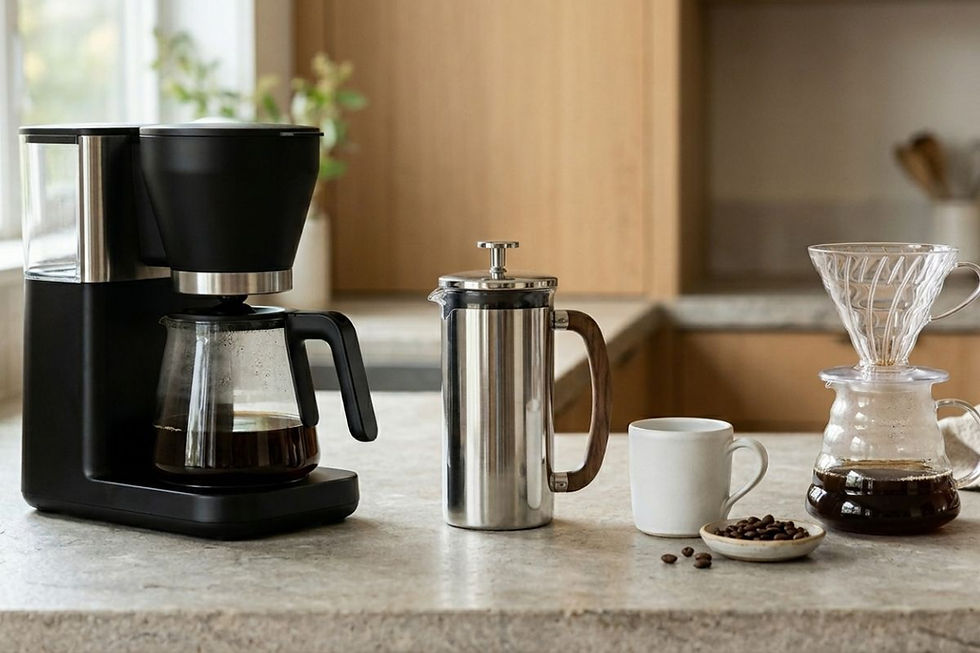
Most coffee makers still use plastic somewhere in the appliance, but the market has changed. A few newer automatic brewers now keep plastic out of the hot-water path — or out of the water and coffee contact path entirely. That makes the real question more useful than a simple “plastic-free” label: where does plastic appear, what does it touch, and what tradeoffs come with avoiding it?
For this roundup, Zenda Lab evaluated each pick using the Zenda Lab Protocol, with a focus on brew-path materials, durability, brewing performance, buyer satisfaction, and long-term value. Each featured product includes a PVS (Proprietary Value Score), but the final order also considers how well each brewer serves a distinct reader need.
This guide includes four automatic drip options plus stainless-steel French press and glass pour-over paths, so you can compare maximum plastic reduction, proven longevity, coffee performance, convenience, and price without treating every brewer as interchangeable.
Affiliate Disclosure
This post contains Amazon affiliate links. As an Amazon Associate, Zenda Guide earns from qualifying purchases at no extra cost to you. Zenda Lab scores are based on data analysis, not physical product testing.
Top Picks at a Glance
Use this table to compare brewing format, material posture, main tradeoffs, and Zenda PVS at a glance. Tap any product name to jump to the full review.
Technivorm Moccamaster KBGV Select
|
SimplyGoodCoffee THE BREWER — Plastic-Free
|
|
BUNN CSB3T Speed Brew Platinum
|
Frieling Double-Wall Stainless Steel French Press
|
|
Quick Answer: What’s the Best Plastic-Free Coffee Maker?
There is no single winner for every lower-plastic coffee routine.
The important distinction is no longer simply whether an electric machine contains plastic somewhere. Some current automatic brewers now keep plastic out of the hot-water path — and one evaluated option goes further by keeping plastic out of the documented water and coffee contact path entirely.
Best overall for long-term ownership: Technivorm Moccamaster KBGV Select
Choose it if durability, proven brewing performance, repair support, and long-term value matter more than achieving the lowest possible plastic contact.
Best automatic for a plastic-free brew path: SimplyGoodCoffee THE BREWER — Plastic-Free
Choose it if minimizing plastic contact is your highest priority. Its glass-and-stainless water and coffee path is exceptional for an automatic brewer, but its durability record is much younger than Technivorm’s.
Best premium automatic for a plastic-free hot brew path: Ratio Eight Series 2
Choose it if you want stronger premium coffee performance while keeping plastic out of the confirmed hot-water and brewed-coffee path. The tradeoff is its much higher price and shorter ownership history.
Best fast-brewing value workhorse: BUNN CSB3T Speed Brew Thermal
Choose it if speed, durability, and value matter more than achieving the strongest material profile.
If you prefer a simpler manual system, Frieling is our stainless-steel French press pick, while Chemex offers the clearest glass-forward pour-over path.
The strongest material profile is not automatically the best overall coffee maker. The right choice depends on how you balance plastic contact, durability, coffee performance, convenience, and budget.
Each featured product below includes a Zenda PVS or review status note to help you compare materials, tradeoffs, and overall fit more quickly.
For pour-over setups, a gooseneck kettle for pour-over coffee helps you control the water flow without adding another full coffee machine to your counter.
What “Plastic-Free” Really Means in a Coffee Maker
“Plastic-free” can mean very different things from one coffee maker to another.
A machine can contain plastic somewhere in its exterior or cold-water system without putting plastic in contact with hot water or brewed coffee. Another machine may use plastic directly in the basket, spray head, tubing, or other parts of the brewing path.
That is why this guide separates three different questions:
Does the appliance contain plastic somewhere?
Does plastic contact the water before heating?
Does plastic contact hot water or brewed coffee?
The last question is especially important for understanding the actual brew path: every surface water or brewed coffee touches from reservoir to cup.
That can include internal tubing, heating components, the shower head, filter basket, carafe, seals, and other hidden routing.
This distinction matters more in 2026 because automatic brewers no longer all make the same material compromise. Simply Good documents a water and coffee contact path built around glass, stainless steel, and silicone, while Ratio uses a Tritan cold-water reservoir but moves the hot-water path through glass and metal. Technivorm and BUNN remain stronger conventional options, but both still use plastic in parts of the brewing system.
That is why Zenda uses a lower-plastic framework rather than treating the category like a simple yes-or-no label.

What About BPA-Free?
“BPA-free” can be helpful, but it is not the same as plastic-free.
It only tells you that one specific compound is not present.
It does not tell you:
whether the machine contains other plastics
whether those plastics appear in hot-contact areas
whether the overall brew path is built around better materials
That is why BPA-free language alone is not enough.
BPA-free disclosure still matters, but it does not tell you where plastic appears. Technivorm and BUNN both use BPA-free plastic in parts of their brew paths, while Simply Good and Ratio demonstrate why a component-by-component view can reveal very different material tradeoffs between automatic machines.
Are There Any Coffee Makers With No Plastic Parts?
Very few modern electric coffee makers are literally free of every polymer component across the entire appliance. But that is no longer the most useful way to compare them.
The more practical distinction is whether plastic touches the water or brewed coffee.
SimplyGoodCoffee THE BREWER — Plastic-Free is the strongest automatic example in this lineup. The brand documents a borosilicate-glass reservoir and carafe, stainless-steel boiler, internal flow path, showerhead, and filter basket, with silicone seals and connectors. Based on the evidence reviewed by Zenda Lab, we found no confirmed plastic contact with the water or brewed coffee.
Ratio Eight Series 2 takes a different approach. It still uses a Tritan plastic reservoir for cold-water storage and polymer in the exterior, but the manufacturer documents glass water lines plus stainless steel, aluminum, and glass in the path once brewing begins. That makes it a strong option for readers who are specifically focused on keeping plastic out of the hot-liquid path.
Technivorm Moccamaster and BUNN Speed Brew remain more conventional compromises. Both offer strong durability or performance advantages, but both use plastic in some brew-path components.
Manual brewers can simplify the question further. Frieling uses a stainless-steel brewing assembly, while Chemex keeps the main brewing vessel glass-forward and avoids hidden electric tubing altogether.
The takeaway: do not ask only whether a coffee maker “has plastic.” Ask where the plastic is and whether it contacts what you drink.
Best Coffee Makers for a Lower-Plastic Brewing Routine
Below are our top picks for readers who want to reduce plastic in the brewing process without losing sight of durability, real-world usability, and long-term value.
Technivorm Moccamaster KBGV Select
Best Overall Coffee Maker for Long-Term Ownership
Zenda PVS: 9.1/10
If your priority is long-term durability, consistent specialty-level brewing, and reduced plastic exposure in key brew components, the Moccamaster remains the benchmark. It uses a copper heating element, stainless dispersion components, and a glass carafe — minimizing plastic exposure while prioritizing engineering longevity.
Quick Specs Snapshot
Brew Type: Drip
Brew-Path Materials: Copper heating element, mixed internal path, multi-hole spray arm
Carafe / Vessel Material: Borosilicate glass
Plastic in Contact Areas: BPA-free plastic brew basket and internal polymer tubing
Manual or Electric: Electric
Batch Size: 10 cups
Main Tradeoff: Plastic remains in the brew basket and internal routing, so this is the strongest overall ownership pick rather than the strongest materials pick.
Best For: Everyday home brewing with strong longevity and excellent extraction
Why It Stands Out: SCA-certified brew performance, strong durability reputation, and one of the best long-term ownership stories in the category.
What to Know About the Materials: The copper heating element and glass carafe are major strengths, but the machine still uses BPA-free plastic in the brew basket and internal tubing.
What to Expect in Daily Use: Fast, consistent brewing with low fuss once dialed in, though the glass carafe does carry normal breakage risk.
Best For: Readers who want one dependable drip machine with a strong balance of performance, durability, and material transparency.
Bottom Line: Moccamaster remains our best overall pick because its combination of proven durability, brewing performance, repair support, and long-term value is harder to match. Choose one of the newer material-first automatics below if minimizing plastic contact matters more to you than long-term ownership evidence.
SimplyGoodCoffee THE BREWER — Plastic-Free
Best Automatic Coffee Maker for a Plastic-Free Brew Path
Zenda PVS: 8.0/10
SimplyGoodCoffee THE BREWER — Plastic-Free is the clearest automatic option in this lineup for readers whose highest priority is keeping plastic out of the water and coffee contact path. The brand documents a borosilicate-glass reservoir and carafe, stainless-steel boiler, internal flow path, showerhead, and filter basket, with silicone seals and connectors.
That materials profile is unusually strong for an electric drip brewer. The tradeoff is durability confidence: this is still a much younger product than Moccamaster, and the evidence we reviewed includes early reports of leaks, overflow, and component issues. Its 8.0 PVS reflects that tension — exceptional material fit, but a less-proven ownership record.
Quick Specs Snapshot
Brew Type: Automatic drip with bloom cycle
Brew-Path Materials: Stainless-steel boiler, internal flow path, showerhead, and filter basket; borosilicate-glass reservoir, boiler tube, and carafe; silicone seals and connectors
Carafe / Vessel Material: Borosilicate glass
Plastic in Contact Areas: No confirmed plastic contact with water or brewed coffee; silicone seals and connectors remain
Manual or Electric: Electric
Batch Size: 8 cups / 40 oz
Main Tradeoff: Much younger durability record than established premium brewers
Best For: Automatic convenience with the strongest plastic-reduction profile in this lineup
Why It Stands Out: Few automatic drip brewers give readers this level of material transparency. Simply Good documents the full water and coffee contact path rather than relying on a generic BPA-free claim, and the configuration substantially matches what independent reviewers have reported.
What to Know About the Materials: The strongest advantage is the combination of glass and stainless steel throughout the main water and coffee path. Silicone is still used for seals and connectors, so we prefer the precise phrase “plastic-free brew path” rather than implying the entire electrical appliance contains no polymer material anywhere.
What to Expect From Brewing: Independent testing found brew temperatures and extraction results within relevant specialty-coffee targets, supporting this as more than a materials-only product. Coffee performance is strong, though other premium brewers — including Ratio — have stronger evidence for extraction precision and flavor.
What to Expect From Ownership: This is the main caution. The model has a shorter ownership history, and early user evidence includes leaks, overflow, and component-fit concerns. Replacement parts are available, but durability is the reason its overall PVS remains below several longer-established products.
Best For: Readers who want automatic batch brewing but consider eliminating plastic from the documented water and coffee contact path their highest product priority.
Main Tradeoff: The best materials story on the automatic side of the lineup comes with considerably less long-term durability evidence.
Bottom Line: Choose Simply Good if plastic avoidance matters more to you than having the longest-proven ownership record. It earns a place near the top of this guide because it directly solves a material constraint that older automatic brewers could not address as cleanly.
The material claims above are supported by the manufacturer's current detailed component disclosure, including the stainless flow path, glass reservoir/carafe, and silicone seals.
Ratio Eight Series 2
Best Premium Automatic for a Plastic-Free Hot Brew Path
Zenda PVS: 8.3/10
Ratio Eight Series 2 is the premium automatic option for readers who want excellent coffee performance while keeping plastic out of the confirmed hot-water and brewed-coffee path. Its design uses a Tritan cold-water reservoir, but once brewing begins, Ratio documents a path built around borosilicate-glass water lines plus stainless steel, aluminum, and glass.
That gives it a materially stronger hot-liquid profile than most conventional premium drip machines. It also performs at a very high level. The bigger questions are price and longevity: the Series 2 is exceptionally expensive, and its long-term ownership record is still developing.
Quick Specs Snapshot
Brew Type: Automatic pour-over-style drip
Brew-Path Materials: Aluminum heating element, borosilicate-glass hot-water lines, stainless-steel showerhead and filter basket
Carafe / Vessel Material: Handblown borosilicate glass on evaluated configuration
Plastic in Contact Areas: Tritan cold-water reservoir and polymer exterior; no confirmed plastic in hot-water or brewed-coffee path
Manual or Electric: Electric
Batch Size: 40 oz / up to eight 5-oz cups
Main Tradeoff: Ultra-premium price and shorter long-term ownership record
Best For: Premium automatic brewing with excellent coffee performance and a stronger hot-liquid material profile
Why It Stands Out: Ratio combines one of the strongest automatic hot-liquid material profiles we evaluated with high-tier brewing performance. The Series 2 adds borosilicate-glass hot-water lines, a stainless-steel showerhead and basket, and automated bloom-style brewing.
What to Know About the Materials: The machine is not literally plastic-free. Its cold-water reservoir is Tritan plastic, and polymer remains in the exterior. The important distinction is that Ratio documents glass, stainless steel, and aluminum in the brew path once brewing begins, with no confirmed plastic contact in the hot-water or brewed-coffee path.
What to Expect From Brewing: This is where Ratio earns its premium position. Independent testing and editorial evidence point to strong temperature control, even saturation, and excellent extraction. For readers who care as much about cup quality as materials, it makes a stronger performance case than Simply Good.
What to Expect From Ownership: Ratio backs the brewer with a five-year warranty and supports replacement parts, but Series 2 is still relatively young. Some early design and firmware issues also keep its durability score below longer-established machines like Technivorm.
Best For: Buyers who want a high-end automatic brewer with excellent coffee performance and are comfortable with plastic in the cold-water reservoir as long as it stays out of the confirmed hot-liquid path.
Main Tradeoff: Excellent materials and performance come at an unusually high price, without the decades-long ownership evidence of the category's most established machines.
Bottom Line: Choose Ratio if you want the strongest premium bridge between material transparency and coffee performance. It does not offer the same full water-contact plastic avoidance as Simply Good, but it delivers a more convincing high-end brewing-performance story.
Ratio's current documentation specifically identifies the Tritan cold-water reservoir, borosilicate-glass water lines, and stainless/aluminum/glass path after brewing begins.
BUNN CSB3T Speed Brew Thermal
Best Fast-Brewing Value Drip Coffee Maker
Zenda PVS: 8.6/10
The BUNN Speed Brew uses a stainless internal hot water tank and a simplified system that prioritizes reliability and speed over advanced features. It is the best fit for readers who want a durable, fast-brewing machine with a stainless thermal carafe and strong long-term value, but do not need the refinement or materials polish of the premium tier.
Quick Specs Snapshot
Brew Type: Drip
Brew-Path Materials: Stainless internal hot water tank, mixed internal path
Carafe / Vessel Material: Double-wall stainless thermal
Plastic in Contact Areas: Plastic spray head, BPA-free plastic brew basket, polymer tubing
Manual or Electric: Electric
Batch Size: 10 cups
Best For: Fast daily brewing and strong long-term value
Why It Stands Out: Very fast brewing, strong durability signals, and one of the best value stories in the drip shortlist.
What to Know About the Materials: The stainless internal tank is a meaningful plus, but the plastic spray head is a real deduction and should be disclosed clearly.
What to Expect in Daily Use: A more utilitarian, less design-led experience focused on speed, reliability, and thermal-carafe convenience.
Best For: Readers who want a durable workhorse drip machine without paying premium-tier prices.
Bottom Line: BUNN is the practical value-and-speed pick, even if it is not the strongest materials story on the page.
Frieling Double-Wall Stainless Steel French Press
Best Stainless-Steel Manual Coffee Maker
Zenda PVS: 9.4/10
If your goal is to simplify the brew path as much as possible, the Frieling Double-Wall Stainless Steel French Press is the strongest French press fit for this page. It is one of the clearest minimal-plastic candidates in the category, with Frieling explicitly positioning it as a 100% 18/10 stainless steel, double-wall insulated, non-plastic design. That kind of disclosure is rare, and it makes Frieling especially well suited to the manual-brew branch of a lower-plastic coffee guide like this one.
Quick Specs Snapshot
Brew Type: French press
Brew-Path Materials: 18/10 stainless steel, two-stage filter system
Carafe / Vessel Material: Double-wall stainless steel
Plastic in Contact Areas: Brand positions it as non-plastic design
Manual or Electric: Manual
Batch Size: 17 oz on evaluated variant
Best For: Minimal-plastic manual brewing with strong durability and heat retention
Why It Stands Out: One of the strongest material-integrity stories in the category, plus durable insulated construction and strong serviceability signals.
What to Know About the Materials: The evaluated Frieling configuration uses an unusually straightforward stainless-steel brewing assembly, which gives it one of the strongest material-integrity stories in the lineup.
What to Expect in Daily Use: A simple, hands-on brewing routine with excellent heat retention and less fragility than glass presses.
Best For: Readers who want the clearest minimal-plastic manual brewing option in this lineup.
Bottom Line: For a lower-plastic manual setup, Frieling is the strongest fit on this page.
Chemex Classic Series
Best Glass Pour-Over Coffee Maker
Zenda PVS: 9.0/10
The Chemex Classic Series is the strongest pour-over option in this guide for readers who want a simple, glass-forward coffee maker with a visible brew path. Unlike many electric coffee makers, the Chemex does not rely on a plastic water reservoir, internal tubing, or a plastic brew basket. Its main body is made from borosilicate glass, and the coffee brews through Chemex bonded paper filters directly into the glass vessel.
It is not a fully all-glass coffee maker. The Classic version includes a wood collar and leather tie, and the filters are proprietary. But from a lower-plastic brewing perspective, it offers one of the clearest manual setups in this broader coffee maker guide.
Quick Specs Snapshot
Brew Type: Pour-over
Brew-Path Materials: Borosilicate glass brewer with paper filter
Carafe / Vessel Material: Borosilicate glass
Plastic in Contact Areas: None in the main brewer body itself; accessory setup may vary
Manual or Electric: Manual
Batch Size: Multiple sizes available
Best For: Readers who want a simple, visible brew path and do not mind a more hands-on routine
Main Tradeoff: Glass fragility and proprietary paper filters
Why It Stands Out: The Chemex keeps brewing simple: glass body, paper filter, ground coffee, and hot water — with no electric reservoir or hidden internal tubing.
What to Know About the Materials: The borosilicate glass body is the main strength. It is glass-forward, not all-glass, because the Classic version includes a wood collar and leather tie.
What to Expect in Daily Use: It is slower and more hands-on than an automatic machine, but easy to understand with a good kettle and the right grind size.
Best For: Readers who want a lower-plastic manual brewer with a visible brew path and clean paper-filtered coffee.
Bottom Line: After the glass coffee maker evaluation process, the Chemex Classic is our strongest glass-forward pour-over pick for this broader lower-plastic coffee maker guide.
For more manual glass-forward options, see our full guide to the best glass coffee makers.
How to Choose a Coffee Maker With Less Plastic
Choosing a lower-plastic coffee maker is not just about the machine itself. It is also about the brewing format.
Some people want the convenience of pressing one button and brewing a full carafe. Others are happy to trade convenience for a simpler setup with fewer parts and clearer materials.
The main things to look at are:
where hot water travels
what touches the brewed coffee
how much coffee you make at once
how much convenience matters in your daily routine
For many households, a drip coffee maker still makes the most sense.
For others, a manual method may be the better fit, especially if the goal is a simpler brew path with fewer plastic contact points.
Prioritize Brew-Path Materials
Start with the parts that hot water or brewed coffee actually touches.
That usually matters more than the outer shell.
Materials many readers prefer include:
stainless steel
glass
ceramic
These often feel like a better fit than plastic-heavy contact areas, especially in hot brewing.
Expect Tradeoffs, Not Perfection
Most electric coffee makers still use plastic somewhere in the appliance, but the material tradeoff is no longer the same across every machine.
Some conventional drip brewers still use plastic in baskets, tubing, or spray heads. Others now keep plastic confined to colder or non-contact areas, while a small number go further and remove it from the documented water and coffee contact path.
That means the better question is not:
Does this coffee maker contain plastic anywhere?
It is:
Where is the plastic, what does it touch, and what do I gain or give up by choosing a different design?
For example, Simply Good offers the strongest automatic plastic-reduction story in this lineup, but with less durability history. Ratio combines an excellent hot-liquid path with stronger premium coffee performance, but at a much higher price. Moccamaster accepts more material compromise but remains our strongest overall long-term ownership choice.
Those are meaningful tradeoffs — not reasons to pretend one machine is universally best.
Match the Format to Your Routine
A lower-plastic setup only works if it fits the way you actually make coffee.
Drip machines make the most sense for batch brewing and convenience.
French press works well for a simpler, more hands-on routine.
Pour-over can be a strong fit for smaller batches and readers who want more control.
If you are still comparing the broader brewing landscape, our Coffee Brewing Methods Guide compares seven home methods by cup style, serving pattern, involvement, equipment, cost, and cleanup before you choose a specific coffee maker.
If your choice has narrowed to an automatic drip machine or a home espresso setup, compare espresso and drip coffee by serving size, caffeine, drink options, batch capacity, cost, equipment, and upkeep before choosing a product category.
The best option is the one you will actually use consistently.
Freshly ground coffee can dramatically improve flavor. Pair your machine with one of the best coffee grinders to get the most from your beans.
Think About Durability Too
A coffee maker that lasts longer can be the better long-term choice, even if it is not flawless from a materials standpoint.
Durability matters because it often brings other benefits too:
fewer replacements
better repair potential
stronger long-term value
less disposable design
In other words, a more durable coffee maker can still be the smarter lower-plastic choice over time.
Drip vs French Press vs Pour-Over for a Lower-Plastic Routine
Each brewing format solves a different problem.
The best one for you depends on what matters most in your routine.

Drip Coffee Makers
Drip coffee makers are usually the best fit for readers who want:
convenience
familiar daily use
enough volume for several cups at once
The material tradeoff now varies considerably between automatic brewers. Simply Good minimizes plastic most aggressively across the documented water and coffee path. Ratio keeps plastic in its cold-water reservoir but out of the confirmed hot-liquid path. Moccamaster accepts more internal polymer contact in exchange for a much stronger long-term ownership record, while BUNN prioritizes speed and value over material purity.
That makes automatic drip more viable for a lower-plastic routine than it used to be — but there is still no universal winner.
French Press
French press setups are a strong fit for readers who want:
a simpler system
fewer parts
more visible contact materials
a more hands-on brewing routine
Frieling stands out here because its all-stainless positioning gives it one of the clearest materials stories on the page.
Want to compare more options? See our guide to the best French presses for a lower-plastic coffee routine.
Pour-Over
Pour-over can be one of the most straightforward lower-plastic paths because the system is simple and easy to understand.
It is often a good fit for readers who want:
a very visible brew path
fewer hidden components
more manual control
smaller-batch brewing
The Chemex Classic is the strongest pour-over example on this page. Its borosilicate glass body and paper-filter brewing format make it a clear glass-forward option for readers who are comfortable with a more hands-on routine.
If you already use a pour-over dripper or glass brewer, a stainless steel gooseneck kettle can give you better flow control while keeping the hot-water path simpler than many automatic machines.
Which One Makes the Most Sense?
Choose Moccamaster if proven longevity and all-around ownership value matter most.
Choose Simply Good if maximum automatic plastic reduction is your highest priority.
Choose Ratio Eight Series 2 if you want premium coffee performance with plastic kept out of the confirmed hot-liquid path.
Choose BUNN if fast brewing and stronger value matter more than achieving the lowest-plastic design.
Choose Frieling if you want a durable stainless-steel manual setup.
Choose Chemex if you prefer a simple glass-forward pour-over path.
The best option depends on which tradeoff you would rather live with, not which product has the boldest materials claim.
Whichever brewing method you choose, the grinder can affect how easy the result is to repeat. Our burr grinder vs blade grinder comparison explains when the added consistency of a burr grinder is worth the cost—and when a blade grinder may still be enough.
The water you use can affect both coffee taste and mineral buildup over time. If you want a no-install option for everyday drinking and brewing water, see our guide to choosing a countertop water filter with glass, stainless steel, or reverse osmosis options.
Still choosing between the two manual paths? Our pour-over vs. French press comparison breaks down cup clarity, body, brewing effort, cleanup, control, equipment, and serving size.
Are Lower-Plastic Coffee Makers Worth the Investment?
For many readers, yes.
Not because every lower-plastic coffee maker is perfect, but because better materials often come with other benefits too:
more durable construction
stronger design standards
better repairability
longer useful life
less disposable feel

That is especially clear in this lineup:
Technivorm shows why proven durability can still outweigh a less-perfect material profile.
Simply Good shows what is now possible when an automatic machine is designed around eliminating plastic from the documented water and coffee contact path.
Ratio shows that a stronger hot-liquid material profile can coexist with premium coffee performance — at a much higher price.
BUNN demonstrates that speed and useful-life value can still justify a more conventional materials compromise.
Frieling shows how a simpler manual brewer can achieve strong material integrity with fewer hidden components.
For some readers, the better investment will be the machine with the strongest long-term ownership evidence. For others, paying more for a materially simpler brew path may be worthwhile.
The point is not to buy the product with the least plastic at any cost. It is to understand what you are paying for — materials, durability, coffee performance, convenience, or some balance of all four.
If you want to improve your coffee setup beyond the brewer itself, roasting your own beans at home is another way to get closer to fresher, more customized coffee — see our guide on how to roast your own coffee at home.
How We Evaluated These Coffee Makers
Every featured pick on this page was reviewed through the Zenda Lab Protocol, our structured evaluation system for comparing materials, durability, usability, buyer experience, and long-term value. In coffee makers, that matters because this category is full of broad claims, partial disclosures, and products that can look premium on the outside while still relying on plastic in key parts of the brew path.
1. Source Vetting
We started by reviewing publicly available product data, brand material disclosures, warranty details, replacement-part availability, and verified buyer patterns. For coffee makers, we paid special attention to the parts that hot water and brewed coffee actually touch, including heating systems, tubing, shower heads, filter baskets, and carafes.
2. Data Synthesis
Next, we compared each candidate using the criteria that matter most in this category:
brew-path materials
durability and build quality
brewing performance
verified buyer satisfaction
long-term value
That process informs the PVS (Proprietary Value Score) you see throughout this guide. The PVS is not a lab test result. It is Zenda’s scoring output based on structured public-data analysis and category-specific weighting.
3. Editorial Synthesis
Finally, we used editorial judgment to decide which products best fit the actual promise of this page. A coffee maker can score well generally and still be the wrong fit for a lower-plastic roundup if the material tradeoffs are too weak or too poorly disclosed. That is why this guide includes a selective mix of drip, French press, and pour-over options rather than treating every coffee maker as interchangeable. This page also follows Zenda’s intent-product alignment standards, so the products, educational sections, FAQs, and imagery all support the same materials-led promise.
How We Decided the Final Product Order
PVS is an important part of our comparison, but this article is not sorted mechanically from highest score to lowest.
After scoring each product, Zenda Lab also considers:
how strongly the product fulfills this page’s lower-plastic promise
which reader need it serves
the quality and maturity of the evidence
durability and ownership confidence
current commercial availability
whether another product already serves the same role better
That is why Moccamaster remains our best overall pick despite not having the highest material score. Its long-term durability and ownership evidence are considerably stronger than the newer material-first machines.
Simply Good ranks highly because it solves the plastic-contact problem more directly than any other automatic brewer we evaluated, while Ratio earns its place by combining a stronger hot-liquid material profile with excellent coffee performance.
In other words, PVS supports the decision; it does not replace editorial judgment.
Frequently Asked Questions
What is the best plastic-free coffee maker?
For automatic brewing, SimplyGoodCoffee THE BREWER — Plastic-Free has the strongest plastic-reduction profile in this lineup. The brand documents no plastic contact with water or brewed coffee, using glass, stainless steel, and silicone across the contact path. It is not our best overall coffee maker, however, because its long-term durability record is much less established than Technivorm Moccamaster’s.
What is the best automatic coffee maker with the least plastic contact?
Simply Good is the strongest fit if minimizing plastic contact is your main priority. Ratio Eight Series 2 is the better premium alternative if you are comfortable with a Tritan cold-water reservoir but want plastic kept out of the confirmed hot-water and brewed-coffee path.
Are any coffee makers completely plastic-free?
Very few electric appliances are literally free of every polymer component. The more useful question is what touches the water and coffee. Simply Good documents a plastic-free water and coffee contact path, while manual options like Frieling and Chemex can simplify the brewing path even further.
What parts of a coffee maker usually contain plastic?
Common areas include water reservoirs, filter baskets, tubing, spray heads, lids, connectors, and exterior housings. Where those components sit matters: plastic in a cold-water reservoir is a different tradeoff from plastic in a basket or tube that contacts hot water or brewed coffee.
What does BPA-free mean in a coffee maker?
BPA-free means that one specific compound is not present. It does not mean the machine contains no plastic, and it does not tell you whether plastic appears in cold-water, hot-water, or brewed-coffee contact areas.
Is stainless steel better than plastic for hot coffee brewing?
Stainless steel can offer useful durability and material-transparency advantages in hot-contact areas, but the complete brewing system matters more than any single material. Glass, stainless steel, silicone components, product durability, and the actual path from reservoir to cup should be considered together.
What is the least plastic way to brew coffee?
Manual methods such as stainless-steel French press and glass pour-over remain among the simplest options because they avoid much of the hidden tubing and routing found inside electric machines. Newer automatic products now provide lower-plastic options too, but with different price and durability tradeoffs.
Is a French press lower in plastic than a drip coffee maker?
Often, yes, because manual systems typically use fewer hidden components. But the exact product matters. Some newer automatic brewers now keep plastic out of the hot-liquid or full water-and-coffee contact path, narrowing the materials gap.
Should I replace my current plastic coffee maker?
Not necessarily. If your current brewer still works well, replacing it immediately may offer little practical benefit. When replacement time comes, use the opportunity to compare the brew path, durability, repair support, and actual material tradeoffs rather than relying on a single “plastic-free” or “BPA-free” label.
Final Thoughts: Material Transparency Over Marketing Labels
The coffee-maker market has become more interesting for readers trying to reduce plastic. Automatic convenience no longer always means accepting the same brew-path compromises — but the products that reduce plastic most aggressively can introduce different tradeoffs in durability, performance, or price.
Technivorm Moccamaster remains our best overall pick because it has the strongest balance of proven longevity, brewing performance, repair support, and long-term value.
SimplyGoodCoffee THE BREWER — Plastic-Free is the better fit when maximum automatic plastic reduction matters most, while Ratio Eight Series 2 is the premium choice for readers who want excellent coffee performance with plastic kept out of the confirmed hot-liquid path.
BUNN Speed Brew remains the practical speed-and-value compromise. And if you are comfortable brewing manually, Frieling and Chemex offer simpler, easier-to-understand material paths.
The goal is not perfection. It is knowing what the water touches, understanding what each design gives up in return, and choosing the coffee maker that best fits your real routine.
If you’re building a more durable, lower-toxicity kitchen, you may also want to explore:
And if you appreciate clear, research-driven buying guides without greenwashing or hype, consider subscribing to the Zenda Guide newsletter. We share material-focused product evaluations, long-term durability insights, and thoughtful upgrades for everyday living.
Because better materials — chosen once — often last longer than marketing claims.
About our editorial process
Zenda Guide reviews are produced by our Editorial Board using a documented methodology focused on durability, materials, and long-term value. Learn more about our Editorial Standards and Zenda Lab Protocol


Comments