Healthiest Type of Grill: Gas vs Charcoal vs Electric (What the Science Really Says)

Updated: Feb 26
Reviewed by Our Editors at Zenda Guide
Our content follows our Editorial Standards and is evaluated using the Zenda Lab Protocol.

Grilling is one of the simplest pleasures of cooking — but not all grills are equally healthy. From smoke and flare-ups to fuel type and the materials your food comes into contact with, the way you grill can significantly influence how many carcinogens form and how cleanly your food cooks.
This guide breaks down what actually matters for healthier grilling, based on cooking science and material safety — without judgment, overwhelm, or fear-based messaging. Just practical clarity.
Whether you’re choosing a new grill or simply want to make healthier meals on the one you already have, here’s what you need to know.
Quick heads-up: This article breaks down the healthiest types of grills. If you’re already ready to buy and just want the safest options, check out our full guide to the Best Non-Toxic Gas Grills.
Table of Contents
What Makes a Grill “Healthy”?
Before comparing gas, charcoal, electric and pellet grills, it helps to understand what makes a grill healthier — and what introduces more risk.
PAHs, HCAs & Smoke Explained
When fat drips onto hot coals or burners, it creates smoke that carries:
PAHs (polycyclic aromatic hydrocarbons)
HCAs (heterocyclic amines)
These form mainly when:
Meat is exposed to open flames
Fat drips and causes flare-ups
Cooking is done at very high direct heat
Food becomes overly charred
The goal isn’t to eliminate grilling — simply to reduce the factors that increase PAH and HCA formation.
According to research summarized by the National Cancer Institute, PAHs and HCAs form when fat drips onto open flames and when meats are cooked at very high temperatures, especially with heavy charring.
Why Fuel Source Matters
Different fuels burn differently:
Cleaner fuel = cleaner smoke
Dirtier or incomplete combustion = higher PAHs
Cleaner-burning fuels like propane generally produce fewer combustion byproducts than charcoal, according to emissions data referenced by the U.S. Environmental Protection Agency.
How Grill Design Affects Health
The grill’s structure matters:
Drip trays reduce flare-ups
Indirect heat zones lower PAH formation
Stainless steel or enamel grates don’t degrade or flake
Good ventilation reduces smoke exposure
The “healthiest grill” is one that manages fat, smoke, and heat as efficiently as possible.
Gas vs Charcoal vs Electric: Which Type of Grill Is Healthiest?
Below is a clear breakdown of each grill type and how they compare.
Gas Grills: Cleanest Burn + Fewer Flare-Ups
Gas grills (propane or natural gas) are widely considered the healthiest overall because:
They burn cleaner than charcoal
They produce far fewer PAHs
They allow better temperature control, reducing over-charring
They often include drip trays
Gas isn’t perfect, but it’s the most practical “healthier grilling” option for most homes.
Ready to upgrade?
Charcoal Grills: Highest PAHs, Best Flavor
Charcoal creates the most smoke — and therefore the highest potential PAHs. But not all charcoal is equal.
Better choices:
Natural lump charcoal over briquettes (fewer additives)
Indirect heat zones
Avoiding lighter fluid (use a chimney starter instead)
Charcoal isn’t “unhealthy” — but it benefits the most from using healthier grilling methods (we’ll get to those below).
Electric Grills: Lowest Smoke, Indoor-Friendly
Electric grills:
Produce very low emissions
Create almost no smoke
Great for apartments or small spaces
But they lack the flavor and high heat of gas/charcoal.
Pellet Grills: Balanced Choice
Pellet grills offer:
Moderate smoke
Clean-burning hardwood pellets
Good temperature control
Excellent flavor
They sit between gas and charcoal on the “healthiest” spectrum depending on the pellets used.
Infrared Grills: Fewer Flare-Ups
Infrared burners:
Heat food quickly
Reduce dripping
Minimize flare-ups
Maintain moisture
Fewer flare-ups = fewer PAHs.
What Is the Least Carcinogenic Grilling Method?

Regardless of grill type, how you grill often matters more than what you grill on.
Use Indirect Heat
Keeping food away from open flames reduces smoke exposure and charring.
Marinate (It Reduces HCAs by Up to 90%)
Herbs, spices, citrus, olive oil — all help prevent harmful compounds from forming. USDA notes that marinating meats before grilling can reduce the formation of HCAs, especially when using herb-rich, acidic marinades.
Use a Drip Tray or Water Pan
This captures fat before it reaches the flames.
Choose Leaner Cuts & Trim Excess Fat
Less dripping = fewer flare-ups.
Pre-Cook Heavier Proteins
Partially cook chicken or pork in the oven, then finish on the grill for flavor without prolonged high heat.
Organizations like the American Institute for Cancer Research recommend indirect heat, trimming excess fat, and minimizing charring to reduce PAH and HCA formation.
Safest Grill Materials: What to Look For
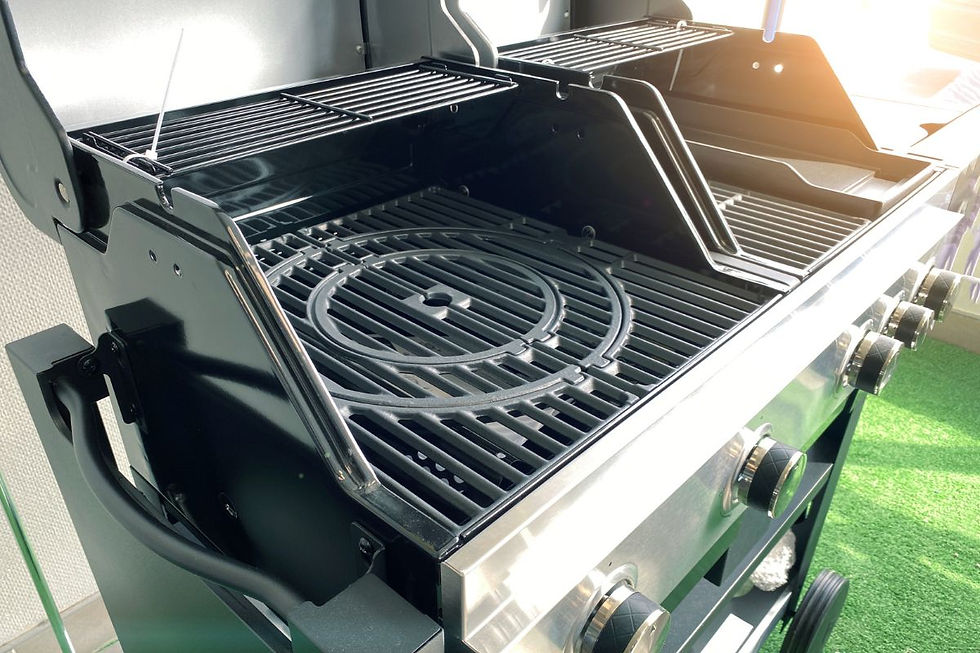
Even the “healthiest grill type” won’t help much if the materials are low-quality or degrade over time. Materials like stainless steel and enamel coatings are widely used in food-contact equipment and regulated under FDA food-contact safety guidelines.
Stainless Steel (304 Preferred)
High-grade stainless steel is:
Non-toxic
Rust-resistant
Long-lasting
Easy to clean
Ultra-thin stainless grates may warp — thicker bars last longer.
Enameled Cast Iron
Great for high heat and searing.
Pros: Non-toxic coating, durable, even heat
Cons: Heavy, enamel can chip over many years
Ceramic Grills (Kamado Style)
Excellent insulation and minimal smoke once heated.
Very low-maintenance and non-toxic.
Non-Stick or PTFE Coatings (Avoid If Possible)
These coatings:
Can degrade at high grill temperatures
Are unnecessary if you use stainless or cast iron
Rust-Proof Materials
Rust can flake into food and shorten the grill’s lifespan.
Look for:
Stainless steel burners
Rust-resistant frames
Powder-coated exteriors
Is Grilling With Propane Healthy?
Short answer: Yes — when used correctly.
Propane:
Burns cleaner than charcoal
Produces fewer PAHs and less smoke
Helps maintain stable heat
It’s one of the most balanced choices for health-conscious grilling.
Healthiest Foods to Grill (Simple Wins)

Based on nutrition science, the healthiest foods to grill are:
Vegetables (asparagus, zucchini, peppers, mushrooms)
Tofu, tempeh, or seitan
Fish (especially salmon)
Lean poultry
Dense marinade + indirect heat = cleanest cook with the best flavor.
If you’re curious about adding more plant-forward meals to your routine — or simply want inspiration for lighter, everyday cooking — explore our articles on living a more plant-based lifestyle.
Practical Tips to Grill Healthier (Without Changing Your Grill)

You don’t need a fancy grill to make healthier meals. A few easy habits go a long way:
Control Flare-Ups
Move food to a cooler zone until flames calm down.
Preheat the Grill Properly
Reduces sticking and over-charring.
Clean Your Grates After Each Use
Built-up residue burns at higher heat and creates smoke.
Rub an Onion on the Grill (Does It Work?)
Rubbing an onion on hot grates can:
Add natural oils
Reduce sticking
Add a subtle flavor
It won’t replace proper cleaning — but it’s a useful trick.
Affiliate & Legal Disclaimer
This post contains Amazon affiliate links. As an Amazon Associate, Zenda Guide earns from qualifying purchases at no extra cost to you. Zenda Lab scores are based on data analysis, not physical product testing.
Final Verdict: Which Grill Type Is Healthiest?
If we had to rank them:
Best Overall (Health + Convenience): Gas Grills
Clean burning, low smoke, and excellent temperature control.
Great picks for gas grills on Amazon:
Weber Spirit II E-310 — Reliable, durable, and excellent flame control
Char-Broil Performance Stainless Steel — Affordable and rust-resistant
→ Want a full breakdown? Explore our guide to the Best Non-Toxic Gas Grills.
Healthiest Indoor/Smoke-Free Option: Electric Grills
Perfect for apartments or a low-smoke cooking setup.
Editor-approved options on Amazon:
Ninja Foodi Electric Grill — Indoor-friendly with great temp control
Weber Lumin Compact Electric Grill — Clean design, small footprint
Best Flavor-Health Balance: Pellet Grills
Cleaner than charcoal while delivering rich smoky flavor.
Top pellet grills on Amazon:
Z Grills 450B Pellet Grill — Good entry option
Traeger Pro Series 22 — Excellent consistency, fewer flare-ups
Most Traditional but Requires Technique: Charcoal Grills
With good methods, charcoal can be healthier — but it’s naturally smokier.
Better-for-you charcoal picks on Amazon:
Weber Original Kettle Premium — Works beautifully with indirect heat
Kamado Joe Jr Ceramic Grill — Exceptional heat retention, less smoke
Ready to Choose a Low-Tox Grill?
If you're ready for a grill that fits your health, home, and lifestyle, explore our curated guide:
We review safer materials, rust-resistant designs, and long-lasting options for conscious outdoor cooking.
Keep Exploring
Join our community for thoughtful guides, honest recommendations, and seasonal tips — no clutter, just clarity.
Stay in the loop with clean living, mindful cooking, and our best product picks.
Curious about the materials inside your home?
Start with our essential guide to safer metals, coatings, plastics, and kitchen surfaces.
A simple way to make healthier choices, one step at a time.
Know the essentials, including propane vs butane stoves, indoor vs outdoor safety considerations, and our top portable gas stove picks.
Read more:
About our editorial process
Zenda Guide reviews are produced by our Editorial Board using a documented methodology focused on durability, materials, and long-term value. Learn more about our Editorial Standards and Zenda Lab Protocol


Comments