Best Glass Coffee Makers in 2026: Glass-Forward Picks by Brew Style

Updated: Aug 18
Reviewed by Our Editors at Zenda Guide
Our content follows our Editorial Standards and is evaluated using the Zenda Lab Protocol.
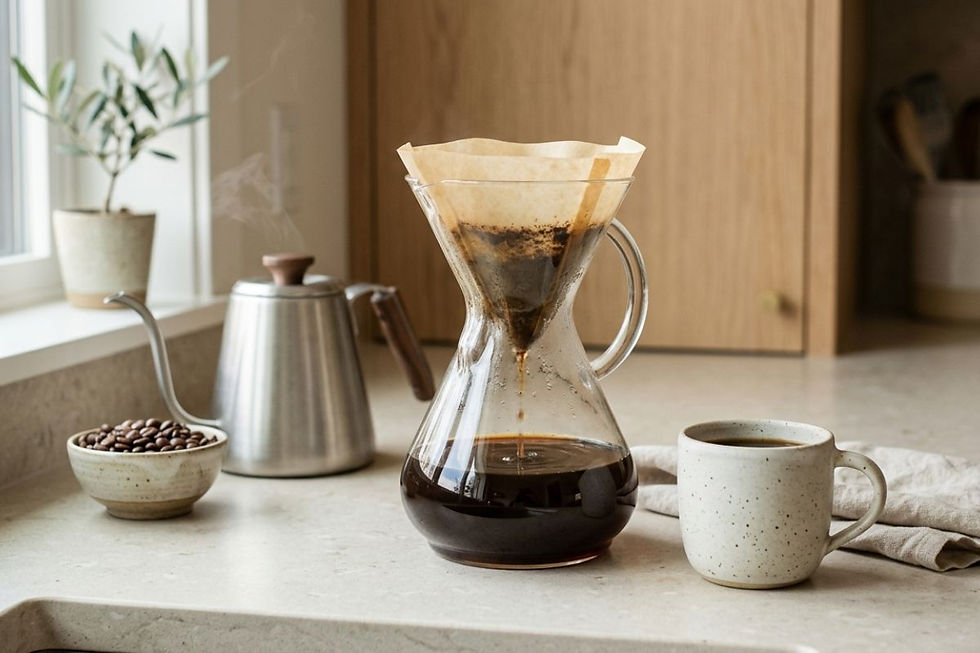
Some are simple pour-over brewers made mostly from borosilicate glass. Others pair glass with stainless steel filters, paper filters, silicone seals, ceramic drippers, wood collars, or plastic components. And some “glass coffee makers” are really electric machines with only a glass carafe.
For this guide, we focused on glass-forward coffee makers organized by brew style: pour-over, paperless brewing, cold brew, siphon, beginner kits, and stovetop percolators.
Each pick was evaluated through the Zenda Lab Protocol for brew-path materials, plastic-contact tradeoffs, durability, cleaning, everyday usability, and long-term value.
If you are looking for an electric coffee maker with a glass carafe or broader lower-plastic coffee setup, start with our guide to the best plastic-free coffee makers instead. This article focuses on manual and glass-forward brewing styles where glass plays a more meaningful role in the coffee routine.
Affiliate Disclosure
This post contains Amazon affiliate links. As an Amazon Associate, Zenda Guide earns from qualifying purchases at no extra cost to you. Zenda Lab scores are based on data analysis, not physical product testing.
Comparison Table: Best Glass Coffee Makers in 2026
Click any product name below to jump to the full review and see why it made our list.
Chemex Classic Pour-Over Glass Coffeemaker
|
Hario “Simply Hario” Glass Coffee Maker
|
Bodum Pour Over Coffee Maker with Permanent Filter
|
OVALWARE Airtight Cold Brew Maker
|
Yama Glass 5-Cup Stovetop Coffee Siphon
|
Hario V60 Coffee Pour Over Kit
|
Café Brew Collection Glass Stovetop Percolator
|
Quick Answer: Best Glass Coffee Makers by Brew Style
If you want the strongest all-around glass-forward coffee maker, the Chemex Classic Pour-Over Glass Coffeemaker is our top pick. It uses a borosilicate glass body and paper-filter brewing, making it one of the clearest options for readers who want a simple manual brewer without the plastic reservoir or internal tubing found in many electric coffee machines.
For solo brewing, the Hario “Simply Hario” Glass Coffee Maker is a compact glass-and-stainless option with a reusable metal filter. For cold brew, the OVALWARE Airtight Cold Brew Maker offers the strongest everyday glass pitcher format.
How We Evaluated Glass Coffee Makers
We evaluated each product using the Zenda Lab Protocol, our internal scoring system for comparing products by materials, durability, usability, buyer experience, and long-term value.
For this guide, we weighted material transparency heavily because the phrase “glass coffee maker” can be misleading. A product may have a glass body or glass carafe while still using plastic, silicone, ceramic, paper, stainless steel, wood, leather, or rubber in other parts of the brewing system.
The strongest products were not simply the ones with the most glass. They were the products where glass played a meaningful role in the brew path, the non-glass components were clearly disclosed, and the design made sense for everyday use.
What We Looked For
Brew-path material transparency:
We checked what actually touches the water, coffee, steam, grounds, filters, lids, seals, and serving path.
Glass-forward construction:
Products scored higher when glass was central to brewing or serving, not just used as a decorative carafe.
Plastic-contact tradeoffs:
We looked for plastic reservoirs, tubing, filter baskets, stems, lids, seals, or unknown internal parts. Manual brewers generally scored better here than electric glass-carafe machines.
Brew-style fit:
Each product needed to serve a clear use case: pour-over, paperless brewing, cold brew, siphon, beginner pour-over, or stovetop percolator.
Brew quality and control:
We considered the filter type, extraction control, sediment risk, flavor profile, heat handling, and whether the brew method fits the product’s promise.
Durability and breakage risk:
Glass can be beautiful and material-transparent, but it can also crack, chip, or break. We looked for borosilicate glass, replacement parts, buyer durability patterns, and care requirements.
Cleaning and daily practicality:
A good glass coffee maker should be realistic to use often. We checked filter cleanup, dishwasher guidance, narrow openings, multi-part designs, and whether the brewer fits normal routines.
Verified buyer satisfaction:
We considered rating patterns, review volume, recurring praise, recurring complaints, and whether buyers continued using the product beyond the first impression.
Value and positioning:
A premium glass coffee maker needed to justify its price through better materials, durability, design, usability, or a meaningful brew-style advantage.
How to Read the Scores
Each product receives a Zenda Lab PVS, or Proprietary Value Score, from 1 to 10.
A higher score means the product better matched the promise of this guide: a glass-forward coffee maker with clear material notes, practical usability, and honest tradeoffs.
A lower score does not always mean a product is bad. Sometimes it means the product is more specialized, more fragile, harder to clean, or less aligned with readers looking for minimal plastic contact.
For example, the Café Brew glass percolator fills an important stovetop percolator category, but it scored lower because its polypropylene stem, basket, and lids are central to the brewing system. That makes it useful for percolator fans, but not a top pick for readers whose main priority is reducing plastic contact.
Learn more: See how the Zenda Lab Protocol evaluates products.
Best Glass Coffee Makers in 2026
Below are the seven glass-forward coffee makers that best matched this guide’s promise: meaningful glass use, clear brew-style fit, honest material notes, and practical value for different routines.
Chemex Classic Pour-Over Glass Coffeemaker
Best Overall Glass Coffee Maker
Zenda Lab PVS: 9.0 / 10
The Chemex Classic is our top pick because it most clearly represents what many readers want when they search for a glass coffee maker: a simple manual brewer where glass plays a central role.
Its hourglass body is made from borosilicate glass, and the brewing method uses thick Chemex bonded paper filters instead of a plastic reservoir, tubing, or electric brew basket. That makes it one of the clearest options for readers who want a glass-forward coffee routine without moving into complicated coffee gear.
It is not literally all-glass — the Classic version includes a wood collar and leather tie — but the brew-and-serve body is glass, and the coffee flows through paper rather than a reusable plastic basket.
Quick Specs Snapshot
Brew style: Manual pour-over
Main materials: Borosilicate glass, paper filters, wood collar, leather tie
Capacity: 6-cup / 30 oz
Filter type: Chemex bonded paper filters
Best for: Clean, glass-forward pour-over brewing
Main tradeoff: Glass fragility and proprietary filters
Why It Stands Out
The Chemex stands out because it keeps the brewing system simple. There is no electric heating element, no plastic water reservoir, and no internal tubing. You add a paper filter, ground coffee, and hot water, then brew directly into the glass body.
The result is a clean, smooth cup that tends to have less sediment than metal-filtered coffee. If you like bright, clear coffee and enjoy the slower rhythm of pour-over brewing, the Chemex is a strong everyday choice.
Material Notes
This is one of the strongest material-fit products in the guide. The main glass body is borosilicate, and the paper-filter brew path helps reduce material ambiguity.
Still, Zenda would not call this “plastic-free” or “all-glass” without context. The wood collar and leather tie are part of the Classic design, and the filters are proprietary. If you prefer a version without the wood collar and leather tie, the Chemex Glass Handle Series may be worth considering as an alternative.
What to Expect
The Chemex rewards a little care. You will need a kettle, ideally a gooseneck kettle, and a medium-coarse grind. The thick filters are part of the flavor profile, but they are also a recurring cost.
Because the brewer is glass, it should be handled gently when washing, storing, or moving it around the kitchen.
Best For
Choose the Chemex Classic if you want:
a beautiful glass-forward manual brewer
clean, paper-filtered coffee
a simple pour-over setup without electric parts
a brewer that works well for one or two people
a strong anchor pick for a slower coffee routine
Main Tradeoff
The Chemex is not the most durable choice if your household is rough on glass. It also depends on proprietary paper filters, which adds ongoing cost and requires keeping filters stocked.
Bottom Line
The Chemex Classic is the strongest overall pick for most readers because it combines material clarity, timeless design, and excellent pour-over coffee. It is the best starting point if you want a glass-forward coffee maker that feels simple, intentional, and easy to understand.
Hario “Simply Hario” Glass Coffee Maker
Best Glass Coffee Maker for One
Zenda Lab PVS: 8.8 / 10
The Hario “Simply Hario” Glass Coffee Maker is a compact glass-and-stainless brewer designed for one-person or small-batch manual coffee. It pairs a heatproof glass server with a stainless steel double-mesh filter and a silicone band for handling.
This is one of the strongest fits in the guide for readers who want a small, paperless glass coffee maker without an electric reservoir, internal tubing, or disposable paper filters.
It is not all-glass, but the materials are clearly defined: glass for the server, stainless steel for the filter, and silicone for the grip band.
Quick Specs Snapshot
Brew style: Manual paperless pour-over
Main materials: Heatproof glass, stainless steel filter, silicone rubber band
Capacity: 400 ml
Filter type: Reusable stainless steel double-mesh filter
Best for: Solo brewing and compact kitchens
Main tradeoff: Small capacity and metal-filter sediment risk
Why It Stands Out
This Hario brewer stands out because it is compact, simple, and paperless. The stainless steel filter sits directly over the glass server, letting you brew without buying paper filters.
That makes it a good fit for people who want a reusable-filter setup but still prefer glass over plastic-heavy electric machines.
Material Notes
The material story is strong. The main coffee-contact system is glass and stainless steel, with a silicone band used for handling. There is no electric water path, no plastic reservoir, and no internal tubing.
The silicone band is a disclosed non-glass component, so this should be described as a glass-and-stainless coffee maker, not an all-glass one.
What to Expect
The reusable metal filter creates a different cup than paper-filtered brewers. You may get more oils and fine sediment, which can make the coffee feel fuller-bodied but less crisp than Chemex-style coffee.
The 400 ml capacity is best for one person or two smaller servings. It is not the best fit for households that brew several cups at a time.
Best For
Choose the Hario Simply if you want:
a compact glass coffee maker for one
a paperless brewing setup
a stainless steel reusable filter
a small manual brewer for daily use
a simple alternative to electric coffee makers
Main Tradeoff
The main tradeoff is capacity. This is not a batch brewer. It also requires cleaning the reusable metal filter after each use, and the coffee may contain more fine sediment than paper-filtered coffee.
Bottom Line
The Hario Simply is the best pick for solo users who want a small, glass-forward, paperless coffee maker. It is especially strong if you want a reusable stainless steel filter and a compact setup that avoids electric-machine complexity.
Bodum Pour Over Coffee Maker with Permanent Filter
Best Budget Glass Coffee Maker
Zenda Lab PVS: 8.6 / 10
The Bodum Pour Over Coffee Maker is the best budget pick in this guide. It combines a borosilicate glass carafe with a reusable stainless steel filter, giving readers a simple glass-forward brewer at a more accessible price point than many premium pour-over systems.
It is smaller than the Chemex and less refined in flavor clarity, but it offers strong value for readers who want an affordable glass coffee maker with no electric reservoir or internal tubing.
Quick Specs Snapshot
Brew style: Manual pour-over
Main materials: Borosilicate glass, stainless steel filter, cork sleeve, suede cord
Capacity: 17 oz / 500 ml
Filter type: Reusable stainless steel permanent filter
Best for: Budget-friendly manual brewing
Main tradeoff: Smaller capacity and fuller-bodied metal-filter coffee
Why It Stands Out
The Bodum stands out because it gives you a glass carafe and reusable stainless steel filter in one affordable setup. You do not need proprietary filters, and the brewer is simple enough for everyday use.
This makes it a practical entry point for readers who want a glass coffee maker but do not want to spend much or manage a more elaborate pour-over station.
Material Notes
The core material story is strong for the price: borosilicate glass for the carafe and stainless steel for the reusable filter. The cork sleeve and suede cord are handling materials, not the central brew path.
It is not all-glass, and it should not be described as plastic-free unless every component is verified. But compared with electric coffee makers with plastic reservoirs or tubing, this manual setup is much clearer.
What to Expect
The reusable stainless steel filter allows more oils through than paper filters, so the cup may taste fuller and have more body. Some readers will like that; others may prefer the cleaner profile of a Chemex or Hario paper-filter setup.
The 17 oz version is best for one large mug or a couple of smaller cups.
Best For
Choose the Bodum if you want:
an affordable glass coffee maker
a reusable stainless steel filter
a simple manual pour-over setup
a small brewer for one or two servings
fewer recurring paper-filter costs
Main Tradeoff
This is not the best option for people who want paper-filter clarity or larger-batch brewing. The reusable filter also requires regular cleaning and may allow more fine sediment into the cup.
Bottom Line
The Bodum Pour Over is the best budget glass coffee maker for readers who want an affordable, reusable-filter setup. It is simple, accessible, and practical, as long as you are comfortable with a smaller capacity and a fuller metal-filter brew.
OVALWARE Airtight Cold Brew Maker
Best Glass Cold Brew Coffee Maker
Zenda Lab PVS: 8.7 / 10
The OVALWARE Airtight Cold Brew Maker is our top cold brew pick because it offers a strong glass-and-stainless setup for iced coffee, fridge brewing, and loose-leaf tea.
It uses a borosilicate glass carafe, removable stainless steel filter, stainless steel lid cap, and silicone airtight seal.
Since cold brew does not require hot water, it also avoids the heat-related material concerns that come up with many electric coffee makers.
Quick Specs Snapshot
Brew style: Cold brew / iced coffee
Main materials: Borosilicate glass, stainless steel filter, stainless steel lid cap, silicone seal, rubber base
Capacity: 1.0L / 34 oz
Filter type: Removable stainless steel filter
Best for: Cold brew and fridge-friendly batch brewing
Main tradeoff: Requires planning ahead and may need a bottle brush for deeper cleaning
Why It Stands Out
OVALWARE stands out because it gives cold brew drinkers a more polished glass alternative to plastic pitchers. The carafe is fridge-friendly, the filter is reusable, and the airtight seal helps keep cold brew concentrate stored between servings.
It is also versatile enough for loose-leaf tea, which adds everyday value.
Material Notes
This is a strong low-plastic-contact cold brew option. The main structure is borosilicate glass and stainless steel, with a disclosed silicone seal and rubber base.
It is not all-glass, and Zenda would not describe it as plastic-free without full component verification. But for cold brew, it has a clear material story and avoids electric-machine reservoirs or tubing.
What to Expect
Cold brew requires time. You will need coarse grounds, cold water, and several hours of steeping. If your grind is too fine, some sediment may pass through the filter.
The carafe shape works well in the fridge, but the narrow opening may require a bottle brush for deeper cleaning.
Best For
Choose OVALWARE if you want:
glass cold brew at home
iced coffee ready in the fridge
a reusable stainless steel filter
a pitcher-style brewer with an airtight seal
a coffee maker that can also handle loose-leaf tea
Main Tradeoff
Cold brew is not instant. This product works best for people who plan ahead and keep concentrate ready in the fridge. It is also not the best fit if you mostly drink hot coffee in the morning.
Bottom Line
The OVALWARE Airtight Cold Brew Maker is the best glass cold brew option for most readers. It has a strong material profile, practical fridge design, and enough everyday usability to justify its spot in a glass coffee maker roundup.
Yama Glass 5-Cup Stovetop Coffee Siphon
Best Glass Siphon Coffee Maker
Zenda Lab PVS: 8.4 / 10
The Yama Glass 5-Cup Stovetop Coffee Siphon is the best pick for readers who want a glass coffee maker that feels more like a ritual than a routine.
A siphon, also called a vacuum coffee maker, uses vapor pressure and gravity to move water between two glass chambers. It is visually striking, hands-on, and more involved than pour-over or cold brew.
This is not the easiest glass coffee maker in the guide, but it is one of the most distinctive.
Quick Specs Snapshot
Brew style: Stovetop siphon / vacuum brewing
Main materials: Borosilicate glass, reusable cloth filter, filter assembly, heat-resistant handle
Capacity: 5-cup / 15 oz
Filter type: Reusable cloth filter
Best for: Coffee enthusiasts and visual brewing ritual
Main tradeoff: More complex, fragile, and maintenance-heavy than simpler brewers
Why It Stands Out
The Yama siphon stands out because glass is central to the brewing process. You can watch the water rise, mix with the coffee, and return to the lower chamber after brewing.
It also avoids the usual electric coffee maker components: no reservoir, no internal tubing, no plastic brew basket, and no pump.
Material Notes
The glass chambers are the core of the brewer, and the reusable cloth filter creates a different cup profile from paper or metal filters.
However, this is not an all-glass system. The handle, filter assembly, gasket/collar elements, and stand-related parts should be treated as disclosed or to-be-verified non-glass components. Zenda copy should avoid calling it plastic-free unless every component is confirmed.
What to Expect
Siphon brewing requires more attention than pour-over. You need heat control, careful assembly, cloth-filter care, and safe handling of hot glass.
It can produce a clean, aromatic cup, but it is not the most practical choice for rushed mornings.
Best For
Choose the Yama Glass Siphon if you want:
a visual glass coffee brewing ritual
a stovetop siphon / vacuum brewer
a coffee maker for slow weekends or guests
a more hands-on brewing method
a product that adds brew-style diversity to your coffee setup
Main Tradeoff
This is not a low-maintenance brewer. It is more fragile, more complex, and more involved than Chemex, Hario Simply, Bodum, or OVALWARE.
Bottom Line
The Yama Glass Siphon is the best glass siphon coffee maker for readers who enjoy coffee as a process. It is not the most convenient pick, but it offers the strongest glass-forward enthusiast experience in this guide.
Hario V60 Coffee Pour Over Kit
Best Glass Pour-Over Kit for Beginners
Zenda Lab PVS: 8.5 / 10
The Hario V60 Coffee Pour Over Kit is the best beginner kit in this guide because it bundles the core pieces needed to start manual pour-over brewing: a V60 dripper, glass server, paper filters, measuring spoon, and lid/stand.
The important caveat is that the dripper in this evaluated bundle is ceramic, not glass. That means this is not a fully glass coffee maker. It earns its place because the glass server is meaningful, the brewing setup is manual, and the kit is useful for beginners who want a complete pour-over system.
Quick Specs Snapshot
Brew style: Manual pour-over kit
Main materials: Ceramic dripper, heatproof glass server, paper filters, silicone/glass lid, measuring spoon
Capacity: 600 ml / up to 4 cups
Filter type: Hario V60 02 paper filters
Best for: Beginners who want a complete pour-over kit
Main tradeoff: The dripper is ceramic, not glass
Why It Stands Out
The Hario V60 kit stands out because it removes guesswork. Instead of buying a dripper, server, filters, and accessories separately, this kit gives beginners a cohesive setup.
The V60 format is popular because it gives users control over water flow, brew time, and extraction. With practice, it can make excellent coffee.
Material Notes
This product should be framed accurately. It is best described as a ceramic-and-glass pour-over kit, not a pure glass brewer.
The glass server matters, and the paper-filter brew path avoids the kind of hidden electric-machine water path that many glass-carafe drip machines have. But because the dripper is ceramic, this should not outrank the stronger glass-forward picks.
What to Expect
The V60 has a learning curve. Grind size, pouring style, water temperature, and filter placement all matter.
The ceramic dripper can hold heat well once preheated, but the setup requires more technique than a basic automatic drip machine.
Best For
Choose the Hario V60 kit if you want:
a beginner-friendly pour-over bundle
a glass server included
paper-filter coffee
more control over brewing
a complete starter setup instead of separate parts
Main Tradeoff
The main tradeoff is intent fit. It is a good pour-over kit with a glass server, but not a pure glass coffee maker. Readers looking specifically for glass drippers may prefer Chemex, Bodum, or Hario Simply.
Bottom Line
The Hario V60 Kit is the best choice for beginners who want an organized pour-over setup with a glass server. It is not the most glass-forward pick, but it is one of the most practical ways to start manual brewing.
Café Brew Collection Glass Stovetop Percolator
Best Glass Stovetop Percolator
Zenda Lab PVS: 7.6 / 10
The Café Brew Collection Glass Stovetop Percolator fills an important niche in this guide: traditional stovetop percolator brewing.
It has a borosilicate glass body and retro coffee-pot feel, making it relevant for readers searching for a glass stovetop coffee maker or glass percolator. But it also comes with the clearest material caveat in the final list.
The stem, basket, basket lid, and lid are polypropylene components. That means this product should not be positioned as a top pick for readers whose main goal is minimizing plastic contact.
Quick Specs Snapshot
Brew style: Stovetop percolator
Main materials: Borosilicate glass body, phenolic handle, polypropylene stem, basket, basket lid, and lid, metal heat diffuser
Capacity: 8 cups / 40 oz
Filter type: Built-in percolator basket
Best for: Traditional glass stovetop percolator brewing
Main tradeoff: Polypropylene brew components are central to the percolator system
Why It Stands Out
This product stands out because it covers a brew style that pour-over, cold brew, and siphon brewers do not. If you specifically want a glass percolator for stovetop coffee, this is the most relevant type of product in the final list.
It also offers a larger 8-cup capacity, which makes it more batch-friendly than smaller pour-over picks.
Material Notes
The glass body is the product’s main strength. However, the polypropylene stem, basket, basket lid, and lid are central to the brewing mechanism.
That makes this a glass-body stovetop percolator with material tradeoffs, not an all-glass or plastic-free coffee maker.
This is why its PVS is lower than the other final picks.
What to Expect
Percolator coffee is different from pour-over coffee. It is usually stronger, more traditional, and less precise. The brew depends on heat control and timing, and the glass body lets you watch the percolation process.
The included heat diffuser helps with stovetop compatibility, but glass stovetop brewing still requires care.
Best For
Choose the Café Brew percolator if you want:
a traditional glass stovetop percolator
a retro-style glass coffee pot
a non-electric batch brewer
stronger percolated coffee
a specific alternative to pour-over or cold brew
Main Tradeoff
This is the least material-transparent pick in the final list because the plastic components are not just exterior parts; they are part of the brewing system. If minimizing plastic contact is your top priority, choose Chemex, Hario Simply, Bodum, or OVALWARE instead.
Bottom Line
The Café Brew Glass Percolator is useful for readers who specifically want a stovetop glass percolator. It fills an important brew-style gap, but it should be treated as a niche compromise — not as the cleanest material-contact option in this guide.
Are Glass Coffee Makers Actually Plastic-Free?

Not always.
This is one of the most important things to understand before buying a glass coffee maker. A product can look mostly glass and still include stainless steel, silicone, ceramic, wood, leather, rubber, paper, or plastic components.
In some cases, that is not a problem. A glass pour-over brewer with a paper filter, for example, may have a very simple brew path. A glass cold brew pitcher may use a stainless steel filter and silicone seal. But in other cases, “glass coffee maker” may simply mean the product has a glass carafe while other brewing components are plastic.
The better question is not only:
Is this coffee maker glass?
It is:
What actually touches the water and coffee?
For this guide, we looked closely at the brew path: the parts that contact hot water, brewed coffee, steam, grounds, filters, lids, seals, stems, baskets, or carafes.
Glass-forward vs all-glass
A glass-forward coffee maker is one where glass plays a meaningful role in brewing or serving. That includes products like Chemex, Hario Simply, Bodum, OVALWARE, and Yama.
An all-glass coffee maker would mean nearly every meaningful component is glass. That is much harder to find, especially once you include filters, handles, lids, seals, collars, or support pieces.
Most realistic glass coffee makers are better described as:
glass and paper
glass and stainless steel
glass, stainless steel, and silicone
glass with ceramic components
glass with some plastic components
That is why we avoid calling these products “100% plastic-free” unless every relevant component is clearly verified.
Which picks have the clearest material story?
The strongest material-fit picks in this guide are:
Chemex Classic: borosilicate glass body with paper filters, plus wood collar and leather tie
Hario Simply: heatproof glass server with stainless steel filter and silicone band
Bodum Pour Over: borosilicate glass carafe with reusable stainless steel filter and cork sleeve
OVALWARE Cold Brew: borosilicate glass carafe with stainless steel filter and silicone seal
The pick with the most important material caveat is the Café Brew Glass Stovetop Percolator. It has a borosilicate glass body, but the stem, basket, basket lid, and lid are polypropylene. That does not make it useless, but it does mean it is not the best choice if minimizing plastic contact is your main priority.
What about electric coffee makers with glass carafes?
Electric coffee makers with glass carafes are a different category.
Many still use plastic reservoirs, tubing, lids, filter baskets, or internal parts. The glass carafe may only be the serving vessel, not the full brew path.
That does not automatically make them bad, but it does mean they belong in a broader coffee maker comparison — not this glass-forward manual brewing guide.
For electric and broader lower-plastic options, see our guide to the best plastic-free coffee makers.
Glass Coffee Maker Types Explained

Glass coffee makers are not all designed for the same kind of coffee. The right choice depends on how you like to brew, how much effort you want in the morning, and how much you care about filters, cleaning, capacity, and material simplicity.
Glass Pour-Over Coffee Makers
Glass pour-over coffee makers are best for readers who want control, clarity, and a slower brewing routine.
With pour-over, you place a filter over the brewer, add ground coffee, and pour hot water by hand. This gives you control over flow rate, bloom time, water temperature, and extraction.
Good examples from this guide include:
Choose pour-over if you enjoy the process of making coffee and want a simple manual setup without electric parts.
Glass-and-Stainless Paperless Brewers
Some glass coffee makers use a stainless steel reusable filter instead of paper filters. These are good for readers who want fewer disposable filters and a fuller-bodied cup.
Good examples include:
Reusable metal filters usually allow more coffee oils and fine particles through than paper filters. That can create a richer cup, but it may also mean more sediment.
Choose this style if you want a paperless routine and do not mind a slightly heavier cup profile.
Glass Cold Brew Coffee Makers
Glass cold brew makers are designed for slow extraction in the fridge or on the countertop. Instead of using hot water, you steep coarse coffee grounds in cold water for several hours.
The OVALWARE Airtight Cold Brew Maker is the strongest cold brew pick in this guide.
Cold brew makers are best if you:
prefer iced coffee
want coffee concentrate ready in the fridge
like batch brewing
want a lower-heat brewing method
also want a pitcher that can work for loose-leaf tea
The tradeoff is time. Cold brew requires planning ahead.
Glass Siphon Coffee Makers
A glass siphon coffee maker, also called a vacuum coffee maker, uses vapor pressure and gravity to move water between two chambers.
The Yama Glass 5-Cup Stovetop Coffee Siphon is our siphon pick.
This brew style is dramatic, visual, and hands-on. It can produce a clean, aromatic cup, but it requires more setup, heat control, filter care, and cleaning than pour-over or cold brew.
Choose a siphon if you enjoy coffee as a ritual. Skip it if you want the fastest morning routine.
Glass Stovetop Percolators
Glass stovetop percolators are traditional coffee pots that cycle hot water through ground coffee using stovetop heat.
The Café Brew Collection Glass Stovetop Percolator fills this category in our guide.
Percolators can make strong, old-school coffee, and the glass body lets you watch the brewing process. But they are less precise than pour-over and usually require more timing attention.
The Café Brew model also has important material caveats because its stem, basket, basket lid, and lid are polypropylene.
Choose this style only if you specifically want a stovetop percolator.
Electric Coffee Makers with Glass Carafes
Electric coffee makers with glass carafes are common, but they are not the focus of this guide.
A glass carafe does not necessarily mean the water path is glass. Many electric drip machines still use plastic reservoirs, plastic tubing, or plastic filter baskets.
If you want an electric machine, start with our broader guide to the best plastic-free coffee makers, where electric and manual options can be compared more fairly.
Glass vs Stainless Steel vs Plastic Coffee Makers
Glass is not automatically better for every person. It depends on your priorities.
Some readers want visibility and material clarity. Others need durability, heat retention, or electric convenience.
Here is the simplest way to compare the main materials.
Glass
Best For: Visibility, manual brewing, clean design, material transparency
Watchouts: Can crack, chip, or break; often includes non-glass components
Stainless steel
Best For: Durability, heat retention, reusable filters, rugged use
Watchouts: Less visibility; flavor and cleaning preferences vary by design
Plastic
Best For: Lightweight design, affordability, electric features, convenience
Watchouts: More material-contact questions, especially around heat and internal water paths
When glass is the better choice
Glass is usually a better fit if you want:
a manual brewing routine
a visible brew process
fewer hidden internal parts
a coffee maker that is easy to inspect
a calmer, more minimal countertop setup
Glass is especially strong in pour-over, cold brew, and siphon brewing because the material is central to how the product works.
When stainless steel may be better
Stainless steel may be better if durability is your top priority. It is less fragile than glass and often better for travel, camping, thermal carafes, or heavy daily use.
A glass coffee maker may look beautiful, but it is not always the best choice for a busy shared kitchen or a household where breakage is likely.
When plastic may still be practical
Plastic is common because it is lightweight, affordable, and easy to mold into electric coffee maker parts.
The issue is not that every plastic component automatically makes a product unusable. The issue is whether plastic is used in places that contact hot water, brewed coffee, or steam — and whether the brand clearly discloses those details.
For Zenda, transparency matters more than vague reassurance. A product that simply says “BPA-free” does not answer every material question.
How to Choose the Best Glass Coffee Maker for Your Routine

The best glass coffee maker depends less on the word “glass” and more on how you actually make coffee.
Use this section to match the brew style to your daily routine.
If you are choosing between more than the glass-forward brewing options on this page, start with our Coffee Brewing Methods Guide to compare the main home methods before narrowing the equipment.
If your choice is really between a paper-filtered pour-over setup and an immersion brewer, our pour-over vs. French press comparison can help you decide by cup profile, active effort, cleanup, batch size, and filter type.
If you are considering manual glass brewing because neither espresso nor automatic drip feels like the right fit, start with our Espresso vs. Drip Coffee comparison to clarify the tradeoff between concentrated café-style drinks, batch convenience, and a simpler manual path.
If you want The strongest overall glass-forward pick
Choose: Chemex Classic
If you want a compact coffee maker for one
Choose: Hario Simply
If you want the best budget glass coffee maker
Choose: Bodum Pour Over
If you want cold brew in the fridge
Choose: OVALWARE
If you want a visual coffee ritual
Choose: Yama Glass Siphon
If you want a b beginner pour-over kit
Choose: Hario V60 Kit
If you want a traditional stovetop percolator
Choose: Café Brew Percolator
The safest general recommendation is the Chemex Classic. It has the strongest overall balance of glass-forward design, clean paper-filter brewing, buyer trust, and everyday usefulness.
The best choice for you depends on whether you value clarity, convenience, ritual, budget, batch size, or reusable filters most.
FAQ: Glass Coffee Makers
Are glass coffee makers plastic-free?
Not always. Some glass coffee makers have very little plastic contact, especially simple manual brewers like Chemex-style pour-over coffee makers or glass-and-stainless brewers. But many products still include non-glass parts such as stainless steel filters, paper filters, silicone seals, wood collars, leather ties, ceramic drippers, rubber bases, or plastic lids and baskets.
A glass coffee maker is better understood as glass-forward unless every relevant component is clearly verified as glass or non-plastic.
What is the best glass coffee maker overall?
The Chemex Classic Pour-Over Glass Coffeemaker is our best overall pick. It uses a borosilicate glass body and paper-filter brewing, making it one of the clearest glass-forward options for readers who want a simple manual coffee maker without an electric reservoir or internal tubing.
Its main tradeoffs are glass fragility and the need to buy Chemex bonded paper filters.
Which glass coffee maker has the least plastic contact?
Among the picks in this guide, the strongest low-plastic-contact options are the Chemex Classic, Hario “Simply Hario” Glass Coffee Maker, Bodum Pour Over, and OVALWARE Airtight Cold Brew Maker.
Each still includes non-glass components, so they should not be described as universally plastic-free. But they avoid the plastic reservoirs, internal tubing, and plastic brew baskets common in many electric coffee makers.
Is glass or stainless steel better for a coffee maker?
Glass is better if you want visibility, material transparency, and a more minimal manual brewing routine. It lets you see the coffee as it brews and is easy to inspect for residue or buildup.
Stainless steel is usually better if you want durability, heat retention, or a product that can handle rougher use. It is less fragile than glass, but you cannot see through it, and the design quality varies by product.
For many readers, the best balance is a glass-and-stainless setup, such as a glass carafe with a stainless steel reusable filter.
Are glass coffee makers better than plastic coffee makers?
They can be, depending on the design.
Glass coffee makers are often easier to inspect and may reduce uncertainty around hidden plastic water paths, especially in manual brewers. However, glass can break, and not every glass coffee maker is free from plastic components.
Plastic coffee makers can be affordable and convenient, especially in electric models, but they often raise more questions about what contacts hot water, steam, or brewed coffee.
The better question is not simply glass vs plastic. It is: what touches the coffee, and is the brand clear about those materials?
What are the different types of glass coffee makers?
Common types of glass coffee makers include:
glass pour-over coffee makers
glass-and-stainless paperless brewers
glass cold brew coffee makers
glass siphon or vacuum coffee makers
glass stovetop percolators
pour-over kits with glass servers
electric coffee makers with glass carafes
This guide focuses on manual and glass-forward brew styles. Electric glass-carafe machines are better compared in a broader coffee maker guide because the carafe may be glass while the internal water path is not.
Can you pour boiling water into a glass coffee maker?
Only if the product is designed for hot brewing and used according to the manufacturer’s guidance.
Many glass coffee makers use borosilicate glass, which is more resistant to thermal shock than standard glass. But that does not make it unbreakable. Sudden temperature changes, impact, uneven heating, or improper stovetop use can still cause cracking or breakage.
Always follow the product’s care instructions, especially for stovetop glass brewers, siphons, and percolators.
Are glass coffee makers dishwasher-safe?
Some are, but not all.
A simple glass carafe may be dishwasher-safe, while wood collars, leather ties, cork sleeves, silicone bands, lids, filters, gaskets, or stands may need hand-washing. For example, a Chemex Classic should have the wood collar and leather tie removed before dishwasher cleaning, while a wood-stand pour-over set may require gentler care.
Check the care instructions for the exact product before putting it in the dishwasher.
What is the easiest glass coffee maker to clean?
The easiest options are usually simple pour-over brewers with fewer parts.
The Chemex Classic is relatively easy to rinse because the grounds stay in the paper filter. The Bodum Pour Over is also simple, but the reusable stainless steel filter needs regular cleaning. The OVALWARE Cold Brew Maker is practical but may need a bottle brush because of its pitcher shape.
Siphon brewers and stovetop percolators are usually harder to clean because they have more parts.
Should I buy a glass coffee maker with a reusable filter or paper filters?
Choose paper filters if you want a cleaner cup with less sediment. Paper-filter brewers like Chemex and Hario V60-style systems usually produce a clearer, lighter cup.
Choose a reusable stainless steel filter if you want fewer disposable filters and a fuller-bodied cup. Metal filters allow more oils and fine particles through, which can create more body but also more sediment.
Neither option is universally better. It depends on your taste, cleaning preference, and whether you want to keep buying paper filters.
Are glass cold brew makers better than plastic cold brew makers?
Glass cold brew makers can be a good choice if you want a more transparent, fridge-friendly setup and prefer avoiding plastic pitchers. Since cold brew uses cold water rather than hot water, the material-contact concerns are different from hot electric brewing.
A glass cold brew maker like OVALWARE can be a strong option because it uses a glass carafe and stainless steel filter. Still, check the lid, seal, base, and filter materials, because most cold brew makers are not literally all-glass.
Is a glass percolator a good choice?
A glass percolator is a good choice only if you specifically like traditional stovetop percolator coffee.
Percolators can make strong, classic coffee, and the glass body lets you watch the brewing process. But they are less precise than pour-over, and some glass percolators use plastic or polypropylene components in the stem, basket, lid, or other parts.
Final Recommendation: Which Glass Coffee Maker Should You Choose?
If you want the strongest all-around glass-forward coffee maker, choose the Chemex Classic Pour-Over Glass Coffeemaker.
It has the clearest balance of material transparency, everyday usability, recognizable design, and clean paper-filtered coffee. The borosilicate glass body is central to the brewing process, and the manual pour-over setup avoids the plastic reservoir, internal tubing, and electric brew basket found in many automatic coffee makers.
That said, the best glass coffee maker depends on how you actually brew.
Choose the Hario “Simply Hario” Glass Coffee Maker if you brew mostly for one and want a compact paperless setup with a stainless steel filter.
Choose the Bodum Pour Over Coffee Maker if you want the best budget-friendly glass coffee maker with a reusable filter.
Choose the OVALWARE Airtight Cold Brew Maker if you prefer iced coffee or want cold brew concentrate ready in the fridge.
Choose the Yama Glass Stovetop Coffee Siphon if coffee is more of a ritual for you and you enjoy a visual, hands-on brewing process.
Choose the Hario V60 Coffee Pour Over Kit if you are new to pour-over and want a beginner-friendly setup with a glass server.
Choose the Café Brew Glass Stovetop Percolator only if you specifically want a traditional glass percolator. It fills an important brew-style category, but it is not the best option if minimizing plastic contact is your top priority.
Our Final Take
For most readers, the best starting point is:
Best overall: Chemex Classic
Best for one: Hario Simply
Best budget: Bodum Pour Over
Best cold brew: OVALWARE
Best coffee ritual: Yama Glass Siphon
Best beginner kit: Hario V60 Kit
Best stovetop percolator: Café Brew Collection
A glass coffee maker is not automatically all-glass, plastic-free, or better for every routine. But when you choose carefully, glass can make your coffee setup easier to inspect, simpler to understand, and more aligned with a calmer, more intentional kitchen routine.
Keep Building Your Coffee Setup
A glass coffee maker is only one part of a better brewing routine.
For a more complete setup, you may also want to explore:
our guide to the best plastic-free coffee makers if you want to compare glass, stainless steel, and electric lower-plastic options
our guide to pour-over vs. French press to compare cup clarity, body, brewing effort, cleanup, control, equipment
our guide to espresso vs. drip coffee to compare taste, caffeine, serving size, cost, convenience, equipment, and maintenance
our guide to the best home espresso machines if you are deciding between manual glass brewing and espresso-style coffee at home
our guide to the best gooseneck kettles for pour-over if you choose Chemex, Bodum, or Hario
our guide to the best coffee grinders if you want better grind consistency for pour-over, cold brew, or siphon brewing
our comparison of a burr grinder vs a blade grinder, if you are deciding whether a burr grinder would meaningfully improve your setup.
our guide to the best French presses if you are comparing glass pour-over with full-bodied immersion brewing
our guide to the best home coffee roasters if you want to take your coffee routine one step further
The best coffee setup is not the most complicated one. It is the one you will actually use, clean, and enjoy.
Want calmer, clearer product guides like this? Subscribe to the Zenda Guide newsletter for practical material notes, durability-focused picks, and low-tox home tips — without the overwhelm.
About our editorial process
Zenda Guide reviews are produced by our Editorial Board using a documented methodology focused on durability, materials, and long-term value. Learn more about our Editorial Standards and Zenda Lab Protocol
A glass coffee maker can mean very different things.


Comments