Ceramic vs Nonstick vs Stainless Steel: Which Is Safest for Everyday Cooking?

Updated: Aug 29
Reviewed by Our Editors at Zenda Guide
Our content follows our Editorial Standards and is evaluated using the Zenda Lab Protocol.

Choosing a safe, long-lasting pan shouldn’t feel complicated — but it often does. Ceramic promises a “natural” nonstick finish, stainless steel is praised for durability, and modern nonstick pans are much safer than they used to be. Still, each material cooks differently, ages differently, and comes with its own safety considerations. In fact, different cookware materials behave differently under heat, which affects everything from cooking performance to long-term safety.
This guide breaks down the true differences between ceramic, nonstick, and stainless steel, based on heat tolerance, durability, toxins, and real-world cooking performance. Whether you’re upgrading your kitchen or replacing a single pan, here’s how to choose the material that fits your cooking style and safety needs.
Quick answer:
For most everyday cooks, stainless steel is the most durable long-term choice, especially if you want an uncoated pan that can handle higher heat and years of use. Ceramic cookware is easier to cook with at first, but its nonstick performance usually fades faster. Traditional nonstick is the most convenient, but it depends heavily on coating quality, heat habits, and replacement timing.
Looking for actual product picks?
Once you understand the material tradeoffs, compare our vetted cookware guides:
Table of contents |
Quick Comparison: Ceramic vs Nonstick vs Stainless Steel
Safety at a Glance
Material | Safe Temperature | Risk Factors | PFAS-Free? | Oven-Safe? |
Ceramic | ~450–600°F | Coating wears down; inconsistent quality | Yes | Many are |
Nonstick (PTFE) | < 400°F | Fumes if overheated; coating degradation | No | Some |
Stainless Steel | 600°F+ | Potential nickel leaching | Yes | Yes |
Heat Tolerance
Stainless steel handles the highest temperatures.
Ceramic is safer than PTFE for medium-high heat.
Nonstick requires the lowest heat to stay safe.
Durability & Lifespan
Material | Expected Lifespan |
Ceramic | 1–3 years |
Nonstick (PTFE) | 1–2 years |
Stainless Steel | Lifetime |
Everyday Use Cases
Best For | Material |
Low-oil cooking | Ceramic |
Quick, delicate meals | PTFE Nonstick |
Searing, browning, boiling | Stainless Steel |
Budget-friendly upgrades | Ceramic |
Long-term investment | Stainless Steel |
This comparison focuses on three common pan surfaces. For a broader look at stainless steel, cast iron, carbon steel, enameled cast iron, aluminum, copper, glass, and silicone, read our full Cookware Materials Guide.
Ceramic vs Stainless Steel Cookware: Which Is Better?
For most long-term kitchens, stainless steel is the better durability choice, while ceramic cookware is the easier short-term cooking choice.
Stainless steel does not rely on a nonstick coating, so it can usually tolerate higher heat, metal utensils, searing, oven use, and years of repeated cooking better than ceramic-coated pans. The tradeoff is that stainless steel has a learning curve: food can stick if the pan is too cold, too hot, or not properly preheated.
Ceramic cookware feels more beginner-friendly because the surface releases food more easily when new. That makes it appealing for eggs, pancakes, delicate fish, and lower-oil cooking. But ceramic coatings can gradually lose their slickness, especially with high heat, abrasive cleaning, stacking, or frequent dishwasher use.
Choose stainless steel if you want:
A pan that can last for years
Better browning and searing
An uncoated cooking surface
More flexibility with heat and utensils
Lower replacement frequency
Choose ceramic if you want:
Easier food release
A gentler learning curve
Lower-heat everyday cooking
A PTFE-free nonstick-style option
A pan for eggs, pancakes, or delicate foods
Zenda takeaway: stainless steel is usually the better long-term material, while ceramic is usually the easier short-term surface. The best choice depends on whether you value durability or convenience more.
Ceramic Cookware: Pros, Cons & Safety

What Ceramic Cookware Is Made Of
Most “ceramic cookware” isn’t pottery ceramic. Instead, it’s aluminum coated with a sol-gel mineral-based layer made from silica and other natural compounds.
This layer gives ceramic its signature nonstick finish — without PFAS.
Is Ceramic Cookware Safe?
Ceramic coatings are PTFE-free and PFAS-free, making them a safer choice than traditional nonstick. However:
Quality varies widely by brand
Coatings can wear down faster than promised
Most ceramic pans degrade with frequent high-heat use
Ceramic is safest and most effective at low to medium-high heat.
Pros of Ceramic
PFAS-, PTFE-, and PFOA-free
Extremely easy to clean
Low-oil cooking
Lightweight
Aesthetic designs
Cons of Ceramic
Shorter lifespan (1–3 years)
Coating can lose nonstick ability
Sensitive to overheating
Not ideal for intense searing
Best For
Eggs and delicate foods
Quick weeknight cooking
Light sauteing
Aesthetic, low-tox kitchens
If you still prefer an easier-release surface, compare ceramic and other lower-tox options in our cookware guides:
Traditional Nonstick (PTFE): What You Need to Know

What Modern Nonstick Is Made Of
Modern nonstick pans use PTFE (polytetrafluoroethylene) — the same base material as classic “Teflon,” but without PFOA, which was phased out in 2015.
Is PTFE Nonstick Safe?
PTFE is considered safe below 400°F. Issues arise when:
The pan overheats on high heat or preheats empty
The coating becomes scratched or damaged
Toxic fumes develop at high temperatures (500°F+)
For high-heat cooking, PTFE is not recommended.
Pros of Nonstick
Very easy to use and clean
Ideal for delicate foods
Affordable
Cons of Nonstick
Short lifespan (1–2 years)
Unsafe at very high heat
Not oven-safe (unless specified)
Coating can flake if scratched
Best For
Low-heat cooking
Quick meals
Beginners
Delicate foods like eggs, pancakes, tofu
Stainless Steel Cookware: Pros, Cons & Safety
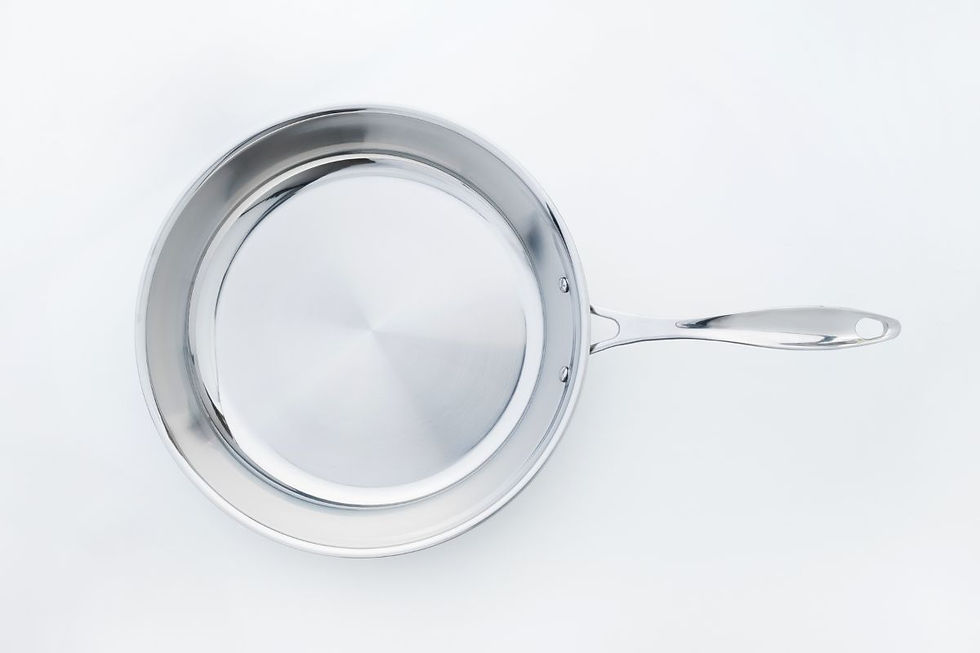
What Stainless Steel Is Made Of
Stainless steel pans use alloys made of:
Chromium (prevents rust)
Nickel (improves shine and resistance)
Iron
Higher-grade pans (like 18/10) contain more nickel, which increases durability.
Is Stainless Steel Safe?
Stainless steel is one of the safest cookware materials, with no coatings or chemical layers that can break down. That said:
Small amounts of nickel can leach, especially with acidic foods
Individuals with nickel allergies may prefer 18/0 steel or cast iron
Pros of Stainless Steel
Lifetime durability
Tolerates very high heat
Perfect for searing and browning
Oven-safe
No coatings to wear down
Dishwasher-safe
Cons of Stainless Steel
Food sticking if technique is off
Heavier than nonstick
Requires more oil than ceramic
Best For
Searing
Browning
Boiling, simmering
Long-term, zero-waste kitchens
Cooking Performance Comparison
High-Heat Cooking
Best: Stainless steel
Avoid: PTFE nonstick
Ceramic: Safe for medium-high, but not max heat
Searing & Browning
Best: Stainless steel
Ceramic can do light searing but lacks heat retention
Nonstick is not designed for it
Low-Oil Cooking
Best: Ceramic
PTFE also performs well
Stainless steel requires more technique
Oven Use
Best: Stainless steel
Ceramic varies by brand
PTFE requires caution
Cleaning & Maintenance
Easiest: Nonstick & ceramic
Most durable: Stainless steel
Most sensitive: Ceramic coating
If this section made stainless steel feel like the better long-term fit, start here:
Which One Lasts Longer? Durability & Lifespan
Expected Lifespan by Material
Material | Lifespan |
Ceramic | 1–3 years |
PTFE Nonstick | 1–2 years |
Stainless Steel | 20+ years |
How Each Material Ages
Ceramic loses nonstick ability over time
PTFE scratches and flakes
Stainless steel improves with seasoning and use
Signs It’s Time to Replace Your Pan
Ceramic: dull, sticky surface
PTFE: scratches, flakes, discoloration
Stainless steel: warping (rare)
What’s Actually Safest? A Science-Backed Summary
Best for Toxic-Free Cooking
Ceramic
PFAS-free, low-heat friendly, great for everyday use.
Best for High-Heat
Stainless steel
Safe under extreme temperatures.
Best for Everyday Versatility
Stainless steel
One pan that does almost everything.
Best for Beginners
Modern nonstick
Requires the least skill, but shortest lifespan.
Representative Examples (Not Full Recommendations)
These examples are included only to illustrate the types of pans commonly used for each material. They are not ranked or exhaustive suggestions.
For our complete tested picks, visit the Best Non-Toxic Pans (2026) guide
Affiliate & Legal Disclaimer
This post contains Amazon affiliate links. As an Amazon Associate, Zenda Guide earns from qualifying purchases at no extra cost to you. Zenda Lab scores are based on data analysis, not physical product testing.
Ceramic Example — Caraway Fry Pan (PFAS-Free)
A modern ceramic-coated pan that represents PFAS-free nonstick technology, with easy cleaning and a low-tox, everyday cooking profile.
Nonstick Example — OXO Good Grips Pro Hard-Anodized 10" Fry Pan (PFAS-Free)
A reliable, affordable PFAS-free nonstick pan suitable for low-heat cooking and delicate foods.
Stainless Steel Example — Tramontina 10-Inch Stainless Steel Fry Pan
A durable, budget-friendly stainless steel pan that handles high heat, browning, searing, and long-term cooking with proper care.
How to Choose Based on Your Cooking Style
For Beginners
Choose nonstick or ceramic for easy success.
For Low-Oil Cooking
Ceramic works best without sacrificing performance.
For High-Heat & Searing
Stainless steel is unmatched.
For Longevity & Zero Waste
Stainless steel lasts decades with proper care.
For Budget-Conscious Upgrades
Ceramic gives you the best “clean kitchen” entry point.
Already know you need a complete induction-ready set? Compare our Best Induction Cookware Sets across stainless steel, ceramic nonstick, conventional nonstick, coating-free, and hybrid options.
The oil does not override the pan’s temperature limits. See our oil smoke points and cooking heat guide for practical pairings by pan material and cooking method.
Frequently Asked Questions
Is ceramic cookware safer than stainless steel?
Short answer: not necessarily. Ceramic cookware can be a good PTFE-free nonstick-style option, but stainless steel is usually the more durable uncoated choice. Ceramic is easier for low-stick cooking, while stainless steel is better for long-term use, higher heat, and searing.
Is stainless steel better than ceramic cookware?
For durability, yes. Stainless steel usually lasts longer because it does not depend on a nonstick coating. Ceramic cookware may feel easier at first, especially for eggs or delicate foods, but the coating can lose performance over time.
Is ceramic nonstick cookware safe?
Ceramic nonstick cookware is often chosen as a PTFE-free alternative, but quality, heat habits, and care still matter. Avoid overheating, abrasive scrubbing, and damaged surfaces. It is best used for low-to-medium heat cooking rather than high-heat searing.
Is stainless steel safer than nonstick?
Stainless steel is an uncoated cooking surface, which makes it appealing for people who want to avoid coating wear. Nonstick can be convenient, but it requires more careful use, especially around heat, scratching, and replacement timing.
Which cookware material lasts the longest?
Stainless steel usually lasts the longest among ceramic, traditional nonstick, and stainless steel cookware. Ceramic and nonstick pans can be useful, but they are more likely to need replacement once the cooking surface wears down or loses release performance.
Which is best for eggs: ceramic, nonstick, or stainless steel?
For eggs, ceramic or traditional nonstick is usually easier. Stainless steel can cook eggs well, but it requires better heat control, enough fat, and proper preheating. If convenience is the priority, choose ceramic or nonstick; if longevity is the priority, choose stainless steel.
Final Thoughts
All three cookware materials — ceramic, nonstick, and stainless steel — can be safe and effective when used correctly.
The right choice depends on how you cook, how much heat you use, and how long you want your pans to last.
Ceramic is perfect for low-oil, everyday cooking.
Stainless steel delivers the best high-heat performance and long-term durability.
Modern nonstick offers easy, beginner-friendly cooking as long as you keep temperatures low.
If you’re ready to upgrade your kitchen, explore these related guides:
Cookware & Kitchen Essentials
Best Non-Toxic Cookware Sets (2026) — Our full, tested list of top picks
Best Woks in 2026 — Carbon Steel, Stainless Steel & Better-Material Picks
Best Non-Toxic Bakeware — Oven-safe, PFAS-free baking sheets & dishes
Best Non-Toxic Food Storage Containers — Glass, stainless steel & BPA-free options
Deep-Dive Educational Guides
Seasonal & High-Value Recommendations
Best Sustainable & Non-Toxic Gift Guide — Thoughtful, ethical gifts
Black Friday + Cyber Monday Deals — Save on cookware, home goods & essentials
If you’re on a journey to build a safer, healthier, and more conscious kitchen, Zenda Guide is here to help you make informed choices — one upgrade at a time.


Comments