Best Dehumidifiers for Basements, Bathrooms & Everyday Home Use

Updated: Jun 1
Reviewed by Our Editors at Zenda Guide
Our content follows our Editorial Standards and is evaluated using the Zenda Lab Protocol.

Excess humidity can make basements, bathrooms, and small rooms feel damp, musty, or harder to manage.
A dehumidifier helps by removing moisture from the air. The right one depends on your room size, drainage setup, noise tolerance, and how often you want to empty the tank.
For this guide, we evaluated portable dehumidifiers through the Zenda Lab Protocol, looking at capacity, drainage, pump support, energy use, noise, durability signals, verified buyer patterns, and long-term value.
The goal: help you choose a dehumidifier that fits your space — not just the biggest model available.
Affiliate Disclosure
This post contains Amazon affiliate links. As an Amazon Associate, Zenda Guide earns from qualifying purchases at no extra cost to you. Zenda Lab scores are based on data analysis, not physical product testing.
Best Dehumidifiers at a Glance
Use this quick comparison to choose by room type, drainage needs, and everyday convenience. Tap or click any product name to jump to the detailed evaluation.
Midea Cube 50 Pint Dehumidifier with Pump
|
GE 50-Pint Portable Dehumidifier with Built-In Pump and Smart Dry
|
Frigidaire 50 Pint Dehumidifier with Wi-Fi
|
Amazon Basics 50-Pint Large Dehumidifier with Pump
|
Honeywell 50-Pint ENERGY STAR Dehumidifier with Built-In Pump
|
BLACK+DECKER BD30MWSA 30-Pint Portable Dehumidifier
|
Quick Answer: What Is the Best Dehumidifier?
The best dehumidifier for most homes is a portable model that matches the room and moisture problem.
For basements and wet rooms, choose a 50-pint dehumidifier with continuous drainage or a built-in pump. For bathrooms, apartments, and smaller rooms, a smaller Energy Star model may be easier to place, run, and empty.
Our top pick is the Midea Cube 50 Pint Dehumidifier with Pump because it combines strong moisture removal, a large tank, smart controls, continuous drainage, and pump support.
Best Dehumidifiers by Use Case
Best Overall Dehumidifier with Pump: Midea Cube 50 Pint Dehumidifier with Pump
Best Dehumidifier with Pump: GE 50-Pint Portable Dehumidifier with Built-In Pump and Smart Dry
Best Smart Dehumidifier for Large Rooms: Frigidaire 50 Pint Dehumidifier with Wi-Fi
Best Value Dehumidifier with Pump: Amazon Basics 50-Pint Large Dehumidifier with Pump
Best Energy Star Dehumidifier with Pump: Honeywell 50-Pint ENERGY STAR Dehumidifier with Built-In Pump
Best Small Dehumidifier for Bathrooms and Apartments: BLACK+DECKER BD30MWSA 30-Pint Portable Dehumidifier
Note: A dehumidifier removes moisture. It does not filter particles like an air purifier or remove existing mold. Check our best air purifiers for mold guide.
If you are still deciding whether moisture control or filtration is the better first step, read our Air Purifier vs Dehumidifier guide before choosing a device.
How We Evaluated Dehumidifiers
We evaluated each product through the Zenda Lab Protocol, our structured review system for comparing products by real-world fit, durability signals, usability, and long-term value.
For dehumidifiers, we focused on one core question:
Does this product fit the moisture problem it claims to solve?
A 50-pint model may be right for a basement, but too bulky for a bathroom. A smaller model may be easier to live with, but too weak for heavy dampness. A pump can make drainage easier, but it also adds another possible failure point.
That is why our scoring looked beyond capacity alone.
What We Scored
Moisture Control, Room Fit & Humidity Performance
We looked at capacity, room-size fit, humidity control, auto modes, and whether the product made sense for its intended use.
Drainage, Maintenance & Everyday Practicality
We evaluated tank size, continuous drain options, built-in pump support, bucket design, filter access, and ease of daily use.
Durability, Reliability & Long-Term Appliance Quality
We considered brand support, warranty signals, pump complexity, compressor-related concerns, leak complaints, and long-term buyer patterns where available.
Energy Use, Noise & Daily Comfort
We looked for Energy Star certification, runtime efficiency, noise signals, smart controls, timers, auto shutoff, and whether the unit made sense for occupied rooms.
Verified Buyer Satisfaction
We reviewed available buyer ratings, review volume, and recurring complaint patterns.
A high rating alone was not enough. We paid attention to what users actually complained about, especially leaks, pump failure, poor moisture removal, noise, and early breakdown.
Value, Use-Case Fit & Category Positioning
We compared price, features, capacity, drainage setup, and the specific role each product could realistically fill.
How to Read the Zenda PVS
The Zenda PVS is our internal product score, shown on a 10-point scale.
9.0–10: Exceptional fit for the category
8.0–8.9: Strong recommendation with clear strengths
7.0–7.9: Useful pick with important tradeoffs
Below 7.0: Usually not included unless there is a specific reason
For this guide, every selected product passed our publishing threshold. Some are stronger overall picks, while others are included because they serve a specific use case well.
Best Dehumidifiers in 2026
Midea Cube 50 Pint Dehumidifier with Pump
Best Overall Dehumidifier with Pump
Zenda PVS: 8.3 / 10
The Midea Cube 50 Pint Dehumidifier with Pump is our strongest all-around pick because it combines high-capacity moisture removal, a large water tank, smart controls, continuous drainage, and built-in pump support. It is especially useful for basements, large rooms, and damp spaces where you do not want to empty the bucket constantly.
Quick Specs
Capacity: 50 pints/day
Best for: Basements, large rooms, smart moisture control
Drainage: Large tank, continuous drain, built-in pump
Built-in pump: Yes
Tank size: 4.2 gallons / about 16 L
Energy rating: Energy Star
Smart features: App control
Main tradeoff: Strong drainage flexibility, but not the quietest option for occupied rooms
Why It Stands Out
The Midea Cube’s biggest strength is flexibility.
You can use the large tank, connect a continuous drain, or use the built-in pump. That makes it easier to adapt to different spaces, especially basements where drainage setup can be tricky.
The large tank also means fewer emptying trips compared with many standard 50-pint models.
What to Know Before Buying
This is not the best choice if your top priority is quiet bedroom use. Like many high-capacity dehumidifiers, it may feel noticeable in occupied rooms and can add some warmth during longer operation.
It is also heavier and bulkier when fully deployed.
Best For
Basements
Large rooms
Wet rooms
Smart moisture control
Users who want fewer tank-emptying trips
Homes that need flexible drainage options
Not Ideal For
Small bathrooms
Bedrooms where quiet operation is the top priority
Users who want the simplest possible design
Anyone who does not need pump drainage or a large tank
Bottom Line
The Midea Cube is the best overall fit for this guide because it solves the biggest dehumidifier pain point: drainage. Its large tank, pump, smart controls, and strong moisture-control profile make it a practical choice for basements and larger damp spaces.
GE 50-Pint Portable Dehumidifier with Built-In Pump and Smart Dry
Best Dehumidifier with Pump
Zenda PVS: 8.2 / 10
The GE 50-Pint Portable Dehumidifier with Built-In Pump and Smart Dry is a strong choice for basements, garages, and wet rooms where pump drainage matters. Its built-in pump can help move collected water to a sink, drain, or elevated outlet, making it useful when gravity drainage is not practical.
Quick Specs
Capacity: 50 pints/day
Best for: Basements, garages, wet rooms
Drainage: Bucket, continuous drain, built-in pump
Built-in pump: Yes
Tank size: Standard removable bucket
Energy rating: Not confirmed as Energy Star in our review pass
Smart features: Smart Dry humidity adjustment
Main tradeoff: Strong pump setup, but smaller exact-listing review base
Why It Stands Out
This GE model is one of the strongest pump-focused options in the evaluated pool.
Its Smart Dry feature automatically adjusts fan speed based on room humidity, which helps reduce manual guesswork. It also includes practical features like auto defrost, auto restart, bucket alerts, and continuous drain support.
What to Know Before Buying
The exact Amazon listing had a smaller review base than some other products in our evaluation. That does not make it a weak product, but it does mean we scored buyer confidence conservatively.
We would also treat this as a wet-room and basement pick, not a bedroom-first option.
Best For
Basements
Garages
Wet rooms
Laundry areas
Users who need pump drainage
Spaces without convenient floor-level drains
Not Ideal For
Small rooms
Bathroom counters or tight spaces
Buyers who want the deepest verified-review base
Users who do not need pump drainage
Bottom Line
The GE 50-Pint Dehumidifier is a strong pump-first option. It is best for users who want a mainstream appliance brand and need help draining water away from a basement or wet space without manually emptying the bucket every day.
Frigidaire 50 Pint Dehumidifier with Wi-Fi
Best Smart Dehumidifier for Large Rooms
Zenda PVS: 8.2 / 10
The Frigidaire 50 Pint Dehumidifier with Wi-Fi is the best fit if you want smart humidity control but do not specifically need a built-in pump. It is a strong option for large rooms, basements, and humid areas where app control and Energy Star efficiency matter.
Quick Specs
Capacity: 50 pints/day
Best for: Large rooms, basements, app-controlled humidity management
Drainage: Bucket and continuous drain
Built-in pump: Not confirmed for this listing
Tank size: About 2.7 gallons
Energy rating: Energy Star
Smart features: Wi-Fi / app control
Main tradeoff: Smart and efficient, but not a pump-first model
Why It Stands Out
Frigidaire is a well-known appliance brand, and this model brings smart control into a high-capacity dehumidifier.
The Wi-Fi feature is useful if you want to monitor humidity, adjust settings, or run the unit without constantly checking the control panel. That can be especially helpful in basements or rooms you do not visit often.
What to Know Before Buying
This model is not the best choice if you need to pump water upward into a sink or elevated drain. It appears better suited to bucket use or gravity drainage.
It is also a large 50-pint unit, so it may be more machine than you need for a small bathroom or bedroom.
Best For
Large rooms
Basements with gravity drainage
Users who want app control
Energy-conscious homes
Spaces where remote humidity monitoring is useful
Not Ideal For
Pump-dependent basement setups
Small bathrooms
Bedroom-first use
Users who want the simplest non-smart model
Bottom Line
The Frigidaire 50 Pint Dehumidifier with Wi-Fi is the strongest smart-control pick in this guide. Choose it if you want a high-capacity, Energy Star dehumidifier with app control and do not need a built-in pump.
Amazon Basics 50-Pint Large Dehumidifier with Pump
Best Value Dehumidifier with Pump
Zenda PVS: 8.1 / 10
The Amazon Basics 50-Pint Large Dehumidifier with Pump is the best value pick for users who want pump drainage without moving into a higher price tier. It offers the key features most basement buyers look for: 50-pint capacity, Energy Star certification, humidity control, auto-defrost, timer, overflow protection, and a built-in pump.
Quick Specs
Capacity: 50 pints/day
Best for: Basements, large rooms, value-focused pump drainage
Drainage: Bucket, continuous drain, built-in pump
Built-in pump: Yes
Tank size: Standard removable bucket
Energy rating: Energy Star
Smart features: No app control
Main tradeoff: Strong value, but less premium brand positioning
Why It Stands Out
This model delivers a strong feature set for the price.
The built-in pump makes it more useful for basements than basic bucket-only models. Energy Star certification also helps if you expect the unit to run regularly during humid months.
It also has a larger review base than several other candidates we evaluated, which gives it more real-world buyer signal.
What to Know Before Buying
Amazon Basics is a value-oriented private-label brand, not a traditional appliance specialist like GE, Frigidaire, Honeywell, or Midea.
That does not make it a bad pick, but it does mean we would position it as a practical value option rather than the lowest-risk premium choice.
Best For
Basements
Large rooms
Budget-conscious buyers
Users who want pump drainage
Homes that need strong features at a lower price
Not Ideal For
Buyers who prefer legacy appliance brands
Bedroom-first use
Users who want smart app control
Anyone who does not need a pump
Bottom Line
The Amazon Basics 50-Pint Dehumidifier with Pump is a strong value pick. It gives you pump drainage, Energy Star certification, and large-room capacity at a more accessible price, with the main tradeoff being less premium brand positioning.
Honeywell 50-Pint ENERGY STAR Dehumidifier with Built-In Pump
Best Energy Star Dehumidifier with Pump
Zenda PVS: 8.0 / 10
The Honeywell 50-Pint ENERGY STAR Dehumidifier with Built-In Pump is a good fit for users who want pump drainage, energy efficiency, and extra safety-focused features. It is designed for larger damp rooms, basements, and spaces where continuous moisture control matters.
Quick Specs
Capacity: 50 pints/day
Best for: Energy-conscious pump drainage
Drainage: Bucket, continuous drain, built-in pump
Built-in pump: Yes
Tank size: 7.1 L
Energy rating: Energy Star Most Efficient
Smart features: No app control confirmed
Main tradeoff: Strong features, but buyer sentiment is more mixed
Why It Stands Out
Honeywell’s biggest advantage is the combination of Energy Star Most Efficient qualification, built-in pump support, and safety-focused features.
It is a practical option if you expect to run a dehumidifier often and want a model designed with energy use in mind.
The built-in pump also makes it useful for basements where gravity drainage is not enough.
What to Know Before Buying
The tank is smaller than the Midea Cube’s large reservoir, so this model makes the most sense if you plan to use the pump or continuous drain.
Buyer sentiment was also more mixed than we prefer for a top overall pick, which is why it ranks below Midea, GE, Frigidaire, and Amazon Basics in this guide.
Best For
Energy-conscious households
Basements
Pump drainage
Larger damp rooms
Users who want safety-focused features
Not Ideal For
Bucket-only users
Buyers who want the strongest review profile
Small bathrooms or bedrooms
Users who want smart app control
Bottom Line
The Honeywell 50-Pint ENERGY STAR Dehumidifier is a strong feature-based pick for users who want energy efficiency and pump drainage. Its smaller tank and more mixed buyer sentiment keep it from being our top choice, but it still fills an important use case well.
BLACK+DECKER BD30MWSA 30-Pint Portable Dehumidifier
Best Small Dehumidifier for Bathrooms and Apartments
Zenda PVS: 7.7 / 10
The BLACK+DECKER BD30MWSA 30-Pint Portable Dehumidifier is the best smaller option in this guide.
It is not built for serious basement moisture, but it is a practical step-down for bathrooms, apartments, offices, laundry areas, RVs, and small-to-medium rooms with moderate humidity.
Quick Specs
Capacity: 30-pint class
Best for: Bathrooms, apartments, offices, laundry areas
Drainage: Bucket and continuous drain hose
Built-in pump: No
Tank size: 6.34-pint bucket
Energy rating: Energy Star
Smart features: No
Main tradeoff: Easier for small spaces, but not for heavy basement moisture
Why It Stands Out
Most “small dehumidifiers” are too weak for real moisture problems. This BLACK+DECKER model is more practical because it uses a compressor-style design, includes an adjustable humidistat, and offers both bucket use and continuous drainage.
It also includes an Energy Star profile, auto shutoff, auto defrost, overflow protection, auto restart, and a 24-hour timer.
What to Know Before Buying
This is not the right pick for a very damp basement or a large wet room. It also does not include a built-in pump, so it works best where bucket emptying or gravity drainage is realistic.
The square-footage claims around this model can be confusing because older and newer DOE standards use different framing. For this guide, we treat it as a small-to-medium room pick, not a large-room solution.
Best For
Bathrooms
Apartments
Offices
Laundry areas
RVs
Small-to-medium rooms
Moderate humidity problems
Not Ideal For
Heavy basement moisture
Large damp rooms
Pump drainage
Whole-home humidity control
Users who want smart features
Bottom Line
The BLACK+DECKER BD30MWSA is the best fit for readers who need a smaller, more manageable dehumidifier for everyday dampness. It is more practical than tiny mini dehumidifiers, but it should not be expected to perform like a 50-pint basement model.
How to Choose the Right Dehumidifier
The best dehumidifier is the one that matches your room, moisture level, and drainage setup.
A large 50-pint model may be right for a damp basement. A smaller model may be easier to live with in a bathroom, apartment, office, or laundry area.
Use these questions before choosing.
1. Where will you use it?
Basement or wet room:
Choose a 50-pint model with continuous drain or a built-in pump.
Bathroom or apartment:
Choose a smaller model that is easier to place, move, and empty.
Large room:
Choose a higher-capacity unit with strong airflow and auto humidity control.
Bedroom or living area:
Check noise carefully. A dehumidifier may be useful, but high-capacity models can feel loud or warm during longer use.
2. How damp is the space?
A mildly humid room may only need a smaller model.
A damp basement, wet laundry area, or room with musty smells usually needs a stronger unit.
If the space has visible mold, water intrusion, or ongoing leaks, a dehumidifier alone is not enough. Fix the moisture source first.
3. How will the water drain?
This is one of the most important buying decisions.
If you do not want to empty the tank often, choose a unit with continuous drainage or a pump.
Dehumidifier with Pump vs Continuous Drain: Which Do You Need?

Not every home needs a built-in pump.
The right drainage setup depends on where the unit sits and where the water needs to go.
Bucket Drainage
Best for: occasional use, smaller rooms, bathrooms, apartments
The dehumidifier collects water in a removable tank. When the tank is full, you empty it manually.
Good because:
simple setup
no hose required
works almost anywhere
Tradeoff:
you must empty it often
the unit may shut off when the bucket is full
Gravity Drain
Best for: basements or rooms with a nearby floor drain
A hose lets water drain continuously from the unit.
Good because:
less manual emptying
useful for regular operation
simpler than a pump
Tradeoff:
the drain must be lower than the dehumidifier outlet
you need the right hose setup
not ideal if the water needs to go upward
Built-In Pump
Best for: basements, wet rooms, sinks, elevated drains
A built-in pump moves water upward or farther away from the unit.
Good because:
helpful for basement setups
reduces bucket emptying
useful when gravity drainage does not work
Tradeoff:
adds another possible failure point
usually costs more
setup matters
What Size Dehumidifier Do You Need?
Choose size based on the room and how damp it feels.
Do not rely only on square-footage claims. A small damp basement can need more power than a larger room with mild humidity.
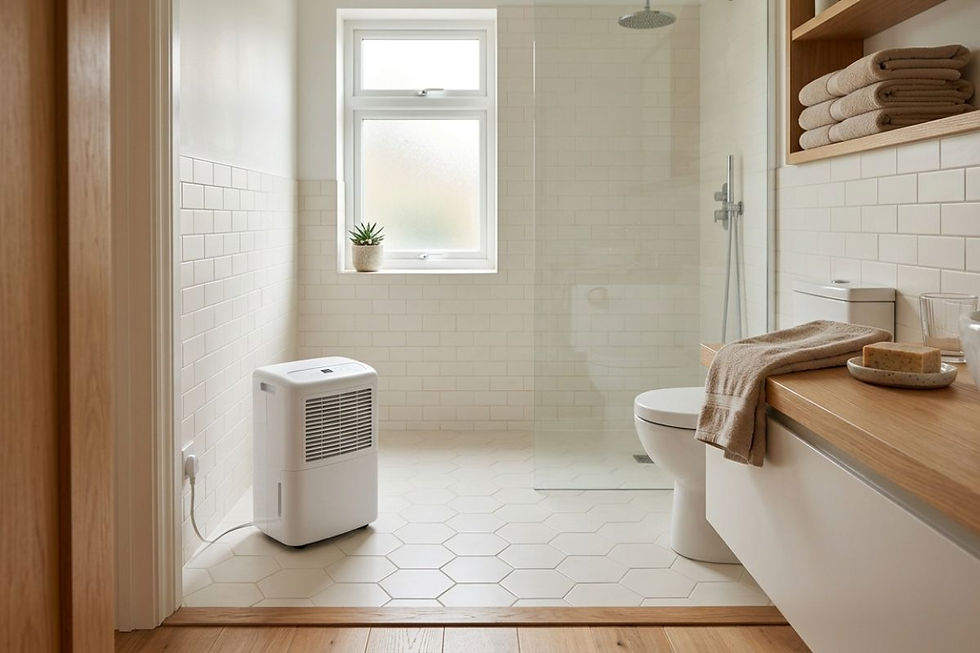
Small rooms, bathrooms, and apartments
A smaller 20- to 30-pint class model may be enough if the space is only moderately humid.
Best fit:
bathrooms
apartments
offices
laundry areas
small bedrooms
RVs
closets or storage rooms with mild dampness
For these spaces, the BLACK+DECKER BD30MWSA is the better fit in this guide.
Basements and large rooms
A 50-pint model usually makes more sense if the room is damp, musty, or used often.
Best fit:
basements
wet rooms
large bedrooms or living areas
garages
humid laundry rooms
rooms with persistent moisture
For these spaces, start with the Midea Cube 50 Pint, GE 50-Pint with Pump, or Amazon Basics 50-Pint with Pump.
Very damp basements
Prioritize drainage before extra features.
Look for:
50-pint capacity
continuous drain
built-in pump, if needed
auto defrost
auto restart
easy filter access
strong buyer patterns around moisture removal
A smart app can be useful, but drainage and reliability matter more.
Whole-home humidity
Portable dehumidifiers are usually best for specific rooms or zones.
If your entire home has humidity problems, you may need to look at:
ventilation
HVAC settings
insulation
leaks or water intrusion
a whole-house dehumidifier
A portable unit can help in one area, but it may not solve whole-home humidity by itself.
Do Dehumidifiers Help With Mold?
A dehumidifier can help manage excess moisture.
That matters because mold is more likely to become a problem in damp environments.
But a dehumidifier does not remove existing mold. It also does not replace cleaning, repairs, ventilation, air filtration, or professional remediation when needed.
Use a dehumidifier as part of a broader moisture-control plan.
That may include:
fixing leaks
improving ventilation
cleaning visible mold safely
using an air purifier for airborne particles
reducing excess humidity
checking bathrooms, basements, windows, and laundry areas regularly
If your main concern is airborne particles or mold spores, read our guide to the best air purifiers for mold.
For a broader indoor environment plan, explore our Indoor Air Quality Guide and our guide to VOCs in homes.
Dehumidifier vs Air Purifier: What Is the Difference?

A dehumidifier and an air purifier solve different problems.
A dehumidifier removes moisture.
An air purifier filters airborne particles.
Many homes benefit from both, but they are not interchangeable.
Choose a dehumidifier if you notice:
damp air
musty smells
condensation
basement humidity
bathroom moisture
water collecting in the tank
clothes or linens feeling damp
humidity staying high indoors
Choose an air purifier if you notice:
dust
pollen
smoke
pet dander
airborne particles
wildfire smoke concerns
visible filter dust buildup
air that feels stale even when humidity is normal
Choose both if:
the room is damp and dusty
you have a mold-prone basement
you want moisture control plus particle filtration
you are building a broader indoor air quality setup
A dehumidifier is not the same as an air purifier. If you are comparing both, our Air Purifier vs Dehumidifier guide explains which one fits dampness, dust, mold, smells, and bedroom air quality.
For more guidance, see our air purifier vs dehumidifier guide, our HEPA vs carbon filters breakdown, and our guide to the best non-toxic air purifiers.
If you are concerned about chemical pollutants, start with our guide to VOCs in homes.
Where Should You Put a Dehumidifier?
Place the dehumidifier where moisture is most active.
That may be a basement, bathroom, laundry room, wet room, or humid corner of an apartment.
For best results:
leave space around the unit for airflow
keep it away from walls, curtains, and furniture
place it near a drain if using continuous drainage
keep the hose straight and secure
close windows when outdoor humidity is high
check the tank and filter regularly
Avoid placing it where water could reach outlets, cords, or power strips.
For bathroom use, placement matters. Keep the dehumidifier away from direct water exposure, wet floors, showers, tubs, and sinks, and always follow the manufacturer’s instructions for safe spacing, power use, and drainage.
Should You Put a Dehumidifier Upstairs or Downstairs?
Start where the moisture problem is strongest.
For many homes, that is the basement or lower level. Basements often stay cooler, darker, and more humid than main living areas.
If the main issue is bathroom humidity, laundry moisture, or apartment dampness, place the unit closer to that room instead.
One portable dehumidifier usually works best as a room or zone solution, not a whole-house fix.
How Long Should You Run a Dehumidifier?
There is no single perfect number of hours.
It depends on:
room humidity
room size
moisture source
drainage setup
outdoor weather
whether the unit has auto mode
For damp basements, longer runtime may be useful, especially if the unit has continuous drainage.
For bathrooms or apartments, shorter cycles may be enough.
The easiest approach is to use a target humidity setting or auto mode, then let the unit cycle as needed.
What Humidity Level Should Your Home Be?
Many homes feel more comfortable when indoor humidity stays around the middle range — not too damp and not too dry.
A common target is around 40%–50% relative humidity.
If humidity stays too high, rooms may feel damp or musty. If it drops too low, the air can feel dry or uncomfortable.
Use the dehumidifier’s humidistat as a guide, but do not treat it as perfect. A separate hygrometer can help if you want a more accurate reading.
Are Small Dehumidifiers Worth It?
Small dehumidifiers can be useful, but only for the right space.
They work best for:
bathrooms
closets
offices
laundry areas
apartments
mild humidity
They are not ideal for:
wet basements
large rooms
visible water issues
whole-home humidity
serious mold-prone areas
For most real moisture problems, avoid tiny thermoelectric mini units. A compact compressor model is usually more practical.
In this guide, the BLACK+DECKER BD30MWSA is the small-room pick because it offers stronger moisture-control potential than most tiny mini dehumidifiers.
Frequently Asked Questions
What is the best dehumidifier for most homes?
The best dehumidifier for most homes is a portable model that matches the room size, moisture level, and drainage setup.
For basements and wet rooms, a 50-pint dehumidifier with continuous drainage or a built-in pump is usually the better fit. For bathrooms, apartments, and smaller rooms, a smaller Energy Star model may be easier to place, run, and empty.
In this guide, our top overall pick is the Midea Cube 50 Pint Dehumidifier with Pump because it combines strong moisture removal, a large tank, smart controls, and flexible drainage.
What size dehumidifier do I need for a basement?
Most damp basements need a 50-pint dehumidifier, especially if the space feels musty, humid, or used regularly.
Look for:
50-pint capacity
continuous drain
built-in pump, if the drain is above the unit
auto defrost
auto restart
easy filter access
For small or mildly humid basements, a lower-capacity model may work. But for persistent dampness, a 50-pint unit is usually the safer choice.
Is a dehumidifier with a pump worth it?
A dehumidifier with a pump is worth it if you need to move water upward or farther away from the unit.
This is common in basements where the nearest drain, sink, or outlet is not below the dehumidifier. A pump can reduce the need to empty the bucket manually.
The tradeoff is that a pump adds another possible failure point, so pump reliability and buyer feedback matter.
Can one dehumidifier work for a whole house?
Usually, no.
Portable dehumidifiers are best for specific rooms or zones, such as a basement, bathroom, laundry room, apartment, or large damp room.
If your entire home has humidity problems, you may need to look at ventilation, insulation, HVAC settings, leaks, or a whole-house dehumidifier.
Do dehumidifiers help with mold?
Dehumidifiers can help reduce excess moisture, which may make damp spaces less favorable for mold growth.
But they do not remove existing mold. They also do not replace cleaning, repairs, ventilation, air filtration, or professional remediation when needed.
If you see mold or smell persistent mustiness, treat the moisture source first.
Should I use a dehumidifier or an air purifier?
Use a dehumidifier if the problem is dampness, condensation, musty smells, or high humidity.
Use an air purifier if the problem is dust, smoke, pollen, pet dander, or airborne particles.
For mold-prone rooms, both may be useful: the dehumidifier helps manage moisture, while an air purifier can help filter airborne particles.
What humidity level should I keep my home at?
A common indoor target is around 40%–50% relative humidity.
If humidity is too high, rooms may feel damp or musty. If it is too low, the air may feel dry or uncomfortable.
A dehumidifier’s built-in humidistat can help, but a separate hygrometer may give you a clearer reading.
Can you leave a dehumidifier running all day?
You can run a dehumidifier for long periods if the unit is designed for it and the drainage setup is safe.
For basements or very damp spaces, continuous operation may be useful. In that case, choose a model with continuous drainage, auto shutoff, and a reliable humidity setting.
Always follow the manufacturer’s instructions, keep the filter clean, and make sure the drain hose is secure.
Where should you place a dehumidifier?
Place the dehumidifier close to the moisture problem, with enough space around it for airflow.
Good locations include:
basements
bathrooms
laundry rooms
wet rooms
humid corners of apartments
storage areas with mild dampness
Avoid placing it tight against walls, behind furniture, or anywhere water could reach cords, outlets, or power strips.
Are small dehumidifiers good for bathrooms?
Small dehumidifiers can help with mild bathroom moisture, especially if the space is small and well-ventilated.
But very small mini dehumidifiers may not be strong enough for regular shower humidity.
For bathrooms, apartments, and small-to-medium rooms, a compact compressor model like the BLACK+DECKER BD30MWSA is usually more practical than tiny thermoelectric units.
Final Thoughts: Choose by Moisture Problem, Not Just Size
The best dehumidifier is the one that fits the space you are actually trying to manage.
For basements, wet rooms, and large spaces, prioritize capacity, drainage, pump support, and reliability.
For bathrooms, apartments, offices, and smaller rooms, prioritize size, noise, ease of emptying, and everyday convenience.
A dehumidifier can be a helpful part of a healthier home setup, but it is not the same as an air purifier, ventilation system, or mold-remediation solution. Think of it as one tool in your indoor environment toolkit.
Choose Your Next Step
Trying to reduce dampness?
Start with the dehumidifier picks above and choose by room type, capacity, and drainage setup.
Trying to filter particles, dust, or mold spores?
Read our guide to the best air purifiers for mold.
Building a healthier indoor environment?
Explore our Indoor Air Quality Guide.
Concerned about chemical pollutants?
Read our guide to VOCs in homes.
Improving sleep spaces?
Explore our Healthy Sleep Environment Guide for more ways to think about bedroom air, materials, and comfort.
About our editorial process
Zenda Guide reviews are produced by our Editorial Board using a documented methodology focused on durability, materials, and long-term value. Learn more about our Editorial Standards and Zenda Lab Protocol



Comments