Best Saucepans for Everyday Cooking in 2026

Updated: Aug 29
Reviewed by Our Editors at Zenda Guide
Our content follows our Editorial Standards and is evaluated using the Zenda Lab Protocol.

A good saucepan is one of the most-used pieces in the kitchen.
It handles oatmeal, grains, sauces, soups, reheating, boiling eggs, melting butter, and small-batch meals — often several times a week.
But the best saucepan is not only about brand or price.
The material that touches your food, the way the pan distributes heat, how easy it is to clean, and how well it holds up over time all matter.
For this guide, we evaluated saucepans through the Zenda Lab Protocol, with a focus on:
food-contact material confidence
heat performance
durability
everyday usability
buyer satisfaction
long-term value
Our top picks are led by stainless steel saucepans, because they offer the strongest balance of durability, versatility, and long-term material confidence for most kitchens.
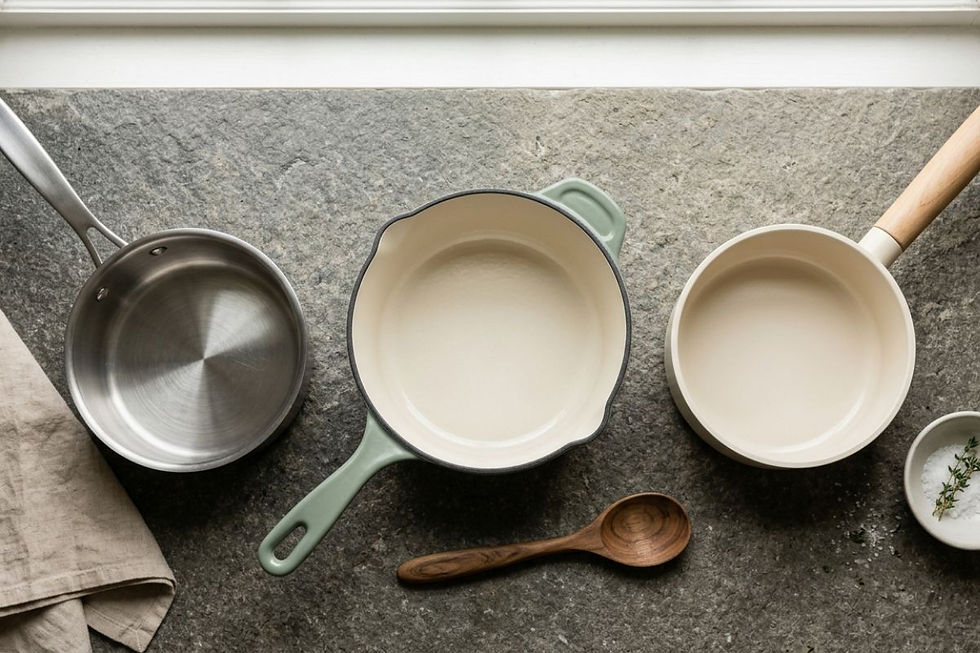
We also included one enameled cast iron saucepan and one ceramic-coated saucepan for readers who want specific benefits like heat retention or easier cleanup — with the tradeoffs clearly explained.
Affiliate Disclosure: This post contains affiliate links. As an Amazon Associate, Zenda Guide earns from qualifying purchases. We also earn commissions from select affiliate partners, including brands available through Impact, at no extra cost to you. Affiliate relationships do not influence our rankings, product scores, or editorial recommendations. Zenda Lab scores are based on data analysis, not physical product testing.
Quick Picks: Best Saucepans at a Glance
Tap or click any product name to jump to the detailed evaluation.
All-Clad D3 Stainless Steel 3-Quart Sauce Pan with Lid
|
Made In 4-Quart Stainless Steel Saucepan with Lid
|
Cuisinart MultiClad Pro Stainless Steel 2-Quart Saucepan with Cover
|
Tramontina Signature Tri-Ply Clad Stainless Steel 2-Quart Sauce Pan with Lid
|
Caraway 3-Quart Stainless Steel Sauce Pan with Lid
|
Demeyere Atlantis 7 1.1-Quart Stainless Steel Saucepan with Lid
|
Le Creuset Signature Enameled Cast Iron Saucepan
|
Caraway 3-Quart Ceramic-Coated Sauce Pan with Lid
|
How We Evaluated Saucepans
We evaluated each saucepan using a category-specific version of the Zenda Lab Protocol.
For saucepans, we focused most heavily on the materials that touch food because these pans are often used with liquids, heat, simmering, acidic ingredients, grains, oatmeal, sauces, milk, and repeated reheating.
A saucepan may look simple, but small details matter:
Is the cooking surface stainless steel, enamel, or ceramic-coated?
Is aluminum used as a core material or as the exposed cooking surface?
Is the pan coated or uncoated?
Does the lid help with simmering?
Is the handle secure and comfortable?
Does the size match everyday cooking needs?
Will the material hold up over time?
Our scoring gives the highest priority to food-contact material confidence, followed by heat performance, durability, everyday usability, buyer satisfaction, and long-term value.
Zenda Lab Scoring Criteria for Saucepans
Food-Contact Material Confidence
Heat Performance & Cooking Control
Durability & Structural Reliability
Everyday Usability & Practicality
Verified Buyer Satisfaction
Value & Positioning
This is why stainless steel saucepans lead the list.
They are not always the easiest to clean, but they usually offer the strongest balance of durability, material transparency, cooktop versatility, and long-term value.
Ceramic-coated and enameled options can still make sense, but they need clearer tradeoff framing.
Best Saucepans for Everyday Cooking
All-Clad D3 Stainless Steel 3-Quart Sauce Pan with Lid
Best for: Best Overall Stainless Steel Saucepan
Zenda PVS: 9.1 / 10
The All-Clad D3 Stainless Steel 3-Quart Sauce Pan is our strongest overall pick because it fits the everyday saucepan role so well. It has a durable stainless steel cooking surface, an aluminum core for heat distribution, a stainless steel exterior, and a stainless steel lid. The 3-quart size is also one of the most practical capacities for most kitchens.
It is large enough for sauces, soups, grains, oatmeal, reheating, vegetables, and small family portions — without feeling as oversized as a 4-quart pan.
Quick Specs Snapshot
Capacity: 3 qt
Main material: Tri-ply stainless steel
Food-contact surface: 18/10 stainless steel
Core: Aluminum
Lid: Stainless steel
Induction compatible: Yes
Oven safe: Up to 600°F
Main tradeoff: Premium price; stainless steel requires care
Why It Stands Out
The All-Clad D3 gives you the classic stainless steel saucepan formula done well:
durable stainless steel cooking surface
aluminum core for even heating
stainless steel lid
induction compatibility
practical 3-quart size
strong long-term buyer confidence
Material & Construction Notes
This saucepan uses stainless steel as the cooking surface, with aluminum enclosed inside the bonded construction to improve heat distribution.
That means the aluminum is there for performance, not as the food-contact layer.
This is the type of construction we like to see in a saucepan because it keeps the material story simple and durable.
What to Expect
Expect strong everyday performance, especially for:
sauces
grains
oatmeal
soups
reheating
vegetables
boiling eggs
small pasta portions
Best For
Choose this if you want one high-quality stainless steel saucepan that can handle most daily cooking tasks.
Not Ideal For
Skip it if you want a very lightweight pan, a low-cost option, or a nonstick surface for easy-release cooking.
Bottom Line
The All-Clad D3 is the best overall saucepan in this guide because it combines the strongest everyday size with durable materials, reliable construction, and broad cooking versatility.
Made In 4-Quart Stainless Steel Saucepan with Lid
Best for: Best Large Stainless Steel Saucepan
Zenda PVS: 9.1 / 10
The Made In 4-Quart Stainless Steel Saucepan is the best pick if you want more capacity than a standard everyday saucepan. Its 4-quart size makes it useful for soups, grains, vegetables, reheating family portions, small pasta batches, and larger sauces. It is still a saucepan, but it gives you more room before you need to reach for a stockpot. The 5-ply stainless clad construction also gives it a strong material and performance profile. Like the All-Clad, this is not a nonstick pan. But if you want a larger coating-free saucepan, it is one of the strongest options in the pool.
Quick Specs Snapshot
Capacity: 4 qt
Main material: 5-ply stainless clad
Food-contact surface: Stainless steel
Core: Internal aluminum layers
Lid: Stainless steel
Induction compatible: Yes
Oven safe: Up to 800°F
Main tradeoff: Larger size may be too much for small tasks
Why It Stands Out
The 5-ply stainless construction supports heat performance, while the stainless steel cooking surface keeps the food-contact material story clear. It is especially useful if you cook for more than one person or often make:
soups
grains
vegetables
larger sauces
reheated leftovers
family-size oatmeal or rice
Material & Construction Notes
This is a stainless steel saucepan with internal conductive layers for heat distribution. That makes it a strong fit for readers who want durability and material transparency without relying on a nonstick coating.
Its 4-quart capacity also makes it more versatile than smaller 2-quart pans, though less nimble for small amounts of butter, milk, or single-serving sauces.
What to Expect
Expect a sturdy, premium saucepan that feels more substantial than budget stainless options.
Because it is larger, it may not be the pan you reach for when warming a tiny amount of sauce. But for everyday cooking with more volume, it fills an important gap.
Best For
Choose this if you want a larger stainless steel saucepan for soups, grains, vegetables, and family portions.
Not Ideal For
Skip it if you mainly cook small portions or want a lightweight compact saucepan.
Bottom Line
The Made In 4-Quart Saucepan is the best large stainless steel saucepan in this guide because it combines premium construction, strong material confidence, and a practical larger capacity.
Cuisinart MultiClad Pro Stainless Steel 2-Quart Saucepan with Cover
Best for: Best Budget Stainless Steel Saucepan
Zenda PVS: 8.9 / 10
The Cuisinart MultiClad Pro 2-Quart Saucepan is one of the strongest budget-friendly stainless steel picks in this guide. It gives you a stainless steel cooking surface, aluminum core, stainless steel lid, drip-free rim, and excellent buyer confidence at a more accessible price than premium options. The 2-quart size is best for smaller households, side dishes, oatmeal, sauces, eggs, rice, and reheating. It is not as versatile as a 3-quart pan, but it is a practical everyday size for many kitchens.
Quick Specs Snapshot
Capacity: 2 qt
Main material: Tri-ply stainless steel
Food-contact surface: 18/10 stainless steel
Core: Solid aluminum
Lid: Stainless steel
Induction compatible: Yes
Oven safe: Up to 550°F
Main tradeoff: Smaller size; less premium than high-end clad options
Why It Stands Out
Cuisinart stands out because it delivers many of the features readers want from stainless steel cookware without premium pricing. You still get:
stainless steel cooking surface
aluminum core
stainless steel lid
oven-safe design
drip-free rim
strong buyer review depth
accessible price point
For Zenda, this makes it one of the best options for readers who want a coating-free saucepan but do not want to pay All-Clad or Made In prices.
Material & Construction Notes
The food-contact surface is stainless steel, with aluminum inside the construction for heat distribution.
That keeps the material story stronger than ceramic-coated or hybrid nonstick pans, especially for long-term durability.
What to Expect
This is a practical small-to-medium saucepan. It is especially useful for:
oatmeal
rice
sauces
reheating
boiling eggs
vegetables
small soups
It may feel less premium than the top stainless picks, and the 2-quart size is not ideal for larger households.
Best For
Choose this if you want a budget-friendly stainless steel saucepan with strong everyday usefulness.
Not Ideal For
Skip it if you want a larger all-purpose saucepan or a premium 5-ply construction.
Bottom Line
The Cuisinart MultiClad Pro is the best budget stainless steel saucepan in this guide because it offers strong material confidence, practical features, and excellent value.
Tramontina Signature Tri-Ply Clad Stainless Steel 2-Quart Sauce Pan with Lid
Best for: Best Value Stainless Steel Saucepan
Zenda PVS: 8.9 / 10
The Tramontina Signature Tri-Ply Clad 2-Quart Sauce Pan is another excellent stainless steel value pick. It is similar in role to the Cuisinart, but with its own strengths: tri-ply clad construction, 18/10 stainless steel cooking surface, aluminum core, stainless steel lid, induction compatibility, NSF certification, and lifetime warranty. This is a strong choice if you want a straightforward stainless steel saucepan for small-to-medium daily cooking.
Quick Specs Snapshot
Capacity: 2 qt
Main material: Tri-ply clad stainless steel
Food-contact surface: 18/10 stainless steel
Core: Aluminum
Lid: Stainless steel
Induction compatible: Yes
Oven safe: Up to 500°F
Main tradeoff: Smaller capacity; less premium than 5-ply options
Why It Stands Out
Tramontina gives readers a strong stainless steel option at a value-focused price point. It is not the most premium saucepan in this guide, but it checks many important boxes:
stainless steel cooking surface
aluminum core
induction compatibility
stainless steel lid
NSF certification
lifetime warranty
strong everyday usability
Material & Construction Notes
The pan uses stainless steel as the food-contact surface, with aluminum inside the tri-ply construction for heat distribution.
This makes it a strong material-trust option compared with coated pans, especially for readers looking for a lower-cost stainless steel saucepan.
What to Expect
Expect a compact, practical stainless steel saucepan for smaller cooking tasks.
It works well for:
sauces
gravies
rice
eggs
vegetables
reheating
small soups
The 2-quart size is useful, but not the best all-purpose capacity if you cook larger portions.
Best For
Choose this if you want a value-focused stainless steel saucepan with strong material confidence.
Not Ideal For
Skip it if you want a larger pan, premium 5-ply construction, or a nonstick surface.
Bottom Line
The Tramontina Signature Tri-Ply is one of the best value stainless steel saucepans in this guide. It is a strong choice for readers who want durability and material clarity without premium pricing.
Caraway 3-Quart Stainless Steel Sauce Pan with Lid
Best for: Best Design-Forward Stainless Steel Saucepan
Zenda PVS: 8.8 / 10
The Caraway Stainless Steel 3-Quart Sauce Pan is the better Caraway pick if your priority is long-term material confidence. Unlike Caraway’s ceramic-coated saucepan, this version uses a stainless steel cooking surface. That makes it a stronger fit for readers who like Caraway’s clean design style but want an uncoated pan. The 3-quart size is also very practical for everyday cooking, making it a good alternative to legacy stainless brands if design matters to you.
Quick Specs Snapshot
Capacity: 3 qt
Main material: 5-ply stainless steel
Food-contact surface: 18/10 stainless steel
Lid: Stainless steel
Induction compatible: Yes
Oven safe: Up to 550°F
Main tradeoff: Less long-term buyer data than legacy stainless brands
Why It Stands Out
This product is useful because it connects two important buyer needs:
a design-forward kitchen aesthetic
a more durable uncoated stainless steel cooking surface
For readers who know Caraway primarily for ceramic-coated cookware, this stainless steel saucepan may be the more durable long-term choice.
Material & Construction Notes
The food-contact surface is stainless steel, not ceramic nonstick.
That matters because it removes the coating-longevity concern that applies to Caraway’s ceramic-coated pan.
The tradeoff is that stainless steel requires more technique and care than ceramic nonstick.
What to Expect
Expect a sleek, practical 3-quart saucepan for:
sauces
grains
reheating
soups
vegetables
everyday cooking
It may not have the same long-term review depth as older stainless steel brands, but the construction and size make it a strong Zenda-fit candidate.
Best For
Choose this if you want Caraway’s design language with a more durable stainless steel cooking surface.
Not Ideal For
Skip it if you want the most proven legacy stainless brand or the easiest nonstick cleanup.
Bottom Line
The Caraway Stainless Steel Sauce Pan is the best design-forward stainless pick in this guide because it offers Caraway’s softer aesthetic without relying on a ceramic-coated food-contact surface.
Demeyere Atlantis 7 1.1-Quart Stainless Steel Saucepan with Lid
Best for: Best Premium Small Saucepan
Zenda PVS: 9.0 / 10
The Demeyere Atlantis 7 1.1-Quart Saucepan is a premium small saucepan for precise tasks. It is not the best all-purpose saucepan because it is too small for many everyday meals. But for butter, small sauces, milk, oatmeal for one, custards, and precision induction cooking, it has one of the strongest material and construction profiles in the guide. This is a specialty pick, not a universal workhorse.
Quick Specs Snapshot
Capacity: 1.1 qt
Main material: 18/10 stainless steel
Base: 7-layer InductoSeal base with copper disk
Lid: Stainless steel
Handle: Welded stainless steel
Induction compatible: Yes
Oven safe: Up to 500°F
Main tradeoff: Very expensive and small
Why It Stands Out
Demeyere stands out for premium construction.
Its welded handle removes interior rivets, which can make cleaning easier and reduce places where residue collects. The base is also designed for strong induction performance and heat control.
For a small saucepan, this is one of the most technically impressive options we evaluated.
Material & Construction Notes
The material confidence is excellent.
It uses stainless steel as the cooking surface, a premium base construction for heat performance, and a welded stainless steel handle.
The copper disk is part of the base construction, not the food-contact surface.
What to Expect
Expect a compact, high-end saucepan for small, precise cooking tasks. It works best for:
melting butter
warming milk
small sauces
oatmeal for one
custards
reheating small portions
It is not ideal for soups, family portions, grains for multiple people, or larger batches.
Best For
Choose this if you want a premium small saucepan and are willing to pay for high-end construction.
Not Ideal For
Skip it if you want one saucepan for most daily meals or need a budget-friendly option.
Bottom Line
The Demeyere Atlantis is the best premium small saucepan in this guide. It is beautifully aligned with Zenda’s material-confidence standards, but its size and price make it a specialty pick.
Le Creuset Signature Enameled Cast Iron Saucepan
Best for: Best Enameled Cast Iron Saucepan
Zenda PVS: 8.7 / 10
The Le Creuset Signature Enameled Cast Iron Saucepan is the best option in this guide if you want enamel, heat retention, and stovetop-to-table design. It is not as responsive or lightweight as stainless steel, but it has a different strength: steady, gentle heat. That makes it useful for sauces, grains, poaching, reheating, simmering, and small-batch cooking where heat retention matters.
Quick Specs Snapshot
Capacity: 1.75 qt
Main material: Enameled cast iron
Food-contact surface: Porcelain enamel
Lid: Enameled cast iron
Induction compatible: Yes
Oven safe: Up to 500°F
Main tradeoff: Heavy and expensive for its size
Why It Stands Out
Le Creuset gives this guide a strong enameled cast iron option.
The light-colored enamel interior helps you monitor cooking, while the cast iron body holds heat well. The tight-fitting lid also supports gentle simmering.
This is not the pan to choose if you want lightweight convenience, but it is a strong choice if you value enamel, heat retention, and design.
Material & Construction Notes
This saucepan uses porcelain enamel over cast iron.
That creates a different material profile from stainless steel. It avoids the ceramic nonstick coating concerns of coated aluminum pans, but enamel still needs care. Chips, cracks, or thermal shock can compromise the cooking surface.
What to Expect
Expect excellent heat retention and a heavier feel. This saucepan works well for:
sauces
grains
poaching
reheating
simmering
stovetop-to-table serving
It is smaller and heavier than most stainless options, so it is not the most practical one-pan choice for every kitchen.
Best For
Choose this if you want a premium enameled saucepan for steady simmering and beautiful stovetop-to-table use.
Not Ideal For
Skip it if you want a lightweight pan, a budget pick, or a highly responsive stainless steel saucepan.
Bottom Line
The Le Creuset Signature Saucepan is the best enameled cast iron pick in this guide. It is durable and beautiful, but its weight, price, and enamel-care needs make it more specialized than the top stainless steel options.
Caraway 3-Quart Ceramic-Coated Sauce Pan with Lid
Best for: Best Ceramic-Coated Saucepan for Easy Cleanup
Zenda Lab PVS: 8.0 / 10
The Caraway Ceramic-Coated Sauce Pan is the best pick in this guide if your top priority is easy cleanup.
It has a 3-quart size, ceramic-coated nonstick surface, stainless steel handles, and a clean design that many Caraway shoppers already recognize. But it should be understood clearly: this is a ceramic-coated saucepan, not solid ceramic cookware and not uncoated stainless steel. That means it is convenient, but less durable long-term than the stainless steel picks above.
Quick Specs Snapshot
Capacity: 3 qt
Main material: Aluminum body
Food-contact surface: Ceramic-coated nonstick
Handle: Stainless steel
Induction compatible: Yes
Oven safe: Up to 550°F
Main tradeoff: Coating longevity is weaker than stainless steel
Why It Stands Out
Caraway’s ceramic-coated saucepan is easy to use and easy to clean by hand. It is especially helpful for foods that can be more frustrating in stainless steel, such as:
oatmeal
sticky sauces
reheated grains
rice
delicate foods
small-batch meals
The 3-quart size also gives it a more versatile everyday profile than many 2-quart coated saucepans.
Material & Construction Notes
This saucepan uses a ceramic-coated nonstick cooking surface over an aluminum body.
That gives it convenience, but the coating is the key tradeoff. Over time, ceramic-coated surfaces can lose performance, scratch, stain, or require more careful use.
For Zenda, this is why the Caraway ceramic pan does not rank above the top stainless steel picks, even though it is easier to clean.
What to Expect
Expect a smooth, convenient cooking experience when the coating is in good condition.
To protect the surface, use gentle utensils, avoid overheating, and follow care instructions carefully.
This is not the best option if your main priority is decades-long durability.
Best For
Choose this if you want easy cleanup and ceramic-coated convenience in a practical 3-quart size.
Not Ideal For
Skip it if you want the longest-lasting material, a coating-free pan, or a dishwasher-first workhorse.
Bottom Line
The Caraway Ceramic-Coated Sauce Pan is the best easy-clean option in this guide, but it comes with a clear tradeoff: ceramic-coated convenience usually does not last as long as uncoated stainless steel.
What Type of Saucepan Is Best?
For most kitchens, a stainless steel saucepan is the best all-around choice.
It is durable, versatile, usually induction-compatible, and does not rely on a nonstick coating that can wear down over time.
That makes stainless steel the strongest fit if you want one saucepan for:
sauces
oatmeal
rice
grains
soups
reheating
vegetables
boiling eggs
small pasta portions
A 3-quart stainless steel saucepan is usually the most practical everyday size because it is large enough for real meals but not as bulky as a 4-quart pan.
That is why our top overall pick is a 3-quart stainless steel saucepan.

There is no single perfect saucepan for every kitchen.
The best choice depends on how you cook most often.
If you want one pan to do the most, choose stainless steel.
If you want steady heat and enamel, choose enameled cast iron.
If you want easier cleanup, choose ceramic-coated — but understand the coating tradeoff.
Saucepan Materials Compared: Stainless Steel, Enameled Cast Iron & Ceramic-Coated
Saucepan materials matter because this is the surface your food touches during boiling, simmering, reheating, and slow cooking.
The best material is not only about “safe” or “non-toxic” claims. It is about transparency, durability, heat behavior, maintenance, and whether the material fits your cooking style.
For a deeper overview of cookware materials, see our Cookware Materials Guide.
Stainless Steel Saucepans
Stainless steel is the strongest all-around saucepan material for most kitchens.
It is durable, widely available, compatible with many cooktops, and does not depend on a nonstick coating.
A good stainless steel saucepan usually has:
a stainless steel cooking surface
an aluminum or copper core for heat distribution
a stainless steel exterior
a secure handle
a well-fitting lid
induction compatibility, when built with a magnetic stainless exterior
The main tradeoff is that stainless steel requires more technique.
Milk, oatmeal, rice, and sauces can stick or scorch if the heat is too high or the pan is not stirred properly. Stainless steel can also show water spots, discoloration, or mineral marks over time.
These are usually maintenance issues, not signs that the pan has failed.
Best for: readers who want durability, material confidence, and long-term value.
Enameled Cast Iron Saucepans
Enameled cast iron saucepans are best for steady heat and gentle simmering.
They are useful for sauces, grains, poaching, reheating, and small-batch cooking where heat retention matters.
The enamel surface creates a smoother cooking layer over cast iron and does not require seasoning.
The main tradeoffs are weight, price, and care.
Enameled cast iron can chip, crack, or craze if it is dropped, overheated empty, or exposed to thermal shock. It also heats and cools more slowly than stainless steel, so it is not as responsive.
Best for: readers who want heat retention, enamel, and stovetop-to-table design.
For more detail, read our guide: Is Enameled Cast Iron Non-Toxic?
Ceramic-Coated Saucepans
Ceramic-coated saucepans are popular because they are easier to clean than stainless steel.
They can be useful for sticky foods like oatmeal, sauces, reheated grains, and delicate cooking tasks.
But it is important to understand the wording.
Most “ceramic saucepans” are not solid ceramic. They are usually metal pans — often aluminum — with a ceramic-style nonstick coating.
That coating is the key tradeoff.
Ceramic-coated pans may be convenient, but the cooking surface can lose performance over time. It may scratch, stain, or become less nonstick with repeated use.
That does not make ceramic-coated cookware automatically bad. It just means it should be treated as a convenience choice, not the longest-lasting material choice.
Best for: readers who prioritize easy cleanup and lower-friction cooking.
For a broader comparison, read our Ceramic vs Stainless Steel vs Nonstick Cookware guide.
Which Saucepan Material Fits Your Cooking Style?
Choose stainless steel if you want the most durable everyday option.
Choose enameled cast iron if you want steady simmering, heat retention, and a more traditional premium feel.
Choose ceramic-coated if you want easier cleanup and are comfortable with a shorter coating lifespan.
For most readers, we recommend starting with a 3-quart stainless steel saucepan and adding a specialty pan later only if your cooking routine calls for it.
Sauces and grains usually benefit from low to medium heat rather than the highest-smoke-point oil. See our cooking heat and oil smoke point guide for practical ranges.
What Size Saucepan Do You Need?
Saucepan size is one of the easiest details to overlook.
A small saucepan can be perfect for butter or oatmeal but frustrating for soups or family portions. A large saucepan can be useful for grains and vegetables but awkward for tiny sauces.
If you only buy one saucepan, a 3-quart saucepan is usually the most versatile size.

Best Size for Most Kitchens
A 3-quart stainless steel saucepan is the best all-around choice for most people.
It gives you enough room for everyday cooking without feeling oversized.
Choose a 2-quart saucepan if you cook mostly for one or two people.
Choose a 4-quart saucepan if you regularly make soups, grains, vegetables, or family-size portions.
Choose a 1–1.5 quart saucepan only if you already have larger cookware and want a small specialty pan.
How to Choose a Good Saucepan
A good saucepan should match how you actually cook.
Before buying, look beyond the brand name and check the details that affect daily use.
1. Check the Food-Contact Surface
This is the material your food touches.
For this guide, we prioritized:
stainless steel
porcelain enamel
clearly labeled ceramic-coated surfaces
We gave stronger scores to uncoated stainless steel because it does not rely on a coating that can wear down over time.
2. Look at the Core or Base
Many good saucepans use stainless steel on the surface with aluminum or copper inside the construction.
That is usually a good thing.
Aluminum and copper conduct heat well, while stainless steel provides a durable cooking surface.
The key question is whether those conductive metals are enclosed inside the pan rather than exposed as the food-contact surface.
3. Choose the Right Capacity
For one all-purpose saucepan, start with 3 quarts.
A 2-quart pan is useful, but it may feel small for soups, vegetables, grains, or family portions.
A 4-quart pan is useful if you cook larger batches, but it may feel too big for small daily tasks.
4. Check the Lid
A lid matters more than many people think.
It helps with:
simmering
steaming
cooking grains
reheating
reducing evaporation
keeping food warm
Stainless steel lids are usually more durable. Glass lids let you monitor cooking but can be more fragile and may have lower oven-safe limits.
5. Confirm Induction Compatibility
Not all saucepans work on induction cooktops.
If you have induction, look for:
explicit induction-compatible labeling
magnetic stainless steel exterior
induction-ready base
A pan may be stainless steel and still not work well on induction if the exterior is not magnetic.
Replacing more than a single saucepan? Compare our Best Induction Cookware Sets for complete-set options by construction, cooking surface, useful vessels, and value.
6. Look at the Handle
A saucepan is often lifted, tilted, and poured while full.
Look for:
secure rivets or welded construction
comfortable grip
good balance
stay-cool design, where possible
Long handles can be helpful, but they may feel awkward on heavier pans.
7. Read Care Instructions Carefully
“Dishwasher safe” does not always mean “best cleaned in the dishwasher.”
For stainless steel, enamel, and ceramic-coated pans, handwashing often helps preserve the finish longer.
This is especially important for ceramic-coated and enameled cookware.
8. Check Warranty and Long-Term Review Patterns
A good saucepan should hold up to repeated use.
Look for patterns around:
warping
loose handles
staining
pitting
coating wear
enamel chipping
lid fit
induction performance
A few cosmetic complaints are normal. Repeated structural complaints are more concerning.
What to Avoid When Buying a Saucepan
Avoiding a poor saucepan is less about finding a perfect material and more about spotting weak disclosure, fragile construction, or a mismatch with your cooking routine.
Avoid Vague “Ceramic” Claims
Many ceramic saucepans are actually ceramic-coated metal pans.
That can be fine, but the product should be clear about what the pan is made from and what the coating is.
Be cautious with products that use broad claims like “clean,” “healthy,” or “non-toxic” without explaining the actual cooking surface.
Avoid Very Thin Bases
Thin saucepans can heat unevenly and scorch food more easily.
This matters for:
milk
oatmeal
sauces
rice
grains
reheating
A heavier base or clad construction usually gives better heat control.
Avoid the Wrong Size
A tiny saucepan may look convenient, but it will not replace a true everyday pan.
A huge saucepan may be useful, but it can feel awkward for small tasks.
For most people, 3 quarts is the best starting point.
Avoid Coated Pans Without Durability Expectations
Ceramic-coated and nonstick saucepans can be useful, but they need realistic expectations.
If the coating begins to peel, chip, scratch deeply, or lose performance, the pan may need replacement sooner than stainless steel.
Avoid Ignoring Lid Material
A glass lid can be useful, but it may have a lower oven-safe limit than the pan itself.
A stainless steel lid is usually more durable but does not let you see inside while cooking.
Choose based on how you cook.
Avoid Treating “Dishwasher Safe” as the Whole Care Plan
Even if a saucepan is labeled dishwasher-safe, handwashing may help it last longer.
This is especially true for:
stainless steel finish care
enamel protection
ceramic-coated surfaces
glass lids
polished exteriors
How Long Do Saucepans Last?
A good saucepan can last for years.
Some stainless steel saucepans can last for decades with proper care. Enameled cast iron can also last a long time if the enamel is protected. Ceramic-coated saucepans usually have a shorter lifespan because the food-contact surface depends on coating integrity.

When to Replace a Saucepan
Consider replacing a saucepan if:
the base is warped
the handle is loose
enamel is chipped or cracked
a ceramic or nonstick coating is peeling
food is sticking because the coating has worn down
the pan has deep pitting or corrosion
the lid no longer fits properly
the pan no longer sits flat on the cooktop
For stainless steel, discoloration or water spots alone usually do not mean the pan needs to be replaced.
Often, those marks are cosmetic and can be improved with proper cleaning.
FAQ
What is the best type of saucepan to buy?
For most kitchens, the best type of saucepan to buy is a stainless steel saucepan.
Stainless steel is durable, versatile, and does not rely on a nonstick coating. It works well for sauces, grains, soups, reheating, vegetables, boiling eggs, and everyday cooking.
If you only want one saucepan, a 3-quart stainless steel pan is usually the best all-around choice.
What saucepan material is best?
Stainless steel is the best all-around saucepan material for most people because it offers strong durability and long-term value.
Enameled cast iron is better for heat retention and gentle simmering.
Ceramic-coated saucepans are easier to clean, but the coating can wear over time.
The best material depends on whether you prioritize durability, heat retention, or easy cleanup.
What is the healthiest saucepan to use?
There is no single perfect saucepan material for every person or recipe.
For a lower-maintenance material-trust choice, uncoated stainless steel is usually one of the strongest options because it avoids nonstick coating wear.
Enameled cast iron can also be a good option if the enamel stays intact.
Ceramic-coated saucepans may be convenient, but they depend on coating condition and usually need more careful use.
Is stainless steel or ceramic better for a saucepan?
Stainless steel is better for long-term durability and everyday versatility.
Ceramic-coated saucepans are easier to clean and more forgiving for sticky foods, but the coating can wear down over time.
If you want a saucepan that can last for many years, choose stainless steel.
If you want easier cleanup and are comfortable with more careful care, ceramic-coated can make sense.
What size saucepan is most useful?
A 3-quart saucepan is the most useful size for most kitchens.
It is large enough for sauces, grains, oatmeal, soups, vegetables, reheating, and small family portions.
A 2-quart saucepan works well for smaller households and side dishes.
A 4-quart saucepan is better for soups, grains, vegetables, and larger portions.
A 1-quart saucepan is best as a small specialty pan.
How often should you replace saucepans?
It depends on the material.
Stainless steel saucepans can last many years, and sometimes decades, if they are not warped, deeply pitted, or damaged.
Enameled cast iron should be replaced or retired if the enamel is badly chipped or cracked.
Ceramic-coated and nonstick saucepans usually need replacement sooner, especially if the coating peels, scratches deeply, or stops performing well.
Are expensive saucepans worth it?
Expensive saucepans can be worth it when the higher price reflects better materials, fully clad construction, stronger durability, better heat control, and a useful warranty.
But not every kitchen needs the most expensive option.
Some lower-cost tri-ply stainless steel saucepans offer excellent value for everyday cooking.
For many readers, the best choice is not the most expensive pan. It is the pan that matches your cooking routine and will hold up over time.
Can saucepans be used on induction cooktops?
Only some saucepans work on induction cooktops.
To work on induction, a saucepan needs a magnetic base or magnetic stainless steel exterior.
Look for clear induction-compatible labeling before buying.
Many stainless steel saucepans are induction-compatible, but not all of them are. Ceramic-coated or enameled pans may also work on induction if they have the right base construction.

Final Recommendation
If you want one everyday saucepan, choose a 3-quart stainless steel saucepan.
For most readers, the All-Clad D3 Stainless Steel 3-Quart Sauce Pan is the strongest overall pick because it combines a durable stainless steel cooking surface, practical capacity, reliable heat performance, induction compatibility, and strong long-term buyer confidence.
If you cook larger portions, the Made In 4-Quart Stainless Steel Saucepan gives you more room for soups, grains, vegetables, and family meals without moving fully into stockpot territory.
If you want a lower-cost stainless steel option, the Cuisinart MultiClad Pro and Tramontina Signature Tri-Ply Clad are the strongest value picks.
If you want something more specialized, the Demeyere Atlantis is the premium small saucepan, while the Le Creuset Signature Saucepan is the best enameled cast iron option for steady simmering and stovetop-to-table use.
If easy cleanup matters more than maximum long-term durability, the Caraway Ceramic-Coated Sauce Pan is the best coated convenience pick — but stainless steel remains the better long-term choice for most kitchens.
The simplest takeaway:
Choose stainless steel for durability.
Choose enameled cast iron for steady heat.
Choose ceramic-coated for easier cleanup, with clear coating expectations.
Keep Exploring
Building a more thoughtful cookware setup? These guides can help you compare materials, avoid overbuying, and choose pieces that fit how you actually cook.
Explore cookware materials: Learn how stainless steel, ceramic, cast iron, enamel, and nonstick coatings compare in our Cookware Materials Guide.
Compare cookware types: See the bigger picture in our guide to Ceramic vs Stainless Steel vs Nonstick Cookware.
Build a full cookware setup: For pots, pans, and everyday cookware bundles, read our Best Non-Toxic Cookware guide. You may also like our guide to the best woks for high-heat cooking and stir-fries
Choose the right pan for searing and sautéing: Compare our picks for the Best Non-Toxic Frying Pans.
Go deeper on enamel: Learn when enamel makes sense in Is Enameled Cast Iron Non-Toxic?
Understand heat and materials: Read The Science of Cookware Leaching for a clearer look at how heat, food, and cookware materials interact.
About our editorial process
Zenda Guide reviews are produced by our Editorial Board using a documented methodology focused on durability, materials, and long-term value. Learn more about our Editorial Standards and Zenda Lab Protocol


Comments