Best Non-Toxic Rice Cookers in 2026: Stainless Steel, Ceramic, Clay & PFAS-Free Picks

Updated: May 21
Reviewed by Our Editors at Zenda Guide
Our content follows our Editorial Standards and is evaluated using the Zenda Lab Protocol.

Finding the best rice cooker is not just about capacity, presets, or how fluffy the rice turns out. If you are searching for a non-toxic rice cooker, the bigger question is what material touches your food every day.
Most rice cookers use coated inner pots. Some are traditional nonstick, some are ceramic-coated, and a smaller group use stainless steel or clay-style cooking surfaces. Each option comes with tradeoffs around cleanup, durability, cooking performance, and long-term material transparency.
This guide prioritizes rice cookers with clearer food-contact materials first — especially stainless steel and coating-free options — while also explaining where PFAS-free ceramic and premium nonstick models may still make sense.
Affiliate Disclosure
This post contains Amazon affiliate links. As an Amazon Associate, Zenda Guide earns from qualifying purchases at no extra cost to you. Zenda Lab scores are based on data analysis, not physical product testing.
Top Non-Toxic Rice Cookers at a Glance
We ranked these rice cookers with food-contact materials first. Stainless steel and clay options rank strongly because they avoid applied inner-pot coatings, while ceramic-coated and PTFE-coated models are included only when they offer strong performance, clear tradeoffs, and reliable buyer satisfaction. Click any product name below to jump to the full review.
Buffalo Classic Stainless Steel Rice Cooker
|
Aroma ARC-753SG Stainless Steel Rice Cooker
|
Zojirushi NS-ZCC18 Neuro Fuzzy
|
|
VitaClay VM7900-6 Smart Organic Multi-Cooker
|
Quick Answer: What Is the Best Non-Toxic Rice Cooker Material?
The best non-toxic rice cooker for most buyers is one with a stainless steel inner pot, because it avoids traditional nonstick and ceramic coatings altogether. Clay-style rice cookers can also be a strong coating-free option, while PFAS-free ceramic-coated rice cookers may work for buyers who want easier cleanup but should still be treated as coated surfaces.
How We Evaluated These Rice Cookers
Every rice cooker in this guide was evaluated using the Zenda Lab Protocol, our internal framework for comparing product materials, durability signals, real-world performance, verified buyer feedback, and long-term value.
For this category, we placed the most weight on two things:
what touches the food
how well the appliance is likely to hold up over time
That means a rice cooker with a fully stainless steel or uncoated clay inner pot may score strongly for material transparency, while a coated model needs stronger durability, performance, and buyer feedback to compete.
Each rice cooker received a weighted score out of 10 based on five criteria.
Inner Pot Material & Food Contact
Durability & Build Quality
Cooking Performance
Verified Buyer Feedback
Value for Price
How to Read the Scores
The final Zenda PVS Score is not just a performance rating. It reflects the balance between material transparency, durability, cooking quality, buyer satisfaction, and value.
That is why a fully stainless steel rice cooker may rank above a more advanced smart model, even if the smart model cooks rice more automatically.
Our goal is to help you see the tradeoffs clearly:
stainless steel for material transparency
clay for a coating-free traditional option
ceramic-coated for easier cleanup with a PFAS-free positioning
premium nonstick for high-performance rice cooking with clear coating tradeoffs
Best Non-Toxic Rice Cookers in 2026
Buffalo Classic Stainless Steel Rice Cooker
Best fully stainless steel, no-coating rice cooking
Zenda Lab Score: 8.6 / 10
The Buffalo Classic is the strongest material-first pick in this guide. Its fully stainless steel inner pot avoids traditional nonstick, ceramic coatings, and PTFE, making it one of the clearest choices for readers who want a rice cooker without applied food-contact coatings.
Quick Specs
Inner Pot Material: Fully stainless steel
Coated or Uncoated: Uncoated
PFAS / PTFE Status: No PTFE or traditional nonstick coating
Capacity: About 5 cups uncooked
Best For: Buyers who want the clearest no-coating rice cooker option
Keep-Warm / Timer: Automatic keep-warm; no advanced timer
Considerations
More manual than fuzzy logic rice cookers
Stainless steel can stick if the water ratio is off
Brown rice may need manual water adjustments
Not the best pick for users who want lots of presets
Higher price than basic budget rice cookers
Why we like it
Fully stainless steel inner pot
No coating to peel, scratch, or wear down
Strong fit for “rice cooker without Teflon” intent
Simple design means fewer electronic features to fail
Best match for readers prioritizing material transparency over automation
Bottom line
Choose the Buffalo Classic if your top priority is a coating-free stainless steel inner pot. It is not the smartest or most automated rice cooker, but it is the strongest material-aligned pick for a lower-tox kitchen.
Aroma ARC-753SG Stainless Steel
Best budget stainless steel rice cooking
Zenda Lab Score: 8.5 / 10
The Aroma ARC-753SG is the best budget-friendly stainless steel pick. It keeps things simple with one-touch cook/warm controls and a fully stainless steel inner pot, making it a strong entry-level option for readers who want to avoid nonstick coatings without spending over $100.
Quick Specs
Inner Pot Material: Fully stainless steel
Coated or Uncoated: Uncoated
PFAS / PTFE Status: No PTFE, PFAS, or ceramic coating
Capacity: 6 cups cooked / about 3 cups uncooked
Best For: Budget buyers who want a simple rice cooker without Teflon
Keep-Warm / Timer: Automatic keep-warm; no timer
Considerations
Smaller capacity than most full-size rice cookers
No presets or fuzzy logic
Stainless steel can stick more than coated pots
Brown rice may require more trial and error
Build quality is lighter than premium stainless models
Why we like it
Fully stainless steel inner pot at a very accessible price
No coating to degrade over time
Simple one-touch operation
Strong value for material-conscious buyers
Ideal for small households, apartments, or occasional rice cooking
Bottom line
Choose the Aroma ARC-753SG if you want the most affordable stainless steel rice cooker in this lineup. It is basic, but that simplicity is part of its appeal.
Zojirushi NS-ZCC18 Neuro Fuzzy
Best premium smart rice cooking and long-term performance
Zenda Lab Score: 8.3 / 10
The Zojirushi Neuro Fuzzy is the best performance pick in this guide. It uses fuzzy logic technology to adjust cooking automatically, producing consistently excellent rice across white rice, brown rice, and sushi rice. It is not coating-free, but it remains one of the strongest options for buyers who care most about rice quality and appliance longevity.
Quick Specs
Inner Pot Material: PTFE-coated aluminum
Coated or Uncoated: Coated
PFAS / PTFE Status: Uses PTFE-based nonstick coating
Capacity: 10 cups uncooked / 1.8L
Best For: Buyers who want premium rice texture and reliable smart cooking
Keep-Warm / Timer: Advanced keep-warm and programmable timer
Considerations
Not stainless steel
Not ceramic-coated
Not coating-free
Inner pot coating can wear over time
Replacement inner bowls may add long-term cost
Premium price point
Why we like it
Excellent cooking consistency
Strong brown rice and sushi rice performance
Fuzzy logic helps reduce guesswork
Long-standing reputation for durability
Replacement inner bowls are available
Best choice for users who prioritize rice texture over coating-free materials
Bottom line
Choose the Zojirushi Neuro Fuzzy if you want the best rice cooking performance and are comfortable with a PTFE-coated inner pot. It is not the most material-minimal option, but it is one of the most reliable premium rice cookers.
COSORI 5.0-Quart Rice Cooker
Best ceramic-coated convenience and easy cleanup
Zenda PVS Score: 8.6 / 10
The COSORI 5.0-Quart Rice Cooker is the strongest ceramic-coated option in this lineup. It offers fuzzy logic, a large capacity, multiple cooking functions, and easier cleanup than stainless steel or clay. It is still a coated inner pot, so it should not be confused with solid ceramic or coating-free cookware.
Quick Specs
Inner Pot Material: Ceramic-coated nonstick
Coated or Uncoated: Coated
PFAS / PTFE Status: Marketed as a ceramic nonstick option; verify current PFAS-free disclosure before publishing
Capacity: 10 cups uncooked / 5 quarts
Best For: Families who want easy cleanup and smart cooking features
Keep-Warm / Timer: 24-hour keep-warm and 24-hour delay timer
Considerations
Not stainless steel
Not clay
Not coating-free
Ceramic coatings can wear over time
Larger size may be more than small households need
Best for convenience, not maximum material simplicity
Why we like it
Strong ceramic-coated alternative to traditional nonstick
Fuzzy logic supports more consistent cooking
Large capacity works well for families
Easy cleanup compared with stainless steel
Stainless steel steamer basket adds a useful material upgrade
Strong feature set for the price
Bottom line
Choose the COSORI if you want a high-performing ceramic-coated rice cooker with easier cleanup and smart features. It is the best convenience pick in the lineup, but not the best option if you want to avoid coatings entirely.
VitaClay VM7900-6 Smart Organic Multi-Cooker
Best clay-pot cooking and coating-free slow cooking
Zenda PVS Score: 7.6 / 10
The VitaClay VM7900-6 adds something different to this guide: an unglazed clay cooking surface. It is a strong specialist option for readers who want to avoid metal nonstick coatings and prefer a more traditional clay-pot cooking style. It also works as a multi-cooker for soups, stews, grains, and slow-cooked meals.
Quick Specs
Inner Pot Material: Unglazed Zisha / purple clay crock
Coated or Uncoated: Uncoated
PFAS / PTFE Status: No traditional PTFE nonstick coating
Capacity: 6 cups / 3.2 quarts
Best For: Buyers who want a clay cooking surface and multi-use slow cooking
Keep-Warm / Timer: Delay start and automatic keep-warm
Considerations
Clay is more fragile than stainless steel or coated metal
Requires careful handling and hand washing
Not as beginner-proof as a standard rice cooker
More of a multi-cooker than a dedicated rice specialist
Durability feedback is more mixed than top-ranked picks
Why we like it
Unglazed clay cooking crock
No traditional nonstick coating
Useful for rice, grains, soups, stews, and slow cooking
Strong material-diversity pick for this guide
Good option for readers who want an alternative to both stainless steel and coated pots
Bottom line
Choose the VitaClay if you want a coating-free clay-pot option and are willing to treat it with more care. It is not the most durable or convenient pick, but it adds a valuable traditional-material alternative.
What Makes a Rice Cooker Non-Toxic?
When people search for a non-toxic rice cooker, they are usually asking one practical question:
What material touches the rice while it cooks?
For most rice cookers, the most important part is the removable inner pot. That is the surface in direct contact with your food. The lid lining, steam vent, condensation collector, and accessories can also matter, but the inner pot is the first place to look.
Rice cookers operate at lower temperatures than stovetop cookware, so the bigger everyday concern is usually not extreme overheating. It is:
what the inner pot is made from
whether the cooking surface is coated or uncoated
how that surface holds up over time
whether the brand clearly discloses PTFE, PFAS, ceramic coating, stainless steel, or clay materials
whether replacement parts are available if the pot wears out
For a lower-tox kitchen, the clearest options are usually fully stainless steel or unglazed clay, because they do not rely on an applied nonstick coating. Ceramic-coated rice cookers can also be useful, especially when marketed as PFAS-free, but they are still coated surfaces. Premium traditional nonstick models may perform very well, but they should be evaluated honestly as coated rice cookers.
In this guide, we ranked each model based on food-contact materials, durability, cooking performance, verified buyer feedback, and long-term value.
Rice Cookers Without Teflon: What to Look For
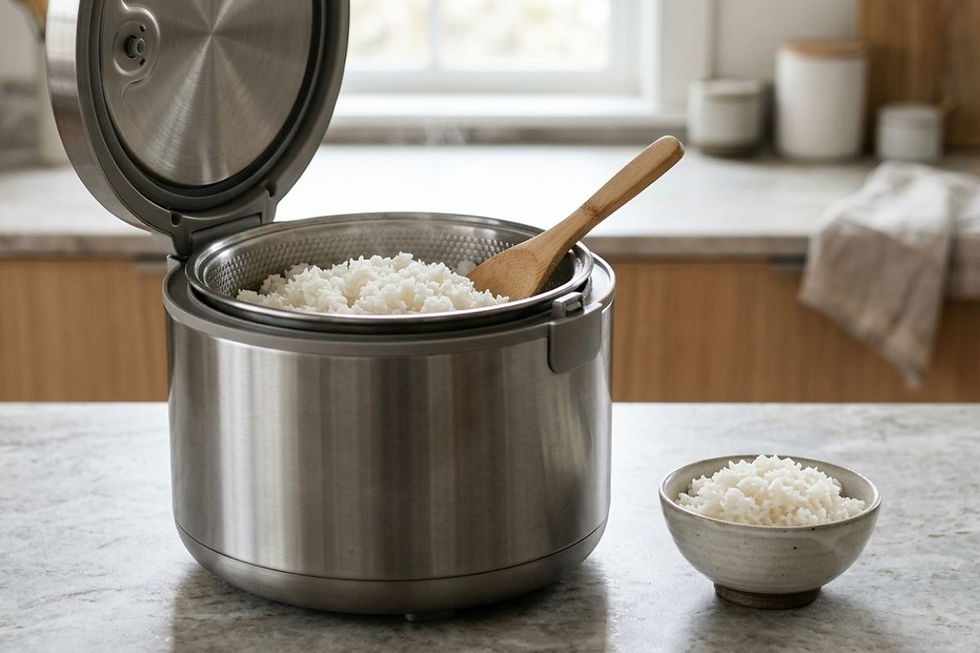
Yes, there are rice cookers without Teflon.
If you want to avoid traditional PTFE-based nonstick coatings, start by looking for one of these inner pot types:
Fully stainless steel inner pot
Unglazed clay inner pot
Clearly labeled PFAS-free ceramic-coated inner pot
The first two are the simplest if your goal is to avoid applied nonstick coatings altogether. Ceramic-coated models can be a good middle ground for easier cleanup, but they are not the same as stainless steel or clay because the cooking surface is still a coating.
What to check before buying
Look for clear language such as:
“stainless steel inner pot”
“uncoated”
“unglazed clay”
“PFAS-free”
“PTFE-free”
“replacement inner pot available”
Be more cautious with vague phrases like:
“healthy nonstick”
“natural coating”
“eco coating”
“stone-like surface”
“ceramic-style finish”
Those terms may sound reassuring, but they do not always explain what the food-contact surface actually is.
What to expect from Teflon-free rice cookers
Choosing a rice cooker without Teflon can improve material transparency, but it may change the cooking experience.
Stainless steel and clay options may require:
more precise water ratios
more careful cleaning
a short learning curve
slightly more sticking than coated pots
That does not make them worse. It simply means they prioritize material simplicity over the easiest possible cleanup.
If convenience matters most, a high-quality ceramic-coated or premium PTFE-coated rice cooker may still be a practical choice — as long as you understand the tradeoff.
Stainless Steel vs Ceramic vs Clay vs Nonstick Rice Cookers

Most rice cookers fall into one of four material categories: stainless steel, ceramic-coated, clay, or traditional nonstick.
If you are comparing these materials more broadly across cookware, we also break down the differences in our guide to ceramic vs nonstick vs stainless steel cookware.
Here is how each material behaves in a rice cooker.
Stainless Steel Rice Cookers
Stainless steel rice cookers use an inner pot with no applied nonstick coating.
They are usually the best fit for buyers who want:
no PTFE
no ceramic coating
no applied surface layer
strong material transparency
long-term durability without coating wear
Because there is no coating to peel or degrade, stainless steel is one of the clearest choices for a non-toxic rice cooker.
The tradeoff is usability. Rice can stick more easily if the water ratio is off, and stainless steel models are often more basic than premium fuzzy logic cookers. They are best for buyers who are comfortable with a little technique in exchange for a simpler material profile.
Best fit: material-first buyers, small households, and anyone searching for a rice cooker without Teflon.
Ceramic-Coated Rice Cookers
Ceramic-coated rice cookers usually use a metal inner pot with a ceramic-style nonstick coating applied on top.
They are often marketed as:
PFAS-free
PTFE-free
ceramic nonstick
easier to clean than stainless steel
Ceramic-coated pots can be very convenient. They are usually easier to clean than stainless steel and may feel more familiar to buyers switching away from traditional nonstick.
The key thing to remember is that ceramic-coated does not mean coating-free. The surface can still wear over time, and durability depends heavily on the quality of the coating and how the pot is used.
Use only soft utensils, avoid abrasive cleaning, and replace the inner pot if the surface becomes badly scratched, chipped, or worn.
Best fit: buyers who want easier cleanup and a PFAS-free ceramic-coated alternative, but do not need a fully coating-free inner pot.
Clay Rice Cookers
Clay rice cookers use a clay or earthenware-style cooking pot instead of a metal nonstick insert.
They are appealing because they can offer:
an uncoated cooking surface
no traditional PTFE nonstick layer
a more traditional cooking experience
good heat retention
multi-use cooking for grains, soups, and stews
Clay can be a strong option for buyers who want something different from both stainless steel and coated nonstick. It also gives the category a useful material alternative beyond the usual stainless vs ceramic debate.
The tradeoff is durability and care. Clay is more fragile than metal, may require hand washing, and can crack if handled roughly or exposed to sudden temperature changes. It is best for careful users, not for buyers who want the most low-maintenance rice cooker.
Best fit: buyers who want a coating-free clay cooking surface and are comfortable treating the pot more carefully.
Traditional Nonstick Rice Cookers
Many premium rice cookers use PTFE-based nonstick inner pots.
These models are popular because they often offer:
excellent rice texture
easy cleanup
strong keep-warm performance
fuzzy logic or smart cooking presets
replacement inner bowls
PTFE is commonly associated with Teflon-style nonstick coatings. In rice cookers, the cooking temperatures are much lower than overheated stovetop pans, so the more practical issue for most buyers is usually long-term coating wear, not extreme heat exposure.
A well-built PTFE-coated rice cooker can last for years when used properly. The important questions are:
Is the coating clearly disclosed?
Do users report peeling or scratching?
Are replacement inner pots available?
Does the cooker offer enough performance and durability to justify the coating tradeoff?
We do not automatically exclude PTFE-coated rice cookers. Instead, we score them lower on material simplicity and evaluate whether their performance, durability, and replacement-part support still make them useful for specific buyers.
Best fit: buyers who prioritize rice texture, automation, and easy cleanup over a coating-free inner pot.
For nonstick rice cooker pots, it’s best to use silicone or wooden tools to avoid scratching the coating. See our guide to the best non-toxic kitchen utensils to choose safe materials that won’t damage delicate cookware.
Quick Material Takeaway
Choose stainless steel if you want the clearest no-coating option.
Choose clay if you want a traditional coating-free cooking surface and do not mind extra care.
Choose ceramic-coated if you want easier cleanup and a PFAS-free coating claim.
Choose premium nonstick if performance and convenience matter more than avoiding PTFE.
For most material-first buyers, stainless steel is the simplest starting point. For buyers who want better convenience, ceramic-coated or premium nonstick models may still make sense when the tradeoffs are clearly understood.
How to Choose the Right Rice Cooker for Your Kitchen
Choosing the right rice cooker depends on more than size or presets. For a material-focused kitchen, the best starting point is the inner pot — then you can decide how much convenience, automation, and capacity you actually need.
Here’s how to narrow it down.
Choose stainless steel if material transparency comes first
A stainless steel inner pot is the simplest option if you want to avoid traditional nonstick and ceramic coatings.
Stainless steel is a strong fit if you want:
no PTFE coating
no ceramic coating
no applied nonstick surface
a pot that does not depend on coating durability
a clearer long-term material story
The tradeoff is convenience. Stainless steel can stick more than coated pots, especially if the water ratio is off or rice sits too long on keep-warm.
Best fit: buyers who care most about a rice cooker without Teflon or ceramic coating.
Choose ceramic-coated if easy cleanup matters more
Ceramic-coated rice cookers are useful for buyers who want a PFAS-free nonstick-style surface but do not want the sticking risk of stainless steel.
They are often easier to clean and more beginner-friendly than stainless steel.
Ceramic-coated models may be a good fit if you want:
easier cleanup
a PFAS-free coating claim
smart cooking features
a more familiar nonstick feel
a balance between convenience and material awareness
The important point is that ceramic-coated does not mean coating-free. Over time, the surface can wear, especially with metal utensils, abrasive scrubbers, or frequent dishwasher use.
Best fit: families and everyday users who want convenience but prefer to avoid traditional PTFE nonstick.
Choose clay if you want a traditional coating-free option
Clay rice cookers are a more specialized choice. They offer an uncoated cooking surface and a different cooking experience from stainless steel or coated nonstick.
Clay can be a good fit if you want:
a coating-free cooking vessel
a more traditional cooking style
good heat retention
a multi-use pot for grains, soups, stews, or slow cooking
an alternative to both stainless steel and coated surfaces
The tradeoff is care. Clay is more fragile than metal, often needs hand washing, and may not be the best choice for a busy kitchen where durability and low maintenance matter most.
Best fit: careful users who want a clay cooking surface and are comfortable with a more hands-on appliance.
Choose premium nonstick if performance matters most
Some of the best-performing rice cookers use PTFE-based nonstick inner pots. These models are not coating-free, but they can offer excellent cooking consistency, strong keep-warm performance, and long appliance life.
A premium nonstick rice cooker may make sense if you want:
fluffy rice with less guesswork
fuzzy logic or smart cooking presets
excellent brown rice or sushi rice performance
easier cleanup
replacement inner pots from the brand
This is why a model like Zojirushi can still belong in a materials-led guide. It is not the most material-minimal option, but its durability, cooking consistency, and replacement part support make it a strong performance pick when the tradeoff is clearly explained.
Best fit: buyers who prioritize rice quality, automation, and long-term appliance reliability over avoiding PTFE.
Think about capacity and how often you cook rice
A smaller rice cooker is enough for one or two people, while larger families may prefer a 10-cup uncooked capacity.
As a simple guide:
3 cups uncooked: best for individuals, couples, and small kitchens
5–6 cups uncooked: good everyday size for most households
10 cups uncooked: better for families, meal prep, or batch cooking
If you regularly cook full meals, soups, stews, beans, or grains, you may also want to compare this guide with our Best Multi-Cookers roundup. A multi-cooker can make more sense if rice is only one part of your weekly cooking routine.
Consider lifespan, not just price
Rice cookers can last anywhere from a few years to a decade or more. Lifespan depends less on marketing claims and more on:
inner pot construction
coating durability
electronics quality
steam seal design
replacement part availability
daily care habits
In general:
Stainless steel pots can last a long time because there is no coating to wear down.
Premium PTFE-coated pots can last for years when used carefully, especially if replacement bowls are available.
Ceramic-coated pots may be convenient, but their nonstick performance can decline as the surface wears.
Clay pots can last with careful handling, but they are more fragile than metal.
If slow cooking is just as important as rice, it may also be worth comparing this guide with our Best Slow Cookers roundup. A dedicated slow cooker may be a better fit if you mostly cook soups, stews, beans, or low-and-slow meals.
Match the rice cooker to your real routine
The best rice cooker is not always the most “natural” material or the most advanced machine. It is the one you will use correctly and maintain well.
Choose based on your priority:
Best material transparency: stainless steel
Best budget no-coating option: basic stainless steel
Best convenience: ceramic-coated
Best rice texture: premium fuzzy logic nonstick
Best traditional material option: clay
Best all-purpose cooking: multi-cooker or slow cooker
A more material-conscious choice only works if it fits your daily habits. If a stainless steel pot feels too high-maintenance, a transparent ceramic-coated option may be a more realistic compromise. If clay feels too fragile, stainless steel may be the better long-term choice.
What to Avoid in a Rice Cooker Inner Pot
Not all rice cookers are built the same. The inner pot is the most important place to look because it directly affects food contact, durability, cleaning, and long-term value.
Here are the main red flags to watch for.
Vague coating descriptions
Be cautious when a rice cooker uses broad phrases without explaining the actual material.
Watch for vague terms like:
“healthy coating”
“eco coating”
“natural nonstick”
“stone-like surface”
“premium coated pot”
“ceramic-style finish”
These phrases may sound reassuring, but they do not always tell you whether the pot is stainless steel, ceramic-coated, PTFE-coated, hard-anodized aluminum, clay, or something else.
Better product pages should clearly state:
inner pot material
whether the surface is coated or uncoated
whether the coating is PFAS-free or PTFE-free
whether replacement inner pots are available
If the brand does not clearly describe the food-contact surface, that is a reason to pause.
Thin aluminum inserts with unclear coatings
Very lightweight aluminum inner pots can be a durability concern, especially when the coating is not clearly explained.
Potential issues include:
uneven heating
warping
faster coating wear
early sticking complaints
lower long-term value
Aluminum is commonly used as a base material under coatings, including ceramic and traditional nonstick. That does not automatically make a rice cooker bad. The concern is when the coating is thin, poorly disclosed, or frequently mentioned in buyer complaints.
Coating wear and peeling complaints
For any coated rice cooker, review patterns matter.
Look closely for repeated complaints about:
peeling
flaking
bubbling
scratching
strong odors
rice sticking after a few months
coating wearing out within 1–2 years
A few isolated complaints can happen with almost any product. But repeated coating-wear patterns are a stronger red flag.
This is especially important for ceramic-coated and PTFE-coated models. Both can work well, but both depend on the condition of the cooking surface.
No replacement inner pot
If a coated inner pot wears out and the brand does not sell replacements, the whole appliance may become less useful.
Before buying, check whether the brand offers:
replacement inner bowls
replacement lids
replacement steam vents or collectors
support for older models
This matters most for premium rice cookers. A higher-priced model is easier to justify when replacement parts can extend its useful life.
Poor steam vent or lid design
Rice cookers generate moisture. A weak lid, poor steam seal, or hard-to-clean steam vent can affect both performance and durability.
Watch for complaints about:
leaking steam
excessive condensation
water pooling near electronics
hard-to-clean lid seals
inconsistent cooking
unpleasant trapped odors
Removable lids, washable steam vents, and simple condensation collectors can make a rice cooker easier to maintain.
Metal utensils on coated pots
If you choose a ceramic-coated or PTFE-coated rice cooker, avoid metal utensils.
Metal tools can scratch or weaken the cooking surface, which may shorten the life of the inner pot.
Better options include:
silicone rice paddles
wooden spoons
soft spatulas
non-abrasive sponges
For more utensil guidance, see our guide to the best non-toxic kitchen utensils. Soft, coating-safe tools can help extend the life of rice cooker pots, cookware, and bakeware.

Choosing only by “non-toxic” marketing
A rice cooker can sound healthy or eco-friendly and still be a poor choice if the materials are unclear or the product does not last.
Instead of relying on marketing claims alone, look for:
clear inner pot material
coating disclosure
verified buyer feedback
low coating-wear complaints
replacement part availability
reasonable warranty coverage
cooking performance that fits your routine
A truly better rice cooker should make sense as both a material choice and a long-term appliance.
Quick takeaway
Avoid rice cookers with:
unclear inner pot materials
vague “healthy coating” language
repeated peeling or odor complaints
hard-to-replace inner pots
fragile parts without replacement support
weak steam or lid design
coated pots that require aggressive cleaning to stay usable
The safest buying strategy is simple: choose the clearest material you can realistically maintain. For some buyers, that will be stainless steel. For others, it may be ceramic-coated convenience, premium nonstick performance, or a careful clay-pot routine.
FAQs About Non-Toxic Rice Cookers
What is the best non-toxic rice cooker?
The best non-toxic rice cooker for most material-focused buyers is one with a fully stainless steel inner pot, because it avoids traditional nonstick, ceramic coatings, and PTFE-based surfaces.
In our guide, the Buffalo Classic Stainless Steel Rice Cooker is the best overall pick for buyers who want a coating-free stainless steel option. The Aroma ARC-753SG is the best budget stainless steel option.
That said, the best rice cooker depends on your priorities. Stainless steel is best for material transparency, ceramic-coated models are easier to clean, clay pots offer a traditional coating-free surface, and premium nonstick models can deliver the most consistent rice texture.
What is the safest rice cooker inner pot material?
The clearest rice cooker inner pot materials are usually stainless steel and unglazed clay, because they do not rely on an applied nonstick coating.
Stainless steel is the simplest choice for most people because it is durable, widely understood, and easier to maintain than clay. Unglazed clay can also be a strong option, but it is more fragile and usually requires more careful handling.
Ceramic-coated and PTFE-coated inner pots can still be useful, but they should be evaluated as coated surfaces. For those, coating durability, brand transparency, and replacement pot availability matter.
Are stainless steel rice cookers better than ceramic rice cookers?
Stainless steel rice cookers are better if your priority is a coating-free inner pot. They do not use ceramic or traditional nonstick coatings, so there is no surface layer to peel or wear down.
Ceramic-coated rice cookers are better if your priority is easy cleanup. They usually feel more nonstick than stainless steel and can be more convenient for daily use.
The tradeoff is simple:
Stainless steel: better material transparency, more sticking risk
Ceramic-coated: easier cleanup, but still a coated surface
For most non-toxic rice cooker shoppers, stainless steel is the clearer material-first choice. Ceramic-coated models can still be a good compromise if convenience matters more.
Are ceramic rice cookers safe?
Ceramic rice cookers can be a good option when the brand clearly states that the coating is PFAS-free and provides transparent material information.
However, most ceramic rice cooker pots are not solid ceramic. They are usually metal pots with a ceramic-style nonstick coating applied on top. That means they may be easier to clean than stainless steel, but they are still coated surfaces that can wear over time.
For maximum material simplicity, stainless steel or unglazed clay inner pots are usually more transparent choices. For easier cleanup, a high-quality ceramic-coated rice cooker can still make sense.
Are PFAS-free ceramic rice cookers coating-free?
No. PFAS-free does not automatically mean coating-free.
A PFAS-free ceramic rice cooker usually still has a ceramic-style coating applied over a metal inner pot. The difference is that the coating is marketed as avoiding PFAS or PTFE chemicals.
That can be a useful feature, but it is not the same as stainless steel or unglazed clay. If you want a rice cooker with no applied coating at all, look for a fully stainless steel or unglazed clay inner pot.
Are nonstick rice cookers safe?
Nonstick rice cookers can be practical and long-lasting when they are well made, used correctly, and maintained with care. Many premium rice cookers use PTFE-based nonstick coatings because they help rice release easily and support consistent cooking.
The main issue is not usually normal rice-cooking temperature. Rice cookers operate at lower heat than overheated stovetop pans. The more practical concern is long-term coating wear.
If you choose a nonstick rice cooker:
avoid metal utensils
use soft sponges
do not scrub aggressively
replace the inner pot if the coating becomes badly scratched, chipped, or peeling
check whether replacement bowls are available
For buyers who want to avoid PTFE completely, stainless steel, unglazed clay, or clearly labeled PFAS-free ceramic-coated options are better fits.
Is there a rice cooker without Teflon?
Yes. Rice cookers without Teflon usually use either a fully stainless steel inner pot or an unglazed clay cooking pot.
These options do not rely on a traditional PTFE-based nonstick coating. Some ceramic-coated rice cookers are also marketed as PTFE-free or PFAS-free, but they are still coated surfaces.
If you want the clearest Teflon-free option, look for product language such as:
stainless steel inner pot
uncoated
unglazed clay
no PTFE
no traditional nonstick coating
The tradeoff is that stainless steel and clay may require more careful cooking and cleaning than coated rice cooker pots.
What is the best rice cooker with a stainless steel inner pot?
The Buffalo Classic Stainless Steel Rice Cooker is our top stainless steel pick because it uses a fully stainless steel inner pot and avoids traditional nonstick coatings.
For a lower-cost option, the Aroma ARC-753SG Stainless Steel Rice Cooker is the best budget pick. It is smaller and more basic, but it offers a fully stainless steel inner pot at a much more accessible price.
Choose Buffalo if you want a stronger overall stainless steel rice cooker. Choose Aroma if you want the most affordable entry point into coating-free rice cooking.
Is a clay pot rice cooker a good option?
A clay pot rice cooker can be a good option if you want a coating-free cooking surface and are comfortable with more careful handling.
Clay rice cookers are appealing because they avoid traditional nonstick coatings and offer a more traditional cooking style. They can also work well for grains, soups, stews, and slow-cooked meals.
The tradeoff is durability. Clay is more fragile than stainless steel or coated metal, and many clay pots require hand washing. A clay rice cooker is best for careful users, not for buyers who want the most low-maintenance appliance.
What should I avoid when choosing a rice cooker?
Avoid rice cookers with unclear inner pot materials or vague coating language.
Common red flags include:
“healthy coating” without material details
“eco coating” with no PFAS or PTFE disclosure
repeated peeling or flaking complaints
strong odor complaints
thin aluminum inserts with unclear coatings
no replacement inner pot availability
weak steam vent or lid design
coated pots that require aggressive cleaning
The best rice cooker should clearly explain what the inner pot is made of, whether it is coated or uncoated, and how the product holds up over time.
Final Thoughts
The best non-toxic rice cooker is not always the most advanced model — it is the one with the clearest material story for your kitchen. If avoiding applied coatings is your top priority, a stainless steel inner pot is the simplest place to start, with clay offering a more traditional coating-free alternative for careful users. If convenience matters more, a well-reviewed ceramic-coated or premium nonstick model can still make sense when the tradeoffs are clearly understood.
For most buyers, the strongest path is to choose based on your real routine: stainless steel for material transparency, ceramic-coated for easier cleanup, Zojirushi-style nonstick for premium rice texture, or clay for a slower, more traditional cooking experience. A better rice cooker should help you cook consistently, last for years, and make your kitchen feel more aligned with the choices that matter to you.
If you’re building a more durable, lower-toxicity kitchen overall, you may also find these guides helpful:
And if you’d like practical, research-backed kitchen recommendations without greenwashing or hype:
About our editorial process
Zenda Guide reviews are produced by our Editorial Board using a documented methodology focused on durability, materials, and long-term value. Learn more about our Editorial Standards and Zenda Lab Protocol


Hi, what are your thoughts on the our place rice cooker?