Best Stainless Steel Toasters of 2026

Reviewed by Our Editors at Zenda Guide
Our content follows our Editorial Standards and is evaluated using the Zenda Lab Protocol.

At Zenda Guide, we are not only looking at how evenly a toaster browns bread. We are also looking at the things many generic review roundups overlook: metal construction, heat-exposed design, crumb tray quality, long-term durability, and how much transparency a brand actually gives you.
So instead of chasing trends or glossy finishes alone, we focused on toasters that make more sense for buyers who want a sturdier, lower-plastic, more durable option for everyday use.
Some of our picks are better for long-term durability. Some are stronger on modern convenience or value. And some are simply a better fit if you want a 2-slice or long-slot design without giving up too much on build quality.
If you are looking for something with more cooking flexibility than a standard pop-up model, you may also want to explore our guide to the best toaster ovens.
Affiliate Disclosure
This post contains Amazon affiliate links. As an Amazon Associate, Zenda Guide earns from qualifying purchases at no extra cost to you. Zenda Lab scores are based on independent data analysis, not physical product testing.
Quick Comparison Table
Use this quick comparison table to scan the top picks by format, materials, and Zenda Lab score before diving into the full reviews. Tap or click any product name to jump straight to its detailed review below.
|
ZWILLING Enfinigy Cool Touch 4-Slot Toaster
|
Cuisinart 4 Slice Metal Classic Toaster
|
ZWILLING Enfinigy 2-Slot Toaster
|
|
Breville Die-Cast Smart Toaster
|
The Best Stainless Steel Toasters We Recommend
These are the toaster models that made the strongest case once we looked beyond basic browning claims and considered materials, crumb tray details, durability signals, long-term value, and overall transparency.
Some are better for long-term ownership. Some are stronger for everyday convenience. And some are simply better fits for 2-slice kitchens, value shoppers, or artisan bread lovers.
Dualit 4 Slice NewGen Classic Toaster
Best Overall Stainless Steel Toaster
Zenda Lab Score: 8.8/10
If you want the toaster that best matches the core promise of this guide, this is it. The Dualit NewGen Classic stands out because it is not just premium-looking. It is built around repairability, replaceable elements, and long-term ownership in a way that few modern toasters are.
Quick Specs Snapshot
Slice size: 4-slice
Exterior: Stainless steel / metal-bodied construction
Crumb tray: Removable metal crumb tray
Best for: Durability, repairability, long-term value
Watch-outs: Expensive, more manual than some competitors
Why it stands out
Hand-built design with a stronger long-term ownership story than most toasters
Replaceable ProHeat elements support a more repairable model
Metal-forward construction aligns closely with the article’s core angle
A strong choice for buyers who care more about durability than flashy features
What to know before you buy
This is one of the most expensive toasters in the guide
It feels more classic and mechanical than digital or convenience-led models
It is a better fit for buyers who value longevity over automation
Bottom line
If you want the strongest overall fit for a stainless steel, durability-led toaster, this is our top pick.
ZWILLING Enfinigy Cool Touch 4-Slot Toaster
Best Premium Toaster for Even Browning
Zenda Lab Score: 8.4/10
If you want a modern premium toaster with strong performance and a polished, contemporary design, this is one of the best-balanced options in the roundup. It combines strong everyday usability with a more elevated feel than most mainstream toasters.
Quick Specs Snapshot
Slice size: 4-slice
Exterior: Stainless steel exterior
Crumb tray: Removable crumb tray, exact metal not fully disclosed
Best for: Premium performance, even browning, modern kitchens
Watch-outs: Premium-priced, internal material transparency is still partial
Why it stands out
Strong premium all-around option for buyers who want polished daily performance
Good fit for shoppers who prioritize even browning and a modern user experience
More contemporary and convenience-led than the Dualit
Helps anchor the roundup with a premium 4-slice alternative
What to know before you buy
It is still a premium purchase, not a budget pick
Internal heat-zone material transparency is not as strong as we would like
Better framed as a premium all-around toaster than as the strictest materials-purity winner
Bottom line
Choose this one if you want premium looks, strong evenness, and a more modern everyday-user experience.
Cuisinart 4 Slice Metal Classic Toaster (CPT-180P1)
Best Value 4-Slice Toaster
Zenda Lab Score: 8.1/10
For a more affordable 4-slice option, Cuisinart’s Metal Classic remains one of the easiest picks to recommend. It gives you a stainless-style exterior, solid feature coverage, and broad buyer validation at a far more accessible price than the premium tier.
Quick Specs Snapshot
Slice size: 4-slice
Exterior: Brushed stainless housing
Crumb tray: Slide-out crumb tray, exact metal not fully disclosed
Best for: Affordable 4-slice value
Watch-outs: Less premium than the top picks, material transparency is limited
Why it stands out
One of the strongest value plays in the roundup
Good fit for buyers who want a recognizable metal-bodied 4-slice toaster without overspending
Strong mainstream relevance and broad customer familiarity
Useful balance of affordability, features, and practical everyday use
What to know before you buy
It is not the strongest option here for repairability or long-term structural confidence
Internal materials are not especially transparent
Better as an affordable stainless-style toaster than as a materials-led flagship pick
Bottom line
This is the best lower-cost 4-slice toaster in the guide for shoppers who want a metal-bodied option without jumping into premium pricing.
ZWILLING Enfinigy 2-Slot Toaster
Best Premium 2-Slice Toaster
Zenda Lab Score: 8.4/10
If you do not need four slots, this is the premium 2-slice toaster we would start with. It delivers a smaller footprint without dropping too much on performance, finish, or overall user experience.
Quick Specs Snapshot
Slice size: 2-slice
Exterior: Stainless steel cool-touch exterior
Crumb tray: Removable crumb tray, exact metal not fully disclosed
Best for: Premium 2-slice performance and even browning
Watch-outs: Premium pricing, internal material transparency still partial
Why it stands out
Strongest premium 2-slice candidate in the roundup
Great fit for smaller kitchens and lower-capacity households
Keeps the polished feel and strong performance of the 4-slot version
Good option for buyers who want premium quality without a larger appliance footprint
What to know before you buy
Still priced in the premium range
Internal heat-zone details are not fully transparent
Better as a premium performance pick than as the strictest low-plastic winner
Bottom line
If you want the best premium 2-slice toaster in this guide, this is the one we would choose.
KitchenAid 2 Slice Toaster (KMT2109SX)
Best Everyday 2-Slice Toaster
Zenda Lab Score: 8.1/10
KitchenAid’s 2-slice toaster is a practical pick for readers who want a sturdier everyday option without moving into premium-design pricing. It is straightforward, metal-bodied, and easier to justify for daily use than more aesthetic-first alternatives.
Quick Specs Snapshot
Slice size: 2-slice
Exterior: Brushed stainless / durable metal design
Crumb tray: Removable crumb tray, exact metal not fully disclosed
Best for: Everyday use, practical value, smaller kitchens
Watch-outs: Less premium than ZWILLING, review signal not as strong as some top value picks
Why it stands out
Practical, easier-to-justify 2-slice option for everyday kitchens
Metal-bodied design is a better fit for this article than many plastic-heavy alternatives
Good feature set without drifting too far into premium pricing
Broad appeal for shoppers who want something simple and reliable-looking
What to know before you buy
It is not the most premium 2-slice model in the roundup
Public material details stay limited beyond the exterior
Better framed as a practical everyday option than as a materials-purity leader
Bottom line
This is the best everyday 2-slice toaster in the roundup for shoppers who want a practical metal-bodied pick at a more approachable price.
Breville Die-Cast Smart Toaster (BTA830XL)
Best Long-Slot Toaster for Artisan Bread
Zenda Lab Score: 8.0/10
If you regularly toast sourdough, artisan loaves, or longer slices that do not fit neatly into standard slots, this is the most useful specialist pick in the guide. It brings a clear use-case advantage that the other models do not match.
Quick Specs Snapshot
Slice size: Long-slot 4-slice
Exterior: Die-cast steel construction
Crumb tray: Front crumb tray, exact metal not fully disclosed
Best for: Sourdough, artisan bread, long slices
Watch-outs: Premium price, more convenience-led than durability-led
Why it stands out
Best differentiated use-case pick in the roundup
Long-slot design is genuinely useful for artisan breads and longer slices
Strong convenience features for buyers who want a more automated feel
Adds breadth to the article without overlapping too much with the other 4-slice picks
What to know before you buy
Not the strongest fit for a strict stainless steel or lower-plastic framing
More feature-led than durability-led
Better seen as a premium specialty-format toaster than as the cleanest materials pick
Bottom line
If you regularly toast artisan breads or longer slices, this is the best long-slot option in the guide.
How We Chose the Best Stainless Steel Toasters
We did not build this guide around looks, brand prestige, or generic “best toaster” lists.
At Zenda Guide, every product review follows the Zenda Lab Protocol, which combines source vetting, data synthesis, and editorial judgment to produce a final PVS (Proprietary Value Score). Our standards also prioritize publicly available data, verified buyer patterns, material disclosures, and calm, evidence-based interpretation.

For this roundup, we focused on five core areas:
Material Safety & Heat-Exposed Design
We looked at exterior construction, crumb tray quality, heat-adjacent materials, and whether a toaster felt overly plastic-heavy or vague about key components.
Durability & Build Quality
We considered build strength, warranty support, and signs of longer-term ownership or repairability.
Toasting Performance
We looked at even browning, consistency, and everyday usability.
Verified Buyer Satisfaction
We used buyer feedback to spot real-world patterns, not just popularity.
Value & Positioning
We asked whether the price felt justified by materials, durability, and daily use.
We also used an internal Heat-Exposure Confidence Check to judge how confidently a toaster could support a stainless steel or lower-plastic positioning. If material transparency was weaker, we treated that more cautiously in the final recommendation.
We did not rank products based only on style, and we did not physically lab-test these toasters. Zenda Guide’s methodology is based on public-data synthesis, not in-house lab testing.
That matters because many toaster roundups focus mostly on toast quality. We wanted this guide to go further by looking at materials, durability, transparency, and long-term value too.
Are There Any Truly Non-Toxic Toasters?
Not in a perfect or absolute sense.
Most toasters are still mixed-material appliances. Even when the exterior looks metallic, many models include some combination of plastic trim, insulated components, wiring housings, coatings, or internal parts that are not fully disclosed.
That is why we think “non-toxic toaster” is not the most helpful phrase on its own.
A better question is this:
Which toasters use better materials, less plastic around repeated heat, and clearer construction details than the average model?
That is the lens we used in this guide.
Why the answer is not black and white
A toaster can look premium and still tell you very little about what sits closest to heat.
Some models use stainless steel or other metal on the outside but stay vague about the crumb tray, internal guides, or heat-adjacent parts. Others may be more affordable, but rely more heavily on plastic-heavy construction. And some premium models perform well, yet still do not offer the kind of material transparency we would want for a stronger claim.
So in practice, there are very few toasters we would describe as truly non-toxic in a strict sense.
What we looked for instead
Rather than chasing a perfect label, we prioritized models with stronger signals in the areas below:
metal-forward exterior construction
better crumb tray quality
fewer signs of plastic-heavy design
fewer concerns around coatings or flaking
better durability and long-term ownership logic
clearer material direction overall
That does not make a toaster “pure.” But it does make some models more credible, more durable, and easier to recommend than others.
What about the “burning plastic” smell?
This is one reason many shoppers start looking for a non-toxic toaster in the first place.
A brief first-use smell does not always mean a product is unsafe. In some cases, it can come from residues left over from manufacturing or from components heating up for the first time. But if strong plastic or chemical smells keep returning after several uses, that is harder to ignore.
In this guide, repeated odor complaints were a meaningful negative signal during product evaluation.

So what is the best realistic goal?
For most buyers, the better goal is not finding a “perfectly non-toxic” toaster.
It is finding a toaster that is:
more metal-forward
less plastic-heavy
better built
more transparent
and easier to justify for long-term use
That is why this roundup focuses on stainless steel and durability first. It is a more honest, more useful way to shop this category.
The short answer
No, there are very few toasters we would call truly non-toxic in an absolute sense.
But yes, some toasters are clearly better than others when it comes to metal construction, lower-plastic design, crumb tray quality, and overall durability. Those are the models we prioritized here.
Plastic vs Stainless Steel Toasters: What Matters Most
In most cases, a metal-bodied toaster is the better starting point.
That does not mean every stainless steel toaster is automatically the best choice, and it does not mean every plastic toaster is a bad one. But if you are trying to avoid a plastic-heavy appliance, reduce heat-related material concerns, and buy something that feels sturdier over time, stainless steel or metal-forward construction usually gives you a better baseline.
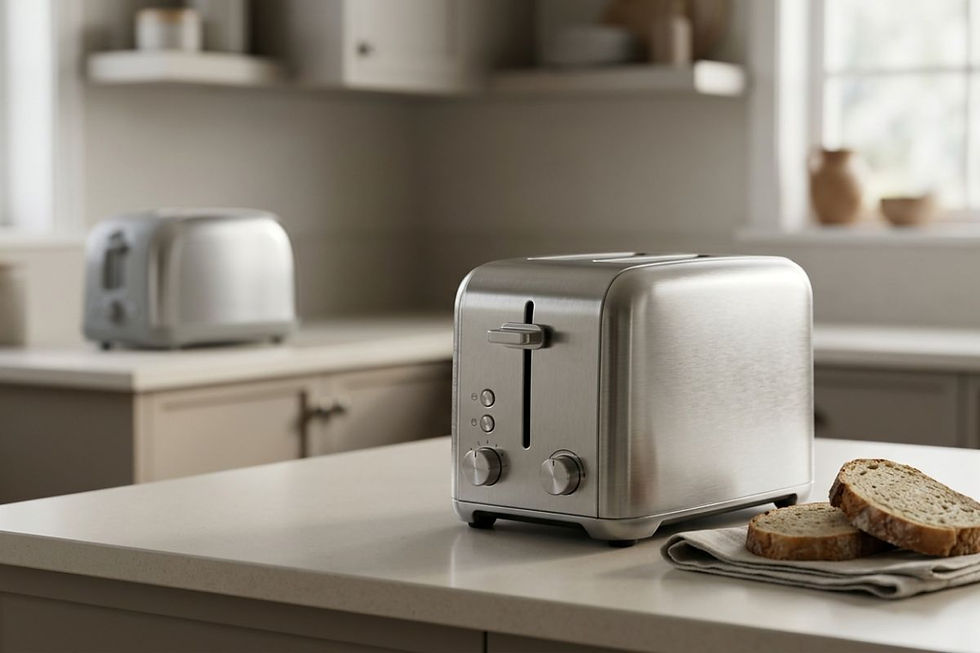
Stainless steel or metal-bodied toasters: the main advantages
usually feel sturdier and less disposable
often fit better with a durability-focused kitchen setup
can be a better match for buyers trying to reduce visible plastic
tend to align more naturally with the kind of material-forward evaluation used in this guide
That said, “metal-bodied” is not the same thing as “all metal.” Many toasters with stainless exteriors still use mixed materials inside, and public disclosures are often incomplete. That is why we looked beyond the finish alone.
Plastic toasters: where they usually fall short
Plastic-heavy toasters are often cheaper and lighter, but they can come with tradeoffs:
less confidence around heat-adjacent materials
more budget-oriented construction
a greater chance of feeling flimsy or short-lived
more reason to pay attention to odor complaints and build quality
This does not mean plastic automatically equals unsafe. It just means it is usually not the strongest fit for a buyer specifically looking for a sturdier, lower-plastic toaster. That is also why this guide leaned toward metal-forward models rather than generic budget picks.
What matters more than the exterior alone
If you are comparing plastic and stainless steel toasters, the exterior is only part of the story.
The more useful questions are:
What is the crumb tray made of?
Does the brand clearly describe the construction?
Are there repeated complaints about plastic smell?
Does the toaster feel built for a few years, or for much longer?
Is the premium price backed by better materials or just better styling?
Those are the questions that separate a genuinely stronger toaster from one that just looks premium.
So, are plastic or metal toasters better?
For this kind of guide, metal-bodied toasters are usually the better choice.
They are not perfect, and they are not all equally transparent. But they are generally the better fit for buyers who care about durability, lower-plastic design, and a more trustworthy materials profile.
The short answer
If you are deciding between plastic and stainless steel, start with stainless steel or another metal-bodied option.
Just do not stop at the finish. The best toaster is the one that combines better materials, better durability, and fewer question marks around the parts exposed to repeated heat.
What Makes a Toaster Worth the Price?
A higher price is only worth it when it buys you something meaningful.
In this category, that usually means better build quality, more consistent performance, a stronger warranty, or a design that genuinely fits how you use bread day to day. If a toaster costs more but only gives you better looks, the value gets much weaker.
What can justify a higher price
Some premium toasters earn their price by offering one or more of the following:
sturdier metal construction
better long-term durability
more even browning
better slot design for bagels or artisan bread
longer warranty coverage
stronger brand support or replaceable parts
That is why a model like Dualit makes more sense at a premium price than a toaster that is mainly charging for style.
What does not automatically justify a higher price
A more expensive toaster is not always a better toaster.
Sometimes the higher price is driven mostly by:
design appeal
brand image
trendy finishes
extra features that do not improve everyday use very much
That does not make those products bad. It just means the upgrade may matter less if your priority is durability, materials, or long-term value.
The best way to judge value
A toaster is usually worth the price when you can clearly explain what you are paying for.
For example:
paying more for repairability and replaceable parts can make sense
paying more for stronger evenness and a better warranty can make sense
paying more only for looks is harder to justify
This is also why this guide does not rank products by price alone. We looked at whether the premium was supported by construction, performance, and real buyer value.
Is it worth getting an expensive toaster?
Sometimes, yes.
If you toast often, care about build quality, want a model that feels less disposable, or need a better format for your bread, paying more can be worth it.
But if you just want a reliable toaster for everyday bread and bagels, a well-chosen mid-range model can still be the smarter buy.
The short answer
A toaster is worth the price when the upgrade gives you better materials, better performance, or better long-term value, not just a more premium look.
How Long Should a Good Toaster Last?
A good toaster should usually last several years, not just one or two.
In real life, the lifespan often depends less on the name on the front and more on the build quality, the materials, how often you use it, and whether the design is built to be repaired or simply replaced.
A rough lifespan guide
Here is a practical way to think about it:
budget toaster: often closer to 2 to 4 years
solid mid-range toaster: often around 4 to 6 years
better-built premium toaster: can last many years longer, especially if it has stronger construction or replaceable parts
That does not mean every expensive toaster will last longer. It just means better materials and better engineering usually improve the odds.
The most common toaster failure points
Most toasters do not fail because the idea of a toaster is complicated. They fail because a few parts wear out over time.
Common issues include:
the lever stops staying down
the browning control becomes inconsistent
one side starts to toast less evenly
the heating elements weaken or fail
the crumb tray starts sticking or warping
the body or controls begin to feel loose or flimsy
This is one reason we gave durability so much weight in this guide.
What shortens a toaster’s lifespan
A toaster usually wears out faster when it has:
lighter, more disposable-feeling construction
more plastic-heavy design
weaker controls or spring mechanisms
poor heat consistency over time
limited warranty or no meaningful repair path
Even a toaster that performs well at first can become frustrating if the controls, latch, or heating system start slipping after a short time.
When should you replace a toaster?
It is usually time to replace a toaster when:
the toast becomes uneven no matter the setting
the lever or controls stop working reliably
strong burning smells keep returning
the toaster stops heating consistently
there are visible signs of damage, warping, or electrical unreliability
If the issue is minor and the model is repairable, replacement may not be the only option. But in this category, many cheaper toasters are built more for replacement than repair.
The short answer
A good toaster should last years, not months.
The models that tend to last longest are usually the ones with sturdier construction, better durability signals, and fewer signs of disposable design. That is also why the most expensive toaster is not always the best buy, but the best-built one often is.
How to Choose the Right Toaster for Your Kitchen
The best toaster is not always the most expensive one. It is the one that fits your space, your habits, and the kind of bread you actually toast most often.
A simple way to choose is to start with format first, then narrow by materials, cleaning, and budget.
If you live alone or toast for one or two people
A 2-slice toaster is usually the better fit.
Choose this if you:
make breakfast for one or two people
have limited counter space
want a simpler, smaller appliance
do not regularly toast multiple items at once
This is often the most practical choice for apartments, couples, or smaller kitchens.
If you toast often or cook for more people
A 4-slice toaster usually makes more sense.
Choose this if you:
toast for a family
want to run fewer cycles in the morning
often make toast, bagels, or frozen waffles in batches
prefer more flexibility across two sides or dual controls
For busy kitchens, a 4-slice model can feel much less frustrating day to day.

If you toast sourdough, artisan bread, or longer slices
Look for a long-slot toaster.
Choose this if you:
buy larger bakery-style loaves
toast long sourdough slices
get annoyed when standard slots cut off the top of your bread
want more flexibility for different bread shapes
If you mostly use standard sandwich bread, a regular-slot toaster is usually enough.
If you are still deciding between a pop-up toaster and a more versatile countertop option, read our guide to the best toaster ovens. It is especially useful if you want more capacity, more cooking functions, or a better fit for reheating, baking, and small-batch meals.
If your priority is fewer plastic concerns
Focus less on marketing words and more on construction.
Look for:
metal-forward or stainless steel exterior
better crumb tray quality
fewer signs of plastic-heavy design
clearer material direction from the brand
stronger durability signals overall
A toaster does not need to be perfect to be a better choice. In this category, a more metal-forward, sturdier model is usually the better starting point.
If you want the best value
Decide whether you need premium upgrades or just a solid everyday toaster.
A premium toaster may be worth it if you want:
stronger build quality
better warranty coverage
more even browning
long-slot flexibility
a more durable long-term purchase
A lower-priced or mid-range toaster may be enough if you want:
reliable daily toast
standard bread and bagel use
simpler controls
a more budget-friendly option
The key is paying more only when the upgrade gives you something meaningful.
If easy cleaning matters to you
Pay attention to the crumb tray and overall simplicity.
A toaster is easier to live with when it has:
a removable crumb tray
a tray that slides out smoothly
a design that does not trap crumbs awkwardly
controls and surfaces that are easy to wipe down
This matters more than many buyers expect, especially if you toast often.
A simple decision shortcut
Choose a 2-slice toaster if you want a compact everyday option.
Choose a 4-slice toaster if you toast for more than one person regularly.
Choose a long-slot toaster if you buy artisan bread or longer slices.
Choose a more metal-forward model if materials and durability matter more than price alone.
Choose a value model if you want a solid toaster without paying for premium branding or extra features.
The short answer
Start with how much bread you toast and what kind of bread you buy most often.
Then narrow your choice by build quality, cleaning ease, materials, and whether you want a budget-friendly everyday toaster or a stronger long-term upgrade.
Final Thoughts
If you want the short version, start with the toasters that best match your kitchen, your bread habits, and your budget, then jump back to the products section to compare the finalists side by side.
For most readers, the best choice will come down to one of three paths:
a more durable, metal-forward toaster for long-term use
a premium 2-slice or 4-slice model with stronger everyday performance
a more affordable pick that still avoids the feel of a plastic-heavy budget appliance
If you are still deciding between a standard pop-up toaster and a more versatile countertop option, our guide to the best toaster ovens is the best next step. It is especially helpful if you want something that can do more than toast, like reheat, bake, or handle small everyday meals.
You can also keep exploring the wider cluster if you are building a cleaner, more durable kitchen overall:
Visit our Non-Toxic Kitchen Guide for broader materials and product recommendations
Browse our Kitchen Appliances category page for more appliance roundups and comparisons
And if you want calmer, better-researched recommendations like this delivered over time, you can subscribe here to stay connected with Zenda Guide.
The goal is not to find a perfect toaster. It is to find one that makes more sense for the way you actually live, toast, and shop.
Frequently Asked Questions
Are there any truly non-toxic toasters?
Very few toasters would qualify in a strict, absolute sense.
Most use mixed materials, and brands often do not fully disclose every heat-adjacent component. That is why it is usually more useful to look for toasters with a more metal-forward design, better crumb tray quality, fewer plastic-heavy signals, and stronger durability overall.
What is the cleanest toaster?
There is no single universal answer, but the cleanest toaster is usually one that combines:
more metal-forward construction
a better-quality crumb tray
fewer signs of plastic-heavy design
fewer recurring odor complaints
stronger long-term build quality
In this guide, those were the signals we prioritized most.
Are stainless steel toasters safe?
Stainless steel is usually a better starting point than a plastic-heavy design, especially for buyers who want a sturdier, lower-plastic option.
That said, a stainless steel exterior does not tell you everything about the internal materials. That is why we looked beyond the finish and considered crumb trays, material transparency, durability, and repeated heat exposure too.
Are plastic or metal toasters better?
In most cases, metal-bodied toasters are the better choice.
They tend to feel sturdier, align better with a durability-focused kitchen, and are often a better fit for buyers trying to avoid a plastic-heavy appliance. But the better toaster is the one that combines stronger materials, better durability, and fewer question marks around heat-exposed parts.
Is it worth getting an expensive toaster?
Sometimes, yes.
A more expensive toaster can be worth it when the extra cost buys you something meaningful, like better construction, more even browning, stronger warranty support, or a format that better fits how you actually eat.
If the higher price is mostly about looks, the value is usually weaker.
How do I choose a good toaster?
Start with how you actually use one.
A good toaster should match:
how much bread you toast
the kind of bread you buy most often
your available counter space
your budget
how much you care about materials, cleaning, and long-term durability
For most people, the best starting point is choosing between a 2-slice, 4-slice, or long-slot model first.
What is the average lifespan of a toaster?
A good toaster should usually last several years.
Budget models often last less, while better-built premium models can last much longer. In general, sturdier construction, stronger durability signals, and fewer disposable-design compromises improve the odds.
Does a toaster with a plastic smell mean it is unsafe?
Not always.
Some toasters can have a temporary first-use smell from manufacturing residues or components heating for the first time. But if strong plastic or chemical smells continue after several uses, that is a more meaningful concern and one we treated as a negative signal during product selection.
About our editorial process
Zenda Guide reviews are produced by our Editorial Board using a documented methodology focused on durability, materials, and long-term value. Learn more about our Editorial Standards and Zenda Lab Protocol
Looking for the best stainless steel toaster for your kitchen in 2026?


Comments